
Taking a break from social media for 7 to 30 days produces measurable but modest benefits in the studies that have tested it: better sleep, lower reported anxiety and depressive symptoms, more time for exercise and face-to-face contact, and a clearer sense of how much you were actually scrolling. The first three or four days are the hardest. By the end of a week most people report less urge to check; by 30 days the habit has usually reset enough that going back is a choice rather than a reflex. What the research found at each stage, how to set up a detox you will finish, and what to keep afterwards, follows.
- Trials of one to four weeks off social media show small to moderate improvements in wellbeing, anxiety and depression scores, especially in heavy users.
- Sleep improves early, mainly because bedtime scrolling stops.
- The urge to check peaks around days 2 to 4 and drops sharply after a week.
- A partial detox, such as removing apps from the phone but keeping desktop access, gets most of the benefit for most people.
- The lasting gain is not abstinence but a deliberate pattern of use afterwards.
Table of Contents
The apps are built to hold attention: infinite feeds, variable rewards, notifications timed to pull you back. The average adult checks their phone dozens of times a day, and heavy use is consistently associated with poorer sleep, more anxiety and lower mood in observational studies. Association is not cause; anxious people may scroll more rather than the other way round. That is why the experimental studies, where people are randomly assigned to stop or continue, matter more.
Those trials show a real but modest effect. A one-week break in one well-known UK study reduced depression and anxiety scores and improved wellbeing compared with continuing as normal. A longer study of university students found that limiting use to 30 minutes a day for three weeks reduced loneliness and depressive symptoms. Effects are largest in people who used social media most, and smallest in light users who had little to give up. The National Institute of Mental Health lists limiting screen time and prioritising sleep and real-world connection among its self-care basics, which is what a detox forces into practice.
Days 1 to 7: what changes first
The first week is withdrawal followed by relief.
- Days 1 and 2: phantom reaching for the phone, boredom in queues and on the toilet, a nagging sense of missing something. This is habit, not information loss.
- Days 3 and 4: the peak of restlessness. Many people abandon the detox here. Low mood or irritability is common and passes.
- Days 5 to 7: sleep often improves because the last hour before bed is no longer screen time. Reading, conversation and walking start to fill the gap. Most people are surprised by how much free time appears; screen-time logs typically show two to four hours a day recovered.
The sleep change is the most reliable early benefit. Bedtime scrolling delays sleep through light exposure and through the alertness that comes from content. Remove it and sleep onset moves earlier. If late-night overthinking fills the space instead, the tools in how to stop overthinking at night help.
Days 8 to 14: the habit loosens
By the second week the compulsive reach has mostly gone. What remains is deliberate: you might think about checking, but you can decide not to. People commonly report:
- Better concentration on longer tasks, because the every-few-minutes interruption has stopped.
- Less comparison-driven low mood. Feeds show other people’s highlights; two weeks away recalibrates what normal looks like.
- More direct contact. Messaging and calls with close friends tend to increase, since the passive sense of “keeping up” through feeds has gone.
- Reduced anxiety about news and events, particularly for people who doom-scrolled.
Some people also notice how few of their online connections they actively miss. That is useful data for deciding what to reinstate later.

Days 15 to 30: consolidation
The third and fourth weeks are where new habits set. Studies that ran this long found the improvements in mood and wellbeing held or grew slightly, and that participants reported more physical activity and more time on hobbies. Cravings are rare by now. The main risk is complacency: reinstalling “just to check one thing” and finding an hour has passed.
The goal by day 30 is a clear picture of what social media was giving you, what it was costing, and which parts you want back on your own terms.
| Stage | Typical experience | Main benefit | Main risk |
|---|---|---|---|
| Days 1 to 4 | Restlessness, boredom, phantom checking | Awareness of the habit | Quitting the detox |
| Days 5 to 7 | Urges fade, time reappears | Earlier, better sleep | Filling the gap with other screens |
| Days 8 to 14 | Deliberate rather than compulsive | Focus, mood, direct contact | “Just checking” relapses |
| Days 15 to 30 | New routines feel normal | Sustained wellbeing, more activity | Going back exactly as before |
Setting up a detox you will finish
- Pick the length. Seven days is enough to see the sleep and awareness benefits; 30 days is enough to reset the habit. Two weeks is a reasonable first attempt.
- Decide what counts. Most people detox from feeds (Instagram, TikTok, X, Facebook, YouTube Shorts) and keep direct messaging. Be explicit with yourself.
- Delete the apps from your phone. Not just log out. Keep desktop access if you need it for work; the friction of a laptop stops most idle checking.
- Tell the people who might worry. A quick message to close friends prevents the “are you okay?” check-ins.
- Replace, do not just remove. Put a book, a podcast list, a walking route and a call list where the scroll used to be. Boredom with nothing to fill it drives relapse.
- Track screen time before and after with the phone’s built-in tools. The number is usually the most persuasive part of the experiment.
- Plan the re-entry before you start. Decide now what you will reinstall and with what limits.
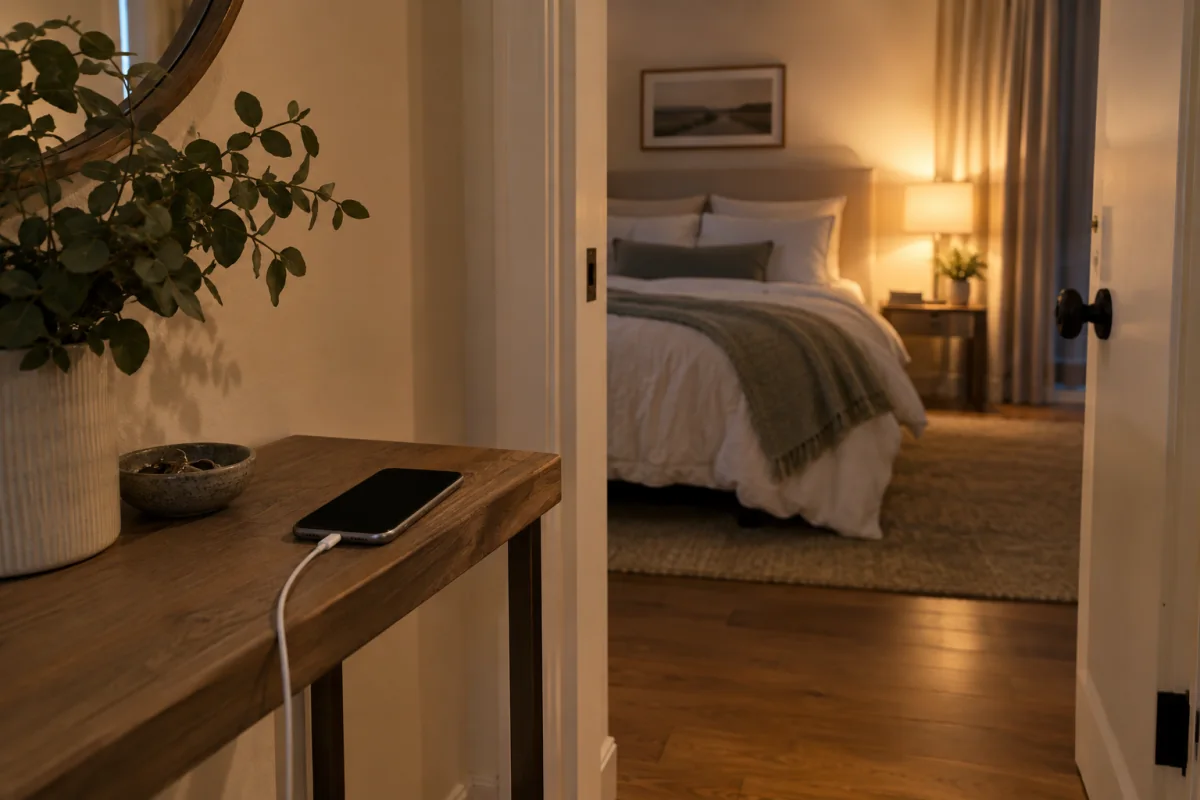
If bedtime was your main scrolling window, put the phone to charge outside the bedroom for the whole detox. This single change accounts for much of the sleep benefit.
Partial detox: the realistic version
Complete abstinence is not necessary for most of the benefit. Options that work:
- Apps off the phone, access only by desktop browser.
- A daily limit of 30 minutes, set in the phone’s screen-time controls with a passcode someone else holds.
- No social media before 9 a.m. or after 8 p.m.
- One platform only. Keep the one that genuinely connects you to people; drop the ones that only feed.
- Unfollow aggressively. A feed of 40 people you care about behaves differently from a feed of 900 accounts and an algorithm.
The 30-minutes-a-day trial mentioned earlier found benefits comparable to full breaks, which suggests the dose matters more than total abstinence.
What to keep after day 30
The point of the detox is the pattern you build afterwards. A sensible default:
- Phone charges outside the bedroom permanently.
- Feed apps stay off the phone, or are limited to a fixed window.
- Notifications off for everything except messages from real people.
- One weekly check of the platforms you dropped, on a laptop, with a time limit.
- The replacement activities stay scheduled: the walk, the book, the call.
Feeling drained, irritable and unable to concentrate can have causes well beyond the phone. If a month away leaves you no better, the comparison in signs of burnout versus depression is worth reading, and a doctor is worth seeing.
Common mistakes
- Announcing the detox on social media, then checking the replies.
- Replacing feeds with news apps or YouTube on the laptop. The mechanism is the same.
- Going cold turkey on messaging too, then feeling isolated and blaming the detox.
- Judging results on day 3, at the peak of restlessness.
- Reinstalling everything on day 31 with no limits and expecting the benefits to last.
Who this is not for
A detox is a wellbeing experiment, not a treatment. If social media is where you get essential support, such as a health condition community or the only contact with faraway family, a targeted cut of feeds while keeping those groups is wiser than a blanket break. People whose work depends on platforms should set boundaries rather than abstain. If you are experiencing persistent low mood, anxiety that affects daily life, or thoughts of self-harm, the NHS Every Mind Matters resources are a starting point, and a doctor is the right next step; do not wait 30 days to see if a detox fixes it. And if compulsive checking is one of many compulsions, that pattern deserves professional support in its own right.
If evenings are your hardest hours, pairing the detox with a short calming routine helps; the five-minute breathing exercises are designed for exactly the gap the phone used to fill.
Frequently asked questions
Seven days shows the early benefits; 30 days resets the habit. Two weeks is a good compromise for a first attempt.
Days 2 to 4. Restlessness and the urge to check peak then and fade sharply after the first week.
Trials show modest reductions in anxiety and depressive symptoms, largest in heavy users. It helps ordinary stress; it does not treat an anxiety disorder.
Can I keep WhatsApp or messaging during a detox?
Yes. Most people detox from feeds and keep direct messaging. The benefit comes from removing passive scrolling, not from cutting off friends.
Will the benefits last after I go back?
Only if you go back differently. Apps off the phone, notifications off, a fixed daily window and a phone-free bedroom keep most of the gains.