
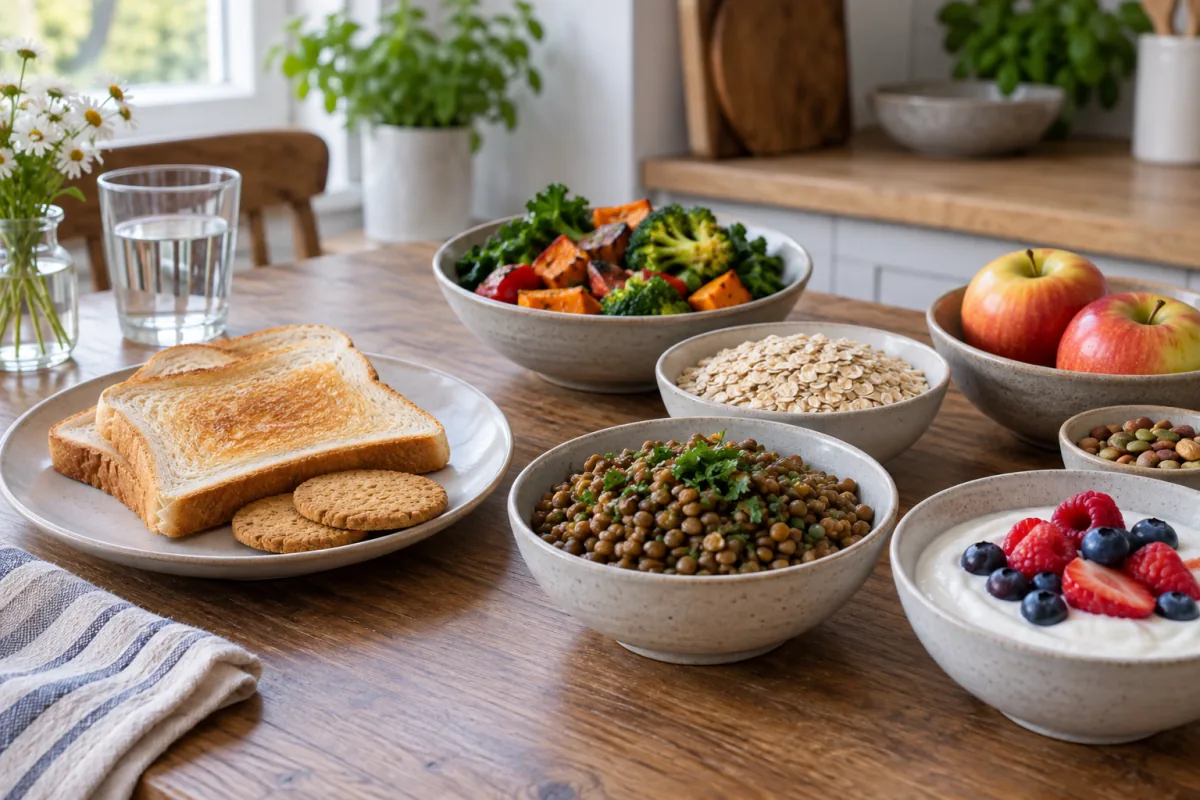
The foods most consistently linked to a less healthy gut are ultra-processed products, added sugars, artificial sweeteners, alcohol, and diets that are heavy in red and processed meat while low in fibre. None of them will wreck your digestion in a single meal. The damage comes from what you eat most days, because the trillions of bacteria in your large intestine adapt within days to whatever you feed them. This guide explains which foods matter, why, what the evidence actually says, and what to eat instead. It also covers when gut symptoms need a doctor rather than a diet change.
Table of Contents
Key takeaways
- Fibre is the main food for beneficial gut bacteria. Most adults eat about half the recommended 25 to 30 g a day.
- Ultra-processed foods, added sugar, alcohol and a lot of processed meat are the patterns most often linked with a less diverse microbiome.
- Some artificial sweeteners and emulsifiers appear to alter gut bacteria in studies, though human evidence is still developing.
- Diversity matters: aim for 30 different plant foods a week, counting herbs, nuts, seeds and legumes.
- Blood in the stool, unexplained weight loss or persistent changes in bowel habit need medical attention, not a new diet.
Why the gut microbiome cares what you eat
Your large intestine houses roughly 100 trillion bacteria from hundreds of species. They ferment the fibre you cannot digest, producing short-chain fatty acids such as butyrate that feed the cells lining the colon, calm inflammation and help regulate appetite. A diverse population is generally a resilient one. When the diet is low in fibre and high in refined ingredients, the species that thrive on fibre decline, and species that feed on the mucus lining of the gut or on simple sugars gain ground.
These shifts happen quickly. Studies that switch people from a plant-rich diet to a meat-and-cheese-only diet see measurable changes in bacterial populations within two to four days. The good news is that the reverse is equally fast. The NIDDK digestive health resources and the WHO healthy diet fact sheet are useful anchors for the recommendations below.
The foods most linked to a less healthy gut
1. Ultra-processed foods
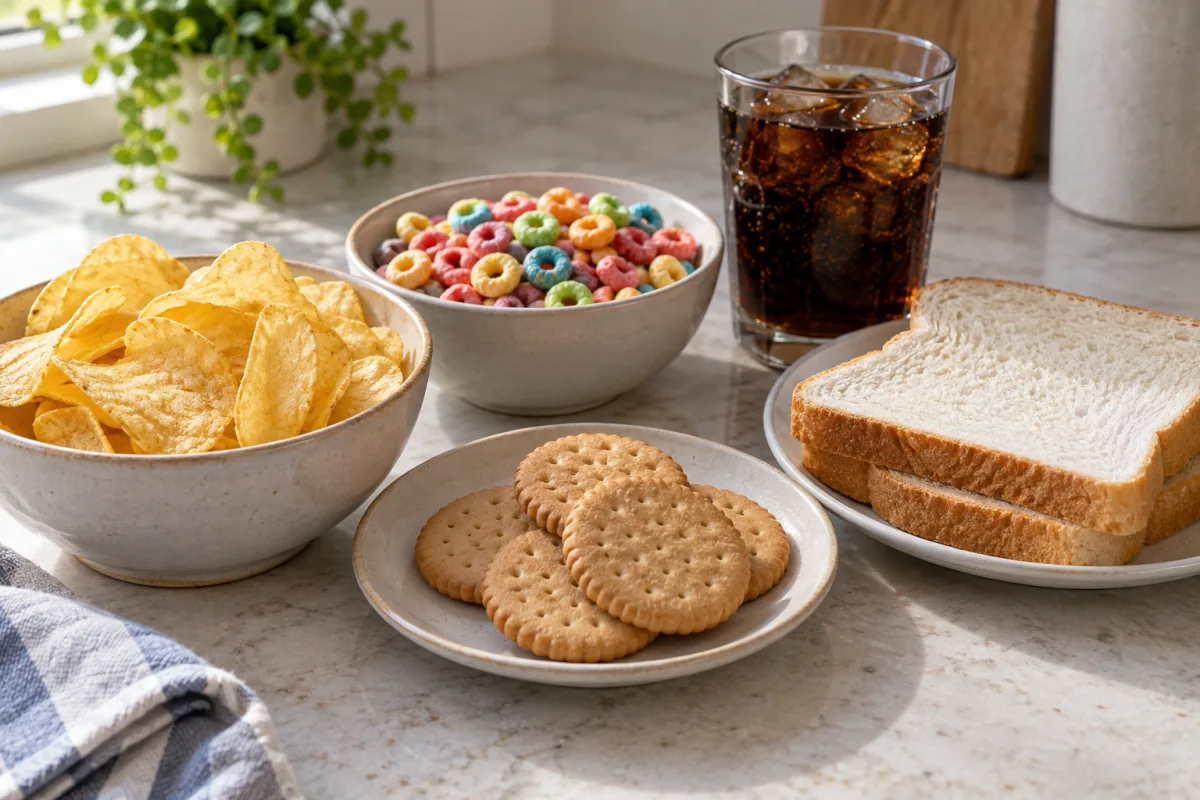
Packaged snacks, instant noodles, ready meals, sugary cereals, reconstituted meats and most fast food. These are low in fibre, high in refined starch, sugar, salt and fat, and often contain emulsifiers and stabilisers. Large observational studies link high ultra-processed intake with lower microbial diversity and higher rates of inflammatory bowel conditions. The mechanism is likely a combination of missing fibre and additives that disturb the gut lining, though cause and effect in humans is still being worked out.
Swap: One packaged meal a day for something with whole ingredients. Dal and rice, eggs with vegetables, a sandwich on wholegrain bread with salad.
2. Added sugar
Sweets, sugary drinks, biscuits, flavoured yoghurts and many sauces. Sugar that is not absorbed in the small intestine feeds fast-growing bacteria and yeasts in the large intestine, and high-sugar diets are associated with a less diverse microbiome and more gut inflammation in animal and early human studies. The WHO advises keeping free sugars below 10 percent of daily energy, and ideally below 5 percent, which is about 25 g or six teaspoons.
Swap: Whole fruit instead of juice. Plain yoghurt with fruit instead of flavoured. Our guide on what happens when you stop eating sugar covers the adjustment period.
3. Artificial sweeteners
Sucralose, saccharin and aspartame pass through the small intestine largely unabsorbed and reach the bacteria in the colon. Several studies, mostly in animals and small human trials, show that some sweeteners alter bacterial populations and, in a subset of people, worsen blood sugar responses. The evidence is mixed and the effect varies from person to person. If you drink several diet sodas a day, it is reasonable to cut back and see how you feel.
Swap: Sparkling water with a squeeze of lime. Unsweetened tea.
4. Alcohol
Regular drinking, particularly more than 14 units a week, irritates the gut lining, increases intestinal permeability and shifts bacterial balance towards inflammatory species. Heavy drinking is one of the most reliable ways to damage the microbiome in research. Occasional moderate drinking has a much smaller effect.
Swap: At least two or three alcohol-free days a week, and no more than one or two drinks on the others.
5. Processed and red meat in large amounts
Bacon, sausages, ham, salami and daily servings of red meat. Diets high in these and low in plants encourage bacteria that produce trimethylamine and hydrogen sulphide, compounds linked to cardiovascular and colon health problems. The issue is largely the pattern: a plate full of meat leaves no room for fibre.
Swap: Keep red meat to two or three portions a week, avoid processed meat most days, and add legumes, fish or paneer on the other days.
6. Refined grains
White bread, white rice, maida-based foods, most pastries. These are not harmful in themselves, but they displace wholegrains and contribute almost no fibre. A diet built on refined grains starves the bacteria that produce butyrate.
Swap: Half the grains as wholegrain: brown rice, whole wheat atta, oats, millets, barley.
7. Fried and very high-fat foods
Diets very high in saturated and trans fats are associated in studies with reduced microbial diversity and increased gut permeability. Fried food also slows stomach emptying, which many people experience as bloating. Fat from olive oil, nuts, seeds and fish does not show the same pattern.
Swap: Bake, grill or air-fry. Use oil rather than ghee or butter for everyday cooking.
What the evidence does and does not show
| Food or pattern | Strength of evidence | Notes |
|---|---|---|
| Low fibre intake | Strong | Consistent across human studies |
| Heavy alcohol | Strong | Clear damage to gut lining and bacteria |
| Ultra-processed diet | Moderate | Large observational studies, mechanisms still under study |
| High added sugar | Moderate | Good animal data, growing human data |
| Processed meat | Moderate | Strongest for colon cancer risk, microbiome link plausible |
| Artificial sweeteners | Mixed | Effects vary by sweetener and by person |
| Emulsifiers | Early | Mostly animal and small human trials |
Anyone selling a product that “detoxes” or “resets” your gut in seven days is not working from this evidence. Change is possible, but it comes from the overall pattern, not a supplement.
What to eat instead: the 30-plants target
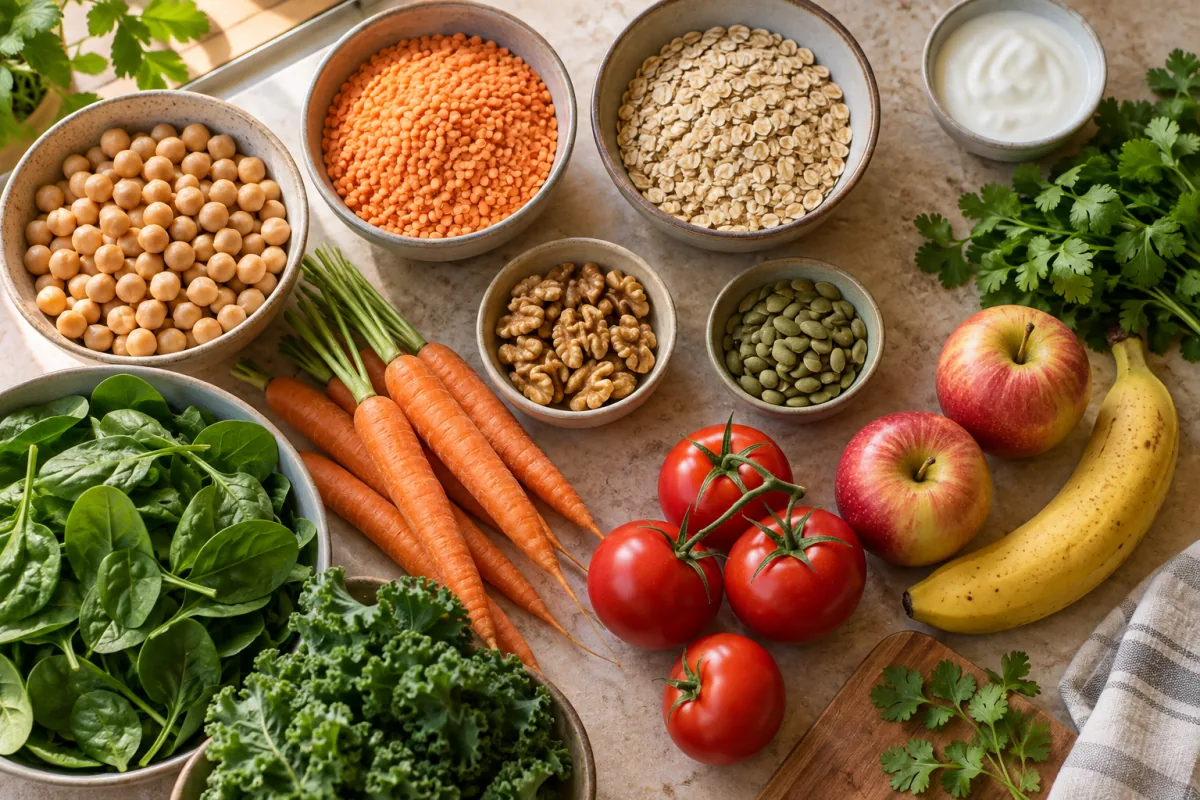
Large microbiome surveys have found that people who eat 30 or more different plant foods a week have more diverse gut bacteria than people who eat 10 or fewer. It is easier than it sounds, because everything counts once: each vegetable, fruit, wholegrain, legume, nut, seed, herb and spice.
- Legumes daily: dal, chickpeas, rajma, lentils, beans. Cheap, high in fibre and resistant starch.
- Wholegrains: oats, brown rice, millets such as ragi and jowar, whole wheat, barley.
- Vegetables in colour: leafy greens, onions, garlic, leeks, carrots, brinjal, capsicum. Onions, garlic and leeks are particularly rich in prebiotic fibre.
- Fruit: bananas, apples, berries, guava, papaya. Skin on where edible.
- Nuts and seeds: a small handful a day.
- Fermented foods: curd, kefir, kimchi, sauerkraut, idli and dosa batter, kanji. These add live bacteria and are well tolerated by most people.
- Herbs and spices: coriander, mint, turmeric, cumin, ginger, cinnamon. Each one counts.
Increase fibre gradually over two to three weeks, and drink more water as you do. A sudden jump from 12 g to 30 g a day causes gas and bloating that put people off. Our guide to foods that cause bloating explains which high-fibre foods are the usual culprits early on, and the Mediterranean diet grocery list is a ready-made shopping template that hits the 30-plant target.
Common mistakes
- Cutting whole food groups. Removing all grains or all dairy without a medical reason usually reduces diversity, not improves it.
- Relying on probiotic supplements. Most strains do not colonise the gut. Fermented food and fibre do more for less money.
- Going all-in for a week and then stopping. The bacteria revert as fast as they improved. Aim for a pattern you keep.
- Ignoring sleep and stress. Both affect gut motility and bacterial balance. Diet is one lever among several.
- Adding fibre without water. Fibre needs fluid to move. Constipation is the common result of skipping this.
When to see a doctor rather than change your diet
This article is about the everyday gut health of adults without a diagnosed condition. It is not a treatment plan for irritable bowel syndrome, coeliac disease, Crohn’s disease, ulcerative colitis or food allergies, all of which need individual advice, and some of which need a low-FODMAP or gluten-free approach that differs from the advice above. See a doctor promptly if you have blood in your stool, black stools, unexplained weight loss, a change in bowel habit lasting more than three weeks, persistent abdominal pain, or difficulty swallowing. The NHS bloating page lists the warning signs that should not be managed at home.
Frequently asked questions
What is the single worst food for gut health?
There is no single worst food. The most damaging pattern is a diet built on ultra-processed food and alcohol with very little fibre. Fixing the fibre gap does more than eliminating any one item.
Are eggs, dairy or gluten bad for the gut?
Not for most people. Those with a diagnosed allergy, intolerance or coeliac disease need to avoid the relevant food, but cutting them out otherwise tends to reduce dietary diversity.
How quickly can gut bacteria change with diet?
Measurable shifts appear within days. Lasting improvement in diversity takes weeks to months of consistent eating.
Is coffee bad for gut health?
Moderate coffee intake is associated with greater microbial diversity in several studies, likely because of its polyphenols and fibre. It can worsen reflux or loose stools in sensitive people.
Do I need a probiotic supplement?
Usually not. Specific strains help specific conditions such as antibiotic-associated diarrhoea, but for general gut health, fibre and fermented foods have better evidence.