
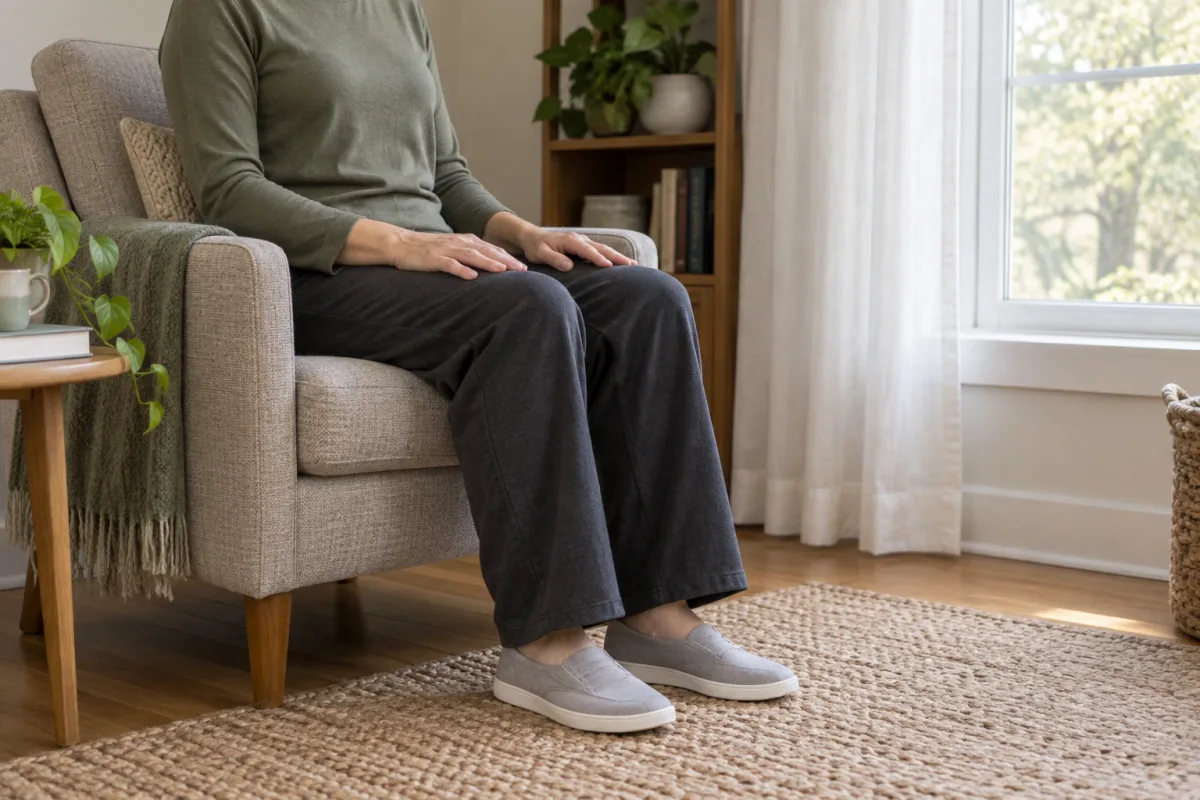
When anxiety spikes, the fastest tool you have is your breath. Slowing it down, and especially lengthening the out-breath, sends a direct signal to the nervous system to stand down. Five minutes is enough to take the edge off a panic surge, a pre-meeting jitter or a 3am worry loop. This guide gives you four breathing exercises with exact counts, which one to use in which situation, the mistakes that make people feel dizzy or give up, and the signs that mean breathing exercises are not enough on their own.
Table of Contents
- 1 Key takeaways
- 2 Why slow breathing calms anxiety
- 3 Before you start: the two basics
- 4 Exercise 1: Extended exhale (the all-rounder)
- 5 Exercise 2: Box breathing (for focus under pressure)
- 6 Exercise 3: 4-7-8 (for winding down and sleep)
- 7 Exercise 4: Physiological sigh (for a sudden spike)
- 8 Which one to use when
- 9 A five-minute routine for daily practice
- 10 Common mistakes
- 11 When breathing exercises are not enough
Key takeaways
- A longer exhale than inhale is the single most effective change. Try 4 seconds in, 6 seconds out.
- Breathe through the nose and into the belly, not the upper chest.
- Four techniques cover most situations: extended exhale, box breathing, 4-7-8, and physiological sighs.
- Practise when calm so the technique is ready when you are not.
- Frequent panic attacks, constant worry or physical symptoms need a doctor, not just breathing.
Why slow breathing calms anxiety
Anxiety is partly a body state. Your heart rate rises, breathing becomes fast and shallow, muscles tense. This is the sympathetic nervous system preparing for a threat. The parasympathetic system, which restores calm, is strongly influenced by the vagus nerve, and the vagus nerve is influenced by breathing. Each slow exhale increases vagal activity and nudges the heart rate down. Do that twenty or thirty times in a row and the body reads the situation as safe, which in turn quietens the mind.
Fast, shallow breathing does the opposite. It lowers carbon dioxide in the blood, which causes tingling, light-headedness and a sense of unreality, and those sensations feel like more anxiety. Slowing down breaks that loop. The NHS breathing exercise for stress is built on exactly this principle, and the National Center for Complementary and Integrative Health summarises the evidence that relaxation techniques help with anxiety symptoms.
Before you start: the two basics
Breathe through your nose
Nasal breathing is slower and naturally deeper. If your nose is blocked, breathe in through the nose as much as you can and out through pursed lips.
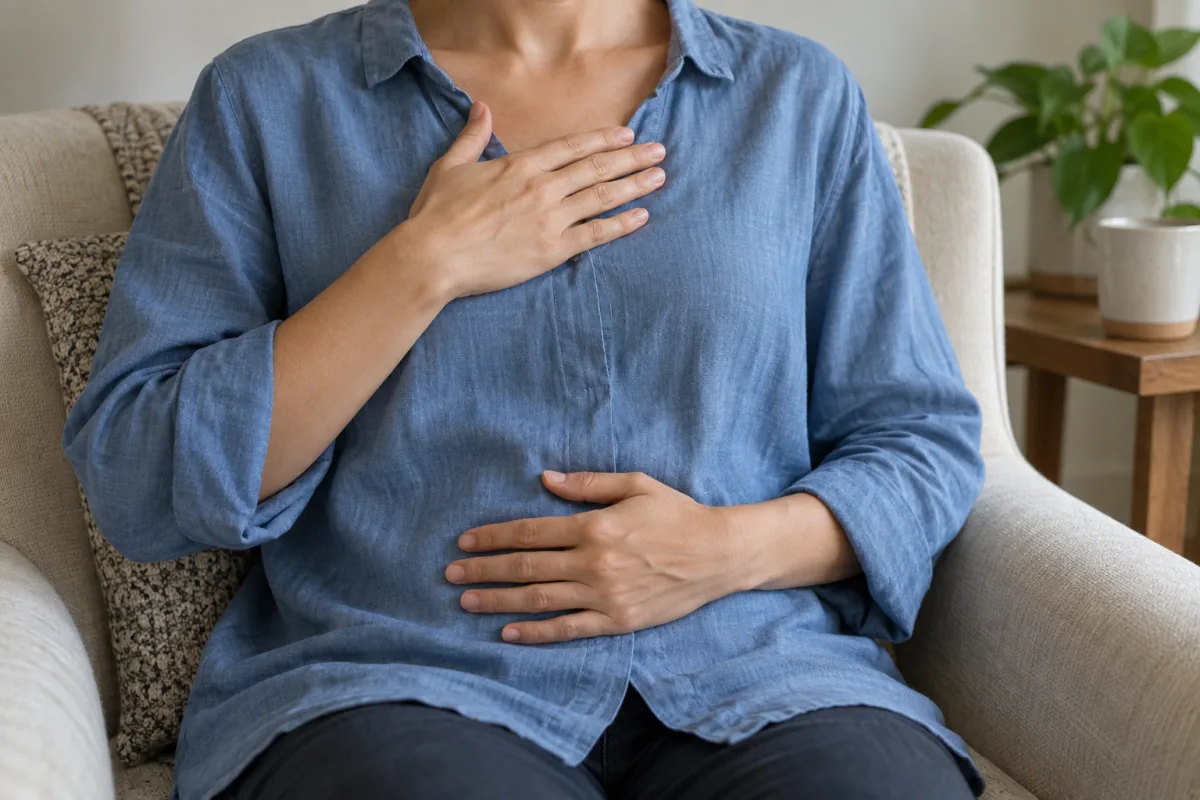
Breathe into the belly
Put one hand on your chest and one on your stomach. When you breathe in, the lower hand should move more than the upper hand. If the chest hand moves first, you are breathing shallowly. It takes a few tries. Lying down makes it easier to learn.
Exercise 1: Extended exhale (the all-rounder)
Use this one first. It is the simplest and works in any setting, including a meeting, a queue or a train.
- Breathe in through the nose for a count of 4.
- Breathe out through the nose or pursed lips for a count of 6.
- Repeat for 5 minutes. That is roughly 30 breaths.
If 4 and 6 feel like a strain, use 3 and 5. The ratio matters more than the numbers. As it gets easier over a couple of weeks, move towards 4 and 8. Common mistake: taking a huge breath in. Keep the inhale gentle so the exhale has room to be slow.
Exercise 2: Box breathing (for focus under pressure)
Used widely by people who need to stay calm and sharp at the same time. Good before a presentation, an exam or a difficult conversation.
- Breathe in for 4.
- Hold for 4.
- Breathe out for 4.
- Hold for 4.
- Repeat for 4 to 5 minutes.
The holds give the mind something to count, which crowds out anxious thoughts. Picture drawing the four sides of a square as you go. Common mistake: tensing during the holds. The hold is a pause, not a clamp. Skip the holds and use the extended exhale instead if you have a heart or lung condition or are pregnant.
Exercise 3: 4-7-8 (for winding down and sleep)
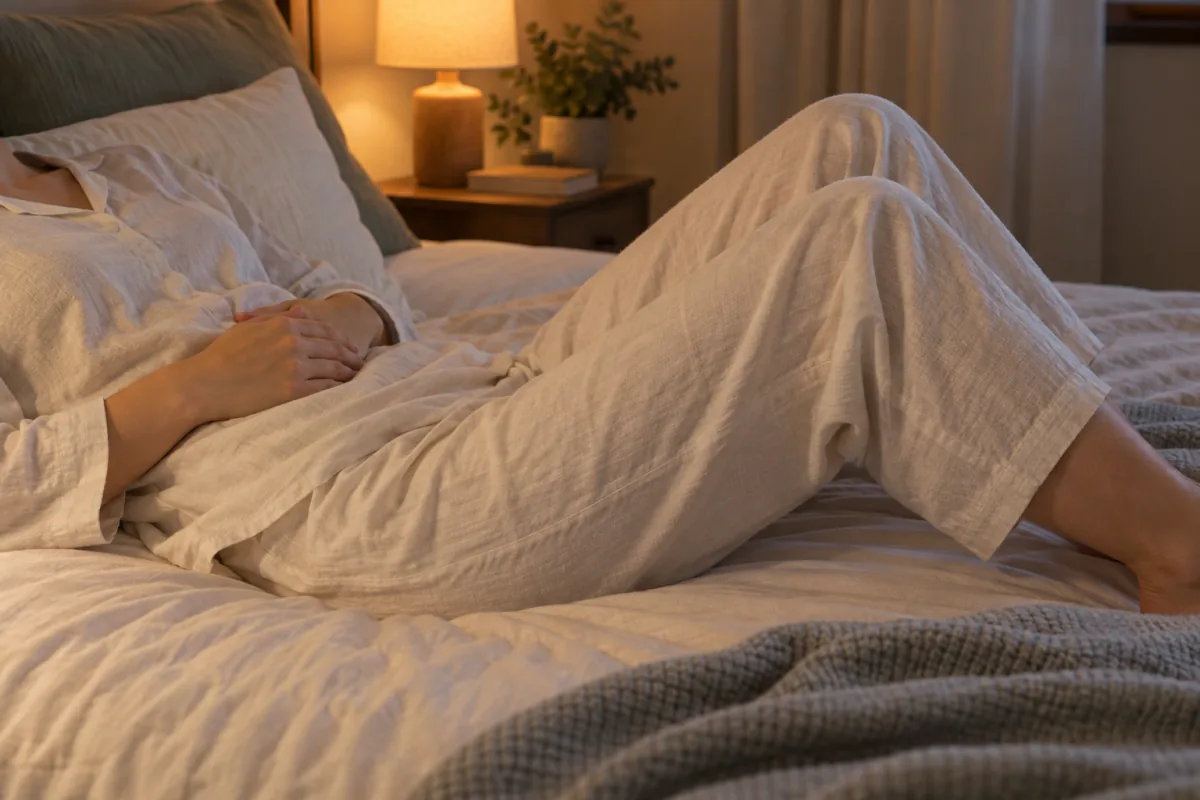
This has a long exhale and a long hold, which makes it more sedating. Use it at bedtime or after a stressful evening, not before something that needs alertness.
- Breathe in through the nose for 4.
- Hold for 7.
- Breathe out through the mouth with a soft whooshing sound for 8.
- Do 4 cycles to start. Build to 8 cycles over a few weeks.
Four cycles take about 90 seconds. Do it, then rest and breathe normally, then do another set if you need it. Common mistake: doing too many rounds on the first night and feeling light-headed. Start small. If night-time thinking is your main issue, this pairs well with the routine in our guide on how to stop overthinking at night, and with the military method for falling asleep.
Exercise 4: Physiological sigh (for a sudden spike)
This is the fastest technique for an acute wave of panic, and it takes under a minute.
- Take a normal breath in through the nose.
- Without breathing out, take a second short sip of air on top to fully inflate the lungs.
- Let it all out slowly through the mouth, as long an exhale as you can manage.
- Repeat 2 or 3 times. Then move to extended exhale breathing for the remaining minutes.
The double inhale reopens the small air sacs that collapse during shallow breathing and lets the long exhale offload carbon dioxide efficiently. Many people feel a shift after two or three sighs.
Which one to use when
| Situation | Best exercise | Time |
|---|---|---|
| General anxiety, anywhere | Extended exhale | 5 minutes |
| Before a presentation or exam | Box breathing | 4 to 5 minutes |
| Cannot switch off at night | 4-7-8 | 2 to 4 minutes, repeat if needed |
| Sudden panic surge | Physiological sigh, then extended exhale | 1 minute plus 4 minutes |
| Daily practice to lower baseline anxiety | Extended exhale | 5 to 10 minutes, once or twice a day |
A five-minute routine for daily practice
Breathing exercises work far better in a crisis if the body already knows them. Practise once a day when you are calm, for two weeks.
- Minute 1: Sit or lie down, hand on belly, breathe normally and notice the movement.
- Minutes 2 to 4: Extended exhale, 4 in and 6 out.
- Minute 5: Return to normal breathing. Notice any change in heart rate or muscle tension.
Attach it to an existing habit: after brushing your teeth, before the first coffee, or on the train. People who practise daily report that the technique kicks in faster during real anxiety, and that their resting breathing rate slows over time, which lowers baseline stress.
Common mistakes
- Over-breathing. Big deep breaths feel like the right thing but can cause light-headedness. Gentle in, slow out.
- Trying it for the first time mid-panic. Counting to 7 while panicking is hard. Learn it calm first.
- Giving up after one minute. The nervous system takes a few minutes to shift. Stay with it for the full five.
- Forcing the counts. If 4-7-8 makes you gasp, shorten every number. Comfort matters more than precision.
- Using it as the only tool. Breathing manages symptoms. Sleep, exercise, less caffeine and dealing with the underlying stressor address causes. Calming herbal teas and daily walking both fit alongside it.
When breathing exercises are not enough
These techniques are safe for most people and useful for everyday anxiety. They are not a treatment for an anxiety disorder, panic disorder or depression, and they should not delay getting help. The National Institute of Mental Health describes the signs of anxiety disorders, which include worry most days for six months or more, panic attacks that recur, avoiding places or situations because of fear, and physical symptoms such as a racing heart, chest tightness or shortness of breath at rest. If any of those describe you, talk to a doctor. Effective treatments exist and breathing exercises can sit alongside them.
Two cautions. If you have asthma, COPD or a heart condition, check with your doctor before using breath holds, and stick to the extended exhale. And if slow breathing itself makes you feel more anxious, which happens to some people who are very focused on bodily sensations, stop and try a movement-based approach such as a brisk walk instead.
Frequently asked questions
How long does it take for breathing exercises to work?
Most people notice the heart rate slowing within two to three minutes. Five minutes gives the nervous system enough time to settle. With daily practice the effect arrives faster.
Which breathing exercise is best for anxiety?
The extended exhale, 4 seconds in and 6 out, is the most reliable and can be used anywhere. The others are variations for specific situations.
Why do I feel dizzy when I do breathing exercises?
Usually because the inhale is too big or the pace too fast. Make the in-breath gentle, slow everything down, and shorten the counts. Stop if it continues.
Can I do these at work without anyone noticing?
Yes. The extended exhale looks like normal breathing. Keep the mouth closed and breathe through the nose.
How often should I practise?
Once a day for five minutes is enough to build the skill. Use it additionally whenever anxiety rises.