
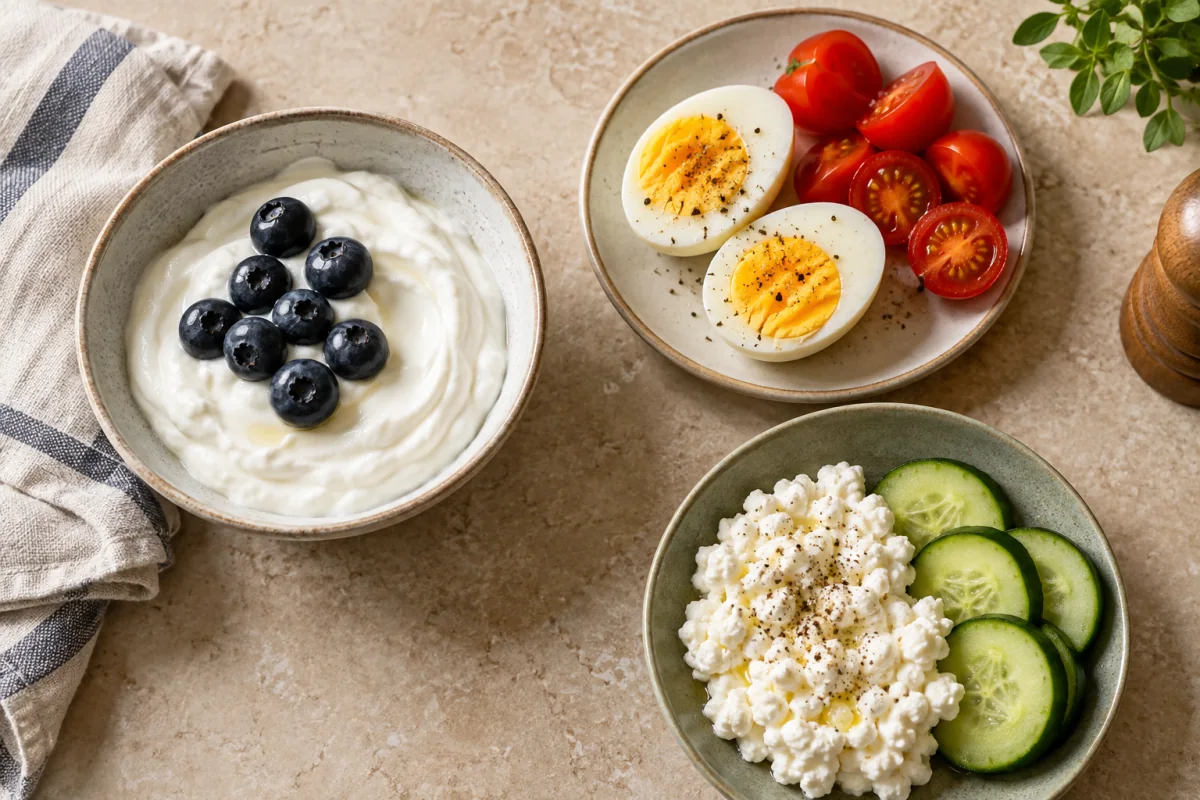
A good weight-loss snack delivers 10 to 20 grams of protein for under 200 calories, takes no cooking, and holds you until the next meal. Greek yogurt, cottage cheese, boiled eggs, edamame, roasted chana, tuna and a measured portion of nuts or paneer all fit. Protein matters because it is the most filling macronutrient per calorie and it protects muscle while you lose fat. This guide lists 20 snacks that meet the numbers, with real portion sizes, a shopping list, the common traps that turn a “protein snack” into a calorie bomb, and how to fit snacks into a daily deficit without stalling it.
- Target: 10 to 20 g protein, under 200 calories, ideally with some fibre. Anything less filling than that is a treat, not a snack.
- Dairy, eggs, legumes and fish give the most protein per calorie; nuts and cheese are useful but need weighing.
- One or two planned snacks a day fit a deficit fine. Grazing all afternoon does not.
- Most protein bars and shakes are fine in a pinch, but many carry 250 calories and a dessert’s worth of sugar.
- Snacking is optional. If three meals hold you, skip it.
Table of Contents
Why protein is the snack nutrient that matters
Protein reduces hunger more than carbohydrate or fat for the same calories, partly through hormones that signal fullness and partly because it digests slowly. It also costs more energy to digest, which is a small but real advantage. During weight loss, adequate protein is what keeps the loss coming from fat rather than muscle, and holding onto muscle is what keeps your resting metabolism from dropping more than it has to.
The NHS balanced diet guidance recommends beans, pulses, fish, eggs and lean meat as the main protein sources, with a preference for lower-fat dairy. That list maps almost exactly onto the best snacks. A rough daily target while dieting is 1.2 to 1.6 g of protein per kilogram of body weight, and two 15 g snacks make that far easier to reach.
Twenty snacks that meet the numbers
Values are approximate and depend on brands; check labels. Portions are deliberately specific because “a handful” of almonds ranges from 90 to 250 calories.
| Snack | Portion | Protein | Calories |
|---|---|---|---|
| Plain Greek yogurt (0 to 2 percent fat) | 170 g | 15 to 17 g | 100 to 130 |
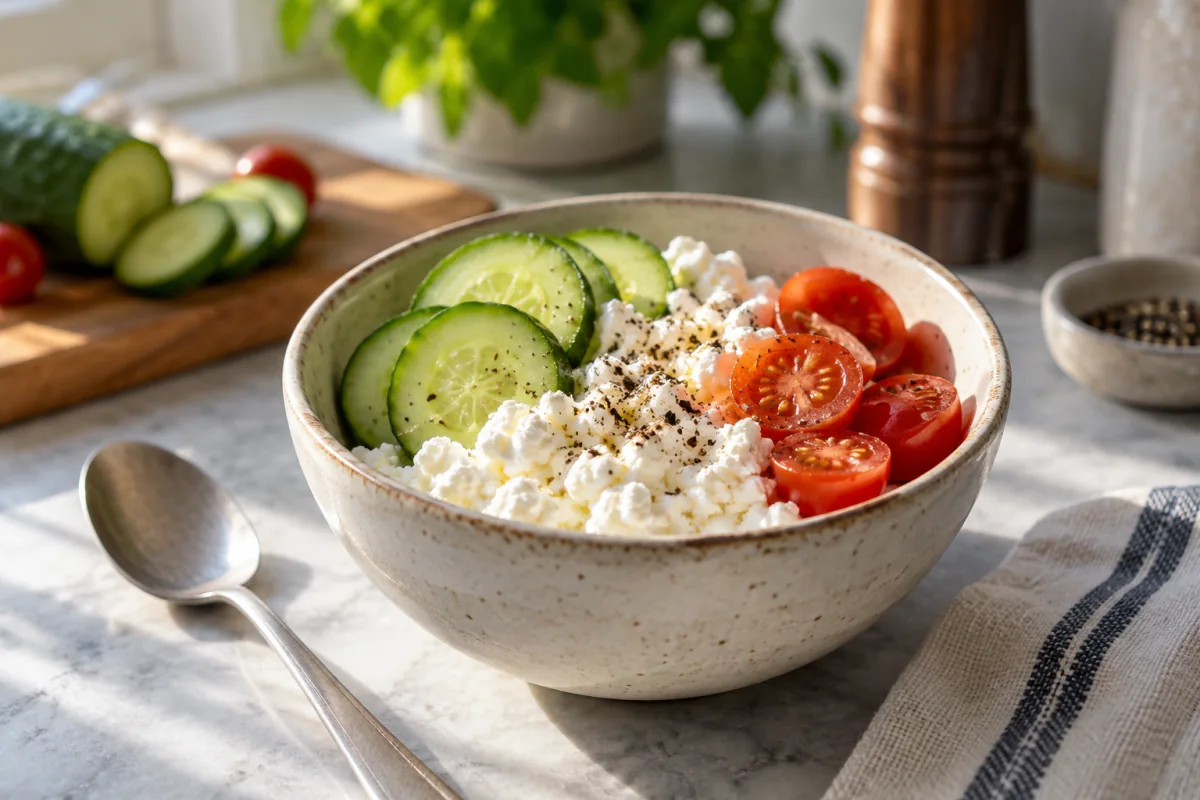
| Cottage cheese with cucumber | 150 g | 16 to 18 g | 120 to 150 |
| Boiled eggs | 2 large | 12 g | 140 to 155 |
| Edamame, in pods, lightly salted | 1 cup shelled, 150 g | 17 g | 180 to 190 |
| Roasted chana (chickpeas) | 40 g | 8 to 9 g | 150 to 160 |
| Tuna, tinned in water, on cucumber slices | One small tin, 85 g drained | 18 to 20 g | 90 to 100 |
| Paneer cubes, plain or grilled | 60 g | 11 to 12 g | 160 to 180 |
| Sprouted moong with lemon and onion | 1 cup, 100 g | 7 g | 110 to 120 |
| Turkey or chicken breast slices | 85 g | 18 to 20 g | 90 to 120 |
| Skyr or high-protein yogurt pot | 150 g | 15 to 18 g | 90 to 120 |
| Almonds | 20 g, about 16 nuts | 4 g | 115 to 120 |
| Peanut butter on rice cakes | 15 g peanut butter on two cakes | 5 to 6 g | 160 to 170 |
| Hummus with carrot and pepper sticks | 60 g hummus | 5 g | 150 to 180 |
| Low-fat string cheese or babybel | 2 pieces | 12 to 14 g | 100 to 140 |
| Protein shake, whey or plant, in water | 1 scoop, 30 g | 20 to 25 g | 110 to 130 |
| Milk (semi-skimmed) with a small banana | 250 ml plus 1 fruit | 9 g | 190 to 200 |
| Smoked salmon on cucumber or a wholegrain cracker | 50 g salmon | 10 to 12 g | 90 to 130 |
| Pumpkin seeds | 25 g | 7 to 8 g | 140 to 150 |
| Tofu, baked or air-fried cubes | 100 g firm | 12 to 15 g | 110 to 145 |
| Roasted seaweed with a boiled egg | 1 pack plus 1 egg | 8 g | 100 to 110 |
The dairy, egg, fish and legume options give the best protein-to-calorie ratio. Nuts, seeds and nut butter earn their place through fibre and satisfaction, but they are the ones people over-pour.
Building a snack that holds you
Protein alone is good; protein with fibre and volume is better. A few pairings:
- Greek yogurt with a handful of berries and a teaspoon of chia seeds.
- Cottage cheese with sliced tomato, black pepper and a few olives.
- Two boiled eggs with cherry tomatoes and a pinch of chaat masala.
- Roasted chana with chopped onion, coriander and lemon.
- Tuna mixed with a spoon of Greek yogurt and mustard, on cucumber rounds.
- Apple slices with 15 g of peanut butter and a sprinkle of cinnamon.
Water counts too. A large glass with a snack adds volume and often reveals that the “hunger” was thirst; the amounts are covered in how much water you should drink.
Timing: when a snack helps and when it hurts
A snack is useful when the gap between meals is long enough that you would otherwise arrive at the next one ravenous and overeat. For most people that means mid-afternoon, between a 1 p.m. lunch and an 8 p.m. dinner. A second snack mid-morning helps if breakfast is early or small.
Snacks hurt when they are unplanned, eaten standing up, or eaten because of stress rather than hunger. If evenings are the problem time, the pattern usually has more to do with mood and habit than with the food; the practical fixes are in how to break the cycle of stress eating at night.
- Decide in the morning whether you will snack, and what.
- Portion it out then, not at the moment of hunger.
- Sit down to eat it.
- Wait 15 minutes before deciding you need more.
Protein bars and shakes: read the label
Bars and shakes are convenient and sometimes the only realistic option. The traps:
- Calories. Many bars run 220 to 300 calories, above the limit for a snack in a deficit.
- Sugar and sugar alcohols. Some bars carry 15 g of sugar; others use sugar alcohols that upset digestion in quantity.
- Low protein density. A bar with 8 g protein and 240 calories is a chocolate bar with a marketing team.
- Shakes made with milk, banana and nut butter. Delicious, and 400 calories.
Rules of thumb: at least 10 g protein per 100 calories, under 10 g sugar, and a shake mixed with water rather than milk if calories are tight. The World Health Organization advises keeping free sugars under 10 percent of daily energy, and a single sweet bar can use a third of that.
Shopping list for a week of snacks
- Dairy: plain Greek yogurt or skyr, cottage cheese, paneer, low-fat cheese portions, semi-skimmed milk.
- Eggs: a dozen, boiled in a batch on Sunday. They keep a week in the fridge.
- Legumes: roasted chana, frozen edamame, moong for sprouting, hummus.
- Fish and meat: tinned tuna in water, smoked salmon, cooked chicken breast.
- Nuts and seeds: almonds, pumpkin seeds, peanut butter with no added sugar.
- Vegetables and fruit: cucumber, carrots, peppers, cherry tomatoes, apples, berries, bananas.
- Extras: rice cakes, wholegrain crackers, roasted seaweed, chaat masala, lemon.
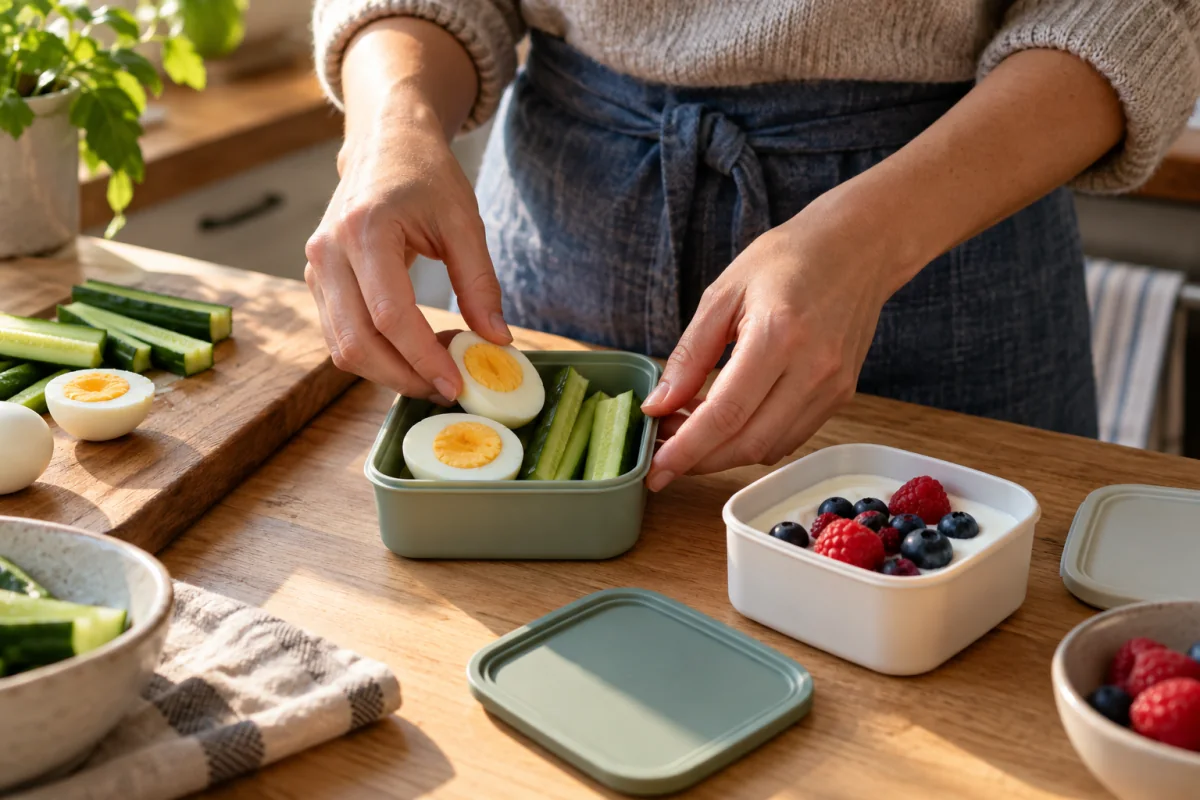
Batch-prep once a week: boil the eggs, portion nuts into 20 g bags, chop vegetables into a box, and cook a tray of paneer or tofu cubes. Snacks that take zero effort at 4 p.m. are the ones that get eaten instead of biscuits.
Common mistakes
- Eyeballing nuts and cheese. Weigh them for a week and you will probably halve the portion.
- Choosing fruit alone. It is healthy but low in protein and often leaves you hungry an hour later.
- Adding snacks on top of your intake instead of within it. Two 180-calorie snacks that were not in the plan cancel a 350-calorie deficit. If you are stuck despite “eating healthy”, the audit in why am I not losing weight in a calorie deficit usually finds it.
- Flavoured yogurts. A fruit-on-the-bottom pot can carry 18 g of sugar; add your own fruit to plain.
- Eating a protein snack because the clock says so, not because you are hungry.
Who this is not for
These snacks suit healthy adults managing weight. People with kidney disease may need to limit protein and should follow their care team’s guidance. Anyone with a history of disordered eating should be cautious with strict calorie ceilings and may do better with a dietitian. Children, pregnant women and older adults recovering from illness generally need more, not less, and should not be snacking to a 200-calorie rule. If your goal is wider than snacks, the meal structure in the Mediterranean diet grocery list is a sensible frame for the rest of the day.
Frequently asked questions
How much protein should a weight-loss snack have?
Aim for 10 to 20 grams. Below 10 g, most snacks stop being filling enough to justify the calories.
Are high-protein snacks good for weight loss?
They help, because protein is filling and preserves muscle in a deficit. They are not magic; the snack still has to fit within your daily calories.
What is the best time to eat a protein snack?
Whenever the gap between meals is longest, usually mid-afternoon. A small protein snack in the evening is fine if you are genuinely hungry and it is planned.
Can I replace a meal with a protein snack?
Occasionally, but a 150-calorie snack is not a meal. Regularly under-eating leads to evening hunger and overeating; a balanced meal of 400 to 600 calories is the better replacement.
Are protein bars healthy?
Some are. Look for at least 10 g protein per 100 calories and under 10 g sugar, and treat anything over 200 calories as a small meal rather than a snack.