
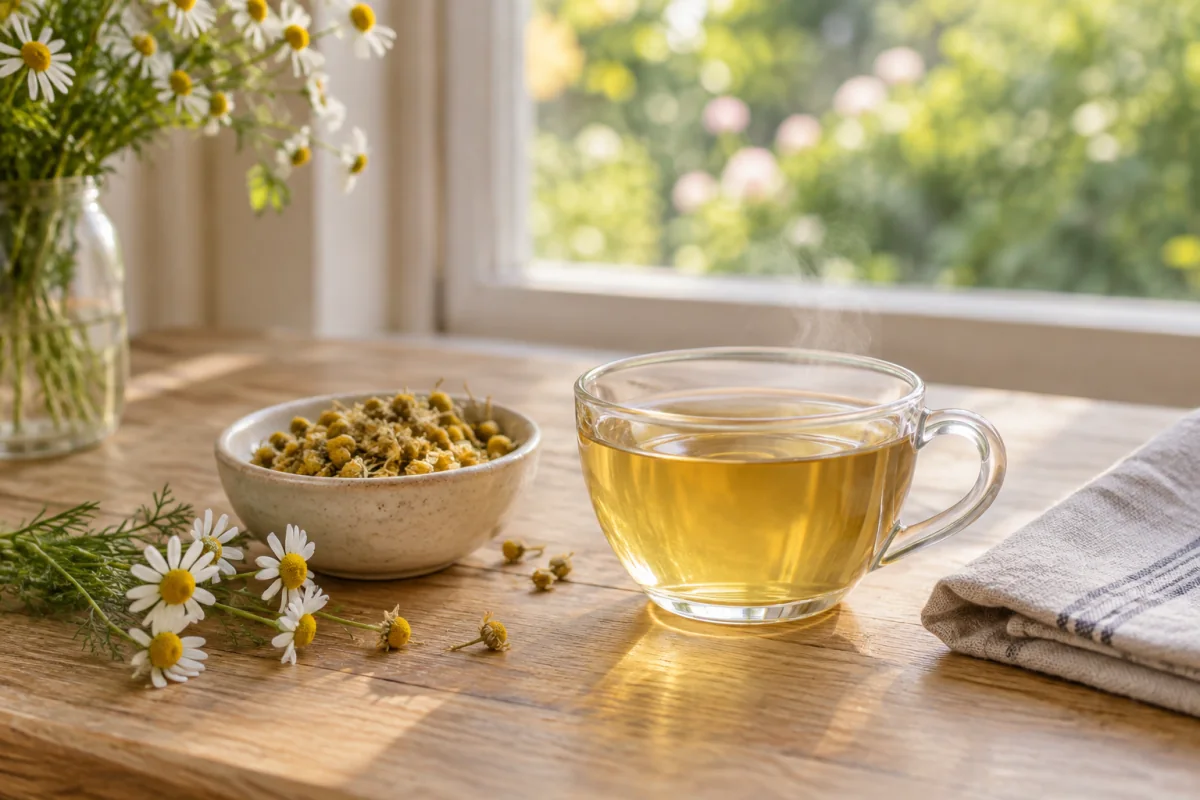
Chamomile, lemon balm, lavender and passionflower are the herbal teas with the most human research behind them for mild, everyday anxiety. None of them works like a prescription medicine, and none is a treatment for an anxiety disorder. What they can do is take the edge off a tense evening, support a wind-down routine and replace a caffeinated drink that was making things worse. The sections that follow set out what the studies actually found for each tea, how to brew it so the useful compounds survive, and who should skip them.
- Chamomile has the strongest evidence, mostly from small trials in people with mild to moderate anxiety.
- Lemon balm and passionflower show modest calming effects in short studies; lavender tea is less studied than lavender oil capsules.
- Brewing matters: cover the cup and steep for 5 to 10 minutes, or you lose the volatile compounds you are drinking it for.
- Swapping an afternoon coffee for a herbal tea often helps more than the herb itself.
- Persistent anxiety, panic attacks or anxiety that affects work and relationships needs a doctor, not a tea.
Table of Contents
What “science-backed” means here
Most herbal tea studies are small, short and use standardised extracts in capsules rather than a cup of tea. A tea delivers a lower and less predictable dose. So when a study shows an effect from 500 mg of chamomile extract twice a day, a mug of chamomile tea is a gentler version of that, not the same thing. Keep that gap in mind whenever a headline says a tea “cures” anxiety.
Anxiety itself is common: the World Health Organization estimates that around 4 percent of people worldwide live with an anxiety disorder, and many more experience stress that never reaches that threshold. Herbal teas belong to the second group, as one small piece of a calmer routine.
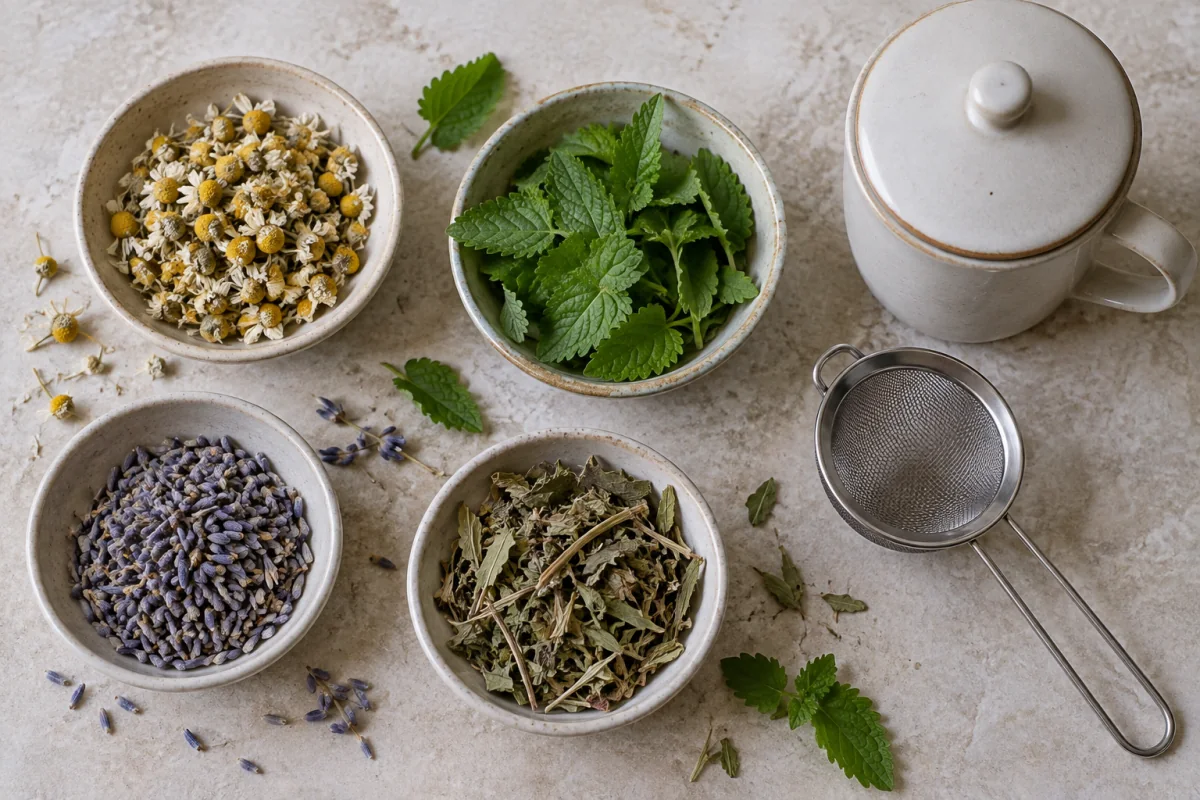
The four teas with real evidence
Chamomile
Chamomile (Matricaria chamomilla) is the best-studied option. A series of trials from the University of Pennsylvania found that a chamomile extract reduced symptoms in people with generalised anxiety disorder compared with placebo over eight weeks, and a longer follow-up suggested the benefit held for many participants. The National Center for Complementary and Integrative Health summarises the evidence as promising but limited, which is a fair reading.
Taste is gentle and apple-like. It pairs well with a slice of fresh ginger or a squeeze of lemon. It is also the tea most often recommended for sleep, so it fits naturally into an evening.
Lemon balm
Lemon balm (Melissa officinalis) is a mint-family herb with a bright citrus smell. Small trials have reported improved mood and reduced anxiety scores within hours of a single dose, and a few weeks-long studies suggest similar results. The effect is mild and the studies are short, but the herb is well tolerated and easy to grow on a windowsill. Fresh leaves make a much better tea than dried ones.
Passionflower
Passionflower (Passiflora incarnata) has been compared with a low dose of a benzodiazepine in one older trial and performed similarly for anxiety scores with less next-day grogginess. That is one small study, so treat it as a hint rather than proof. Passionflower has a grassy, slightly bitter taste and is usually blended with chamomile or mint. It can make some people drowsy, so keep it for evenings.
Lavender
Most lavender research uses an oil capsule (silexan) rather than tea, and those trials show meaningful reductions in anxiety symptoms. Lavender tea has far less data. It still earns a place because the smell alone has a measurable relaxing effect in several studies, and a warm cup delivers plenty of that. Use culinary lavender buds, not essential oil, and go easy: half a teaspoon per cup is enough, or it tastes like soap.
Honourable mentions
- Green tea: contains L-theanine, which promotes calm alertness, but also caffeine. Better for daytime than for bedtime.
- Tulsi (holy basil): widely used in India and studied mainly as a capsule for stress; tea evidence is thin but it is pleasant and caffeine-free.
- Peppermint and ginger: no direct anxiety evidence, but both settle the stomach, and a churning stomach is often part of feeling anxious.
How to brew for effect, not just flavour
The calming compounds in these herbs are mostly volatile oils and flavonoids. Both are lost to steam and to short steeping times. A tea bag dunked for 90 seconds in an open mug is mostly warm water.
- Use 1 to 2 teaspoons of dried herb, or a heaped tablespoon of fresh leaves, per 250 ml cup.
- Pour water that has just gone off the boil, around 90 to 95 degrees Celsius.
- Cover the cup with a saucer or lid. This keeps the aromatic oils in the liquid instead of the air.
- Steep 5 to 10 minutes. Chamomile and lavender turn bitter past 10; lemon balm and passionflower are more forgiving.
- Strain, and sweeten lightly if you want to. A teaspoon of honey is fine; a sugar hit before bed is not the goal.
Loose herbs from a spice shop or pharmacy are usually fresher and cheaper than boxed bags. Store them in a sealed jar away from light and use within six months.
| Tea | Best time | Steep | Flavour notes |
|---|---|---|---|
| Chamomile | Evening | 5 to 8 min, covered | Mild, apple, honeyed |
| Lemon balm | Any time | 8 to 10 min | Bright, lemony, mint-like |
| Passionflower | Evening | 8 to 10 min | Grassy, mildly bitter |
| Lavender | Evening | 4 to 5 min | Floral; use sparingly |
| Green tea | Morning or early afternoon | 2 to 3 min at 80 degrees | Grassy, savoury |
Building a routine that actually calms you
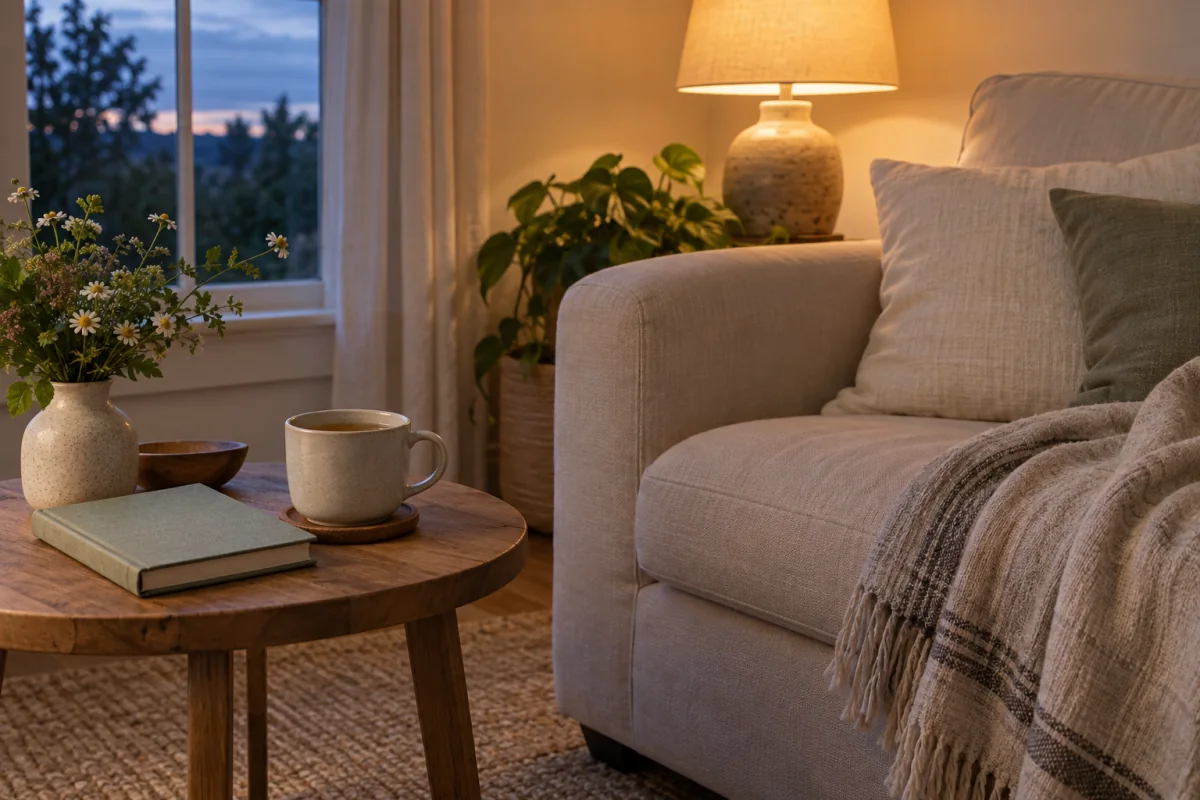
The tea is the anchor; the routine does most of the work. A hot drink, a fixed time, no screen and a few slow breaths together tell the nervous system that the day is over. Try this for two weeks before judging whether the tea “works”:
- Pick one tea and one time, ideally 60 to 90 minutes before bed.
- Make it a screen-free ten minutes. Sit somewhere other than the bed.
- While it steeps, do a short breathing exercise. Our five-minute breathing exercises are designed for exactly this gap.
- Drink it slowly. Notice the warmth and the smell. That is the part the studies on lavender aroma are measuring.
- Keep the same cup and the same spot. Familiarity is part of the signal.
If your evenings are dominated by racing thoughts rather than physical tension, pair the tea with the techniques in how to stop overthinking at night. If you are drinking tea to fall asleep specifically, the foods in foods that help you sleep work alongside it.
Cutting caffeine: the swap that helps most
Caffeine has a half-life of roughly five to six hours in most adults. A 4 p.m. coffee is still partly active at 10 p.m., and caffeine sensitivity is higher in many people who already feel anxious. Replacing the afternoon coffee or energy drink with lemon balm or tulsi tea is often the single most noticeable change people make. It is also the reason herbal teas get credit they may not fully deserve; the removal of caffeine is doing part of the job.
Do it gradually if you drink a lot. Dropping from four coffees to zero overnight brings headaches and irritability that can feel like more anxiety, not less. Cut one cup every three or four days.
Safety, interactions and who this is not for
Herbal does not mean harmless. The main cautions:
- Pregnancy and breastfeeding: safety data are thin for passionflower and lavender in particular. Ask a doctor or midwife before making any of these a daily habit.
- Ragweed and daisy allergies: chamomile belongs to the same plant family and can trigger reactions.
- Blood thinners: chamomile contains coumarin-like compounds. Check with your doctor if you take warfarin.
- Sedatives, sleep medicines or anti-anxiety medication: passionflower and chamomile may add to their drowsiness.
- Thyroid conditions: lemon balm has been reported to affect thyroid hormone activity in laboratory studies. Speak to your doctor if you have a thyroid diagnosis.
- Surgery: stop chamomile and passionflower at least two weeks before a scheduled operation because of possible effects on bleeding and anaesthesia.
- Children: stick to weak chamomile or mint, and never give honey to a child under one year.
The NHS guidance on generalised anxiety disorder lists the signs that anxiety has moved beyond everyday stress: worry most days for six months or more, trouble sleeping, difficulty concentrating, physical symptoms such as a racing heart. If that describes you, tea is a comfort, not a plan. Talking therapies and, where needed, medication have far stronger evidence, and a doctor can help you find the right route.
Common mistakes
- Expecting a drug-like effect from one cup. The studies that show benefit used daily intake over weeks.
- Buying expensive “anxiety blends” with a dozen herbs in tiny amounts. Single herbs in proper quantities work better and cost less.
- Drinking herbal tea and keeping the late coffee. The two cancel out.
- Steeping uncovered for a minute. You are pouring the useful part into the air.
- Using tea to avoid a conversation with a doctor about anxiety that is affecting your life.
Frequently asked questions
Which herbal tea is best for anxiety?
Chamomile has the most consistent research and is the sensible first choice. Lemon balm is a good daytime alternative because it does not cause drowsiness in most people.
How many cups a day are safe?
For healthy adults, one to three cups a day of chamomile, lemon balm or lavender is generally considered safe. Passionflower is best kept to one evening cup because of its sedative effect. If you fall into any of the caution groups above, check first.
How long does herbal tea take to work?
The warmth and ritual can feel calming within minutes. Any effect from the herb itself builds over one to four weeks of regular use, according to the trials that showed a benefit.
Can I drink these teas with anxiety medication?
Occasionally, usually yes; daily, ask your prescriber. Chamomile and passionflower can add to the drowsiness of some medicines, and lemon balm may interact with thyroid treatment.
Do tea bags work as well as loose herbs?
They can, if the bag is fresh and you steep it covered for the full time. Loose herbs tend to be fresher and let you control the amount, which is why most people find them stronger.