
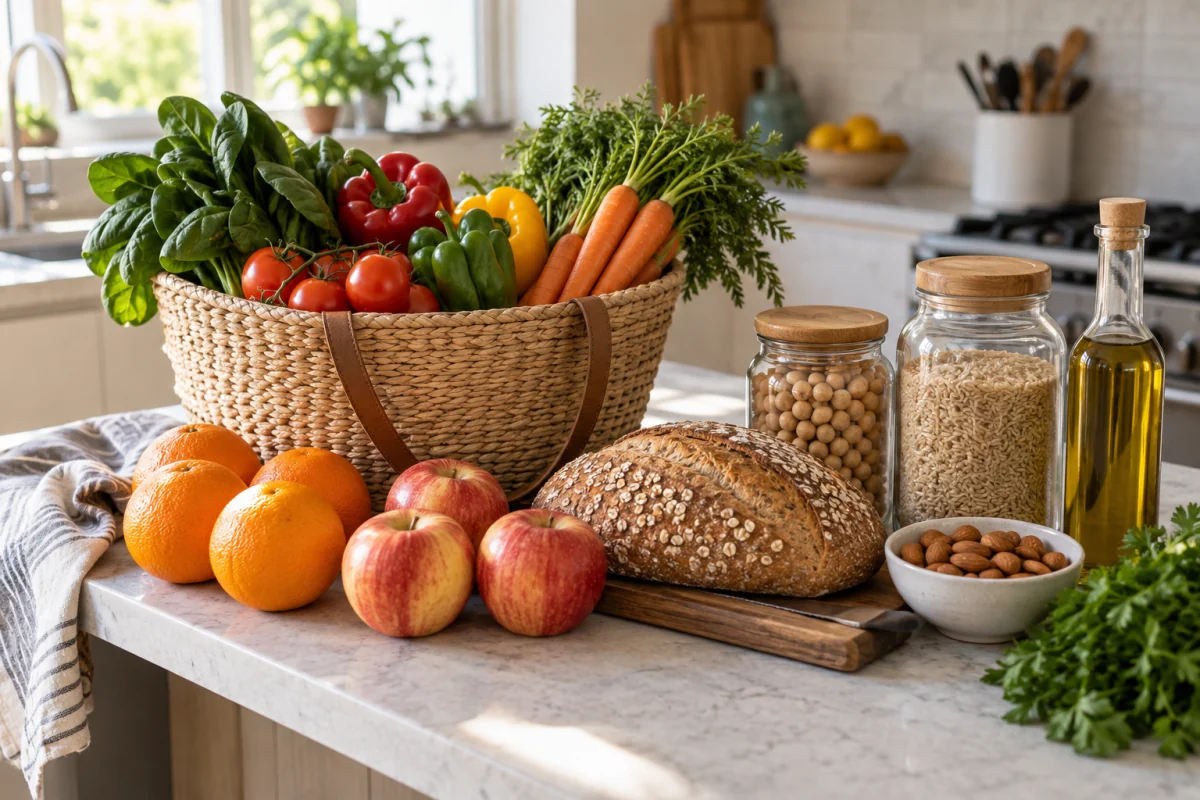
A Mediterranean diet grocery list for a beginner comes down to about 40 staples: extra virgin olive oil, a range of vegetables and fruit, wholegrains, legumes, nuts, fish a couple of times a week, some dairy, and herbs and spices for flavour. You do not need imported ingredients or a large budget, and most of the list is already sold in any Indian or international supermarket. This guide gives you the full list by section, a first-week shopping basket for one or two people, budget swaps, and the mistakes that make beginners give up in the first fortnight.
Table of Contents
Key takeaways
- The Mediterranean diet is a pattern, not a rulebook: mostly plants, olive oil as the main fat, fish and legumes for protein, small amounts of dairy and meat.
- It is one of the best-studied eating patterns for heart health, and it is flexible enough to work with Indian, Middle Eastern or East Asian cooking.
- Around 40 staples cover almost every meal. Buy the pantry items once, then top up fresh food weekly.
- Budget versions use tinned fish, frozen vegetables, dried legumes and seasonal produce.
- It is a healthy pattern for most adults, but people with kidney disease, on blood thinners, or with specific allergies should check with a doctor first.
What makes a diet Mediterranean
The pattern is based on the traditional eating habits of Greece, southern Italy and coastal Spain in the mid-twentieth century. The Mayo Clinic summarises the core features: daily vegetables, fruit, wholegrains and olive oil; weekly fish, poultry, beans and eggs; moderate dairy; and red meat and sweets only occasionally. Meals are built around plants, and fat comes mainly from olive oil, nuts and fish rather than butter or ghee.
Large trials have linked this pattern to lower rates of heart attack and stroke, better blood sugar control and modest weight loss when portions are sensible. It is also consistent with the WHO healthy diet recommendations on fruit and vegetable intake, fat quality and free sugars. It is not a weight-loss diet by design, though many people lose weight because it displaces processed food.
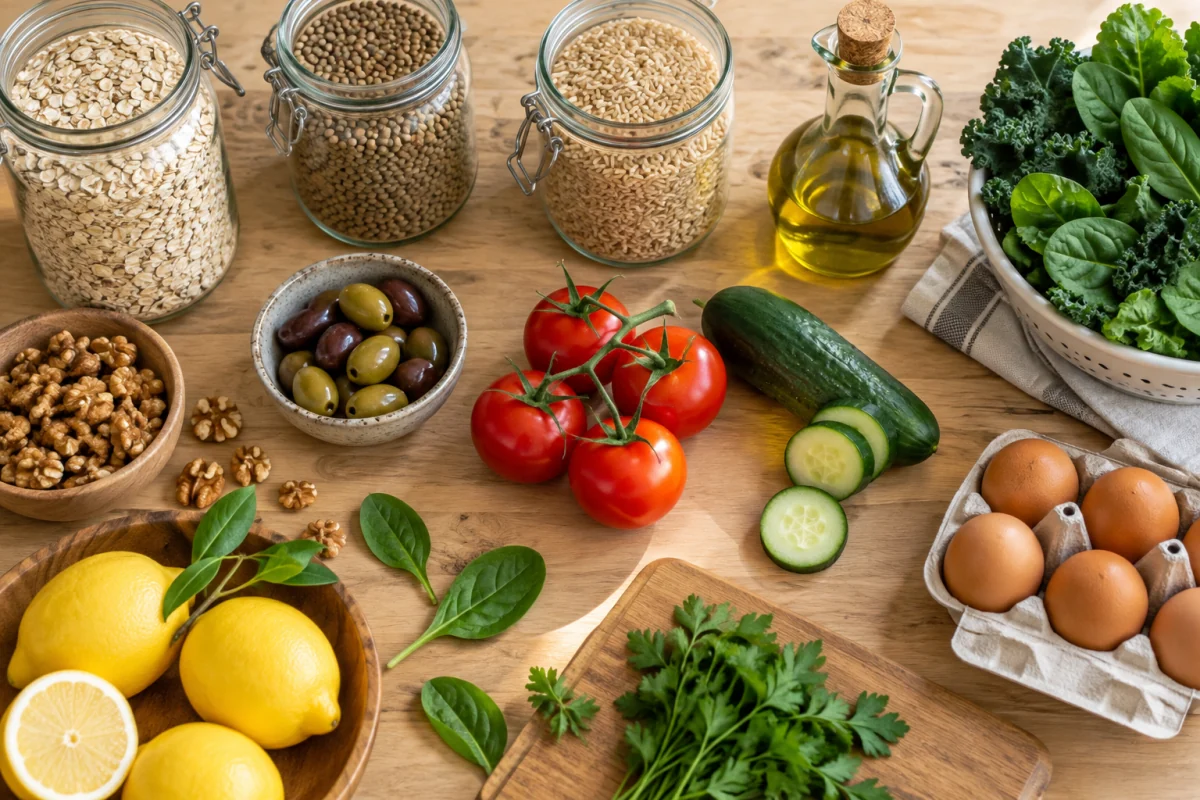
The full grocery list by section
Oils, vinegars and fats
- Extra virgin olive oil (the single most important item; buy a mid-range bottle and keep it away from heat and light)
- A cheaper olive oil or cold-pressed groundnut or mustard oil for high-heat cooking
- Red wine vinegar or apple cider vinegar
- Lemons
Vegetables (aim for 5 to 7 types a week)
- Tomatoes, onions, garlic
- Leafy greens: spinach, methi, rocket, lettuce
- Capsicum, brinjal, courgette, cucumber
- Carrots, beetroot, cauliflower, broccoli
- Frozen peas and frozen mixed vegetables for backup
Fruit (2 to 3 types a week)
- Apples, oranges, bananas
- Seasonal: guava, papaya, grapes, pomegranate, berries when affordable
- Dried figs or dates for a sweet finish
Wholegrains
- Rolled oats
- Brown rice or barley
- Whole wheat atta or wholegrain bread
- Wholewheat pasta or couscous
- Millets such as jowar, bajra or ragi (a good local substitute for bulgur)
Legumes
- Chickpeas (dried or tinned)
- Lentils: masoor, moong, brown lentils
- Kidney beans or white beans
- Hummus, or tahini and a tin of chickpeas to make your own
Fish, poultry and eggs
- Tinned sardines, mackerel or tuna in olive oil
- Fresh or frozen oily fish: salmon, mackerel, rohu, sardines, hilsa
- Chicken thighs or breast for one or two meals a week
- Eggs
Dairy
- Plain yoghurt or curd, ideally full-fat Greek style
- Feta or paneer
- A small block of hard cheese for grating
Nuts and seeds
- Almonds, walnuts
- Pumpkin seeds, sunflower seeds, sesame seeds
- Unsalted peanuts (a budget stand-in)
Herbs, spices and pantry
- Fresh: coriander, mint, parsley, basil if available
- Dried: oregano, thyme, cumin, chilli flakes, black pepper, cinnamon
- Tinned tomatoes, tomato paste
- Olives, capers
- Garlic, ginger
A first-week basket for two people
| Category | Buy this week | Rough cost band |
|---|---|---|
| Fresh vegetables | Tomatoes 1 kg, onions 1 kg, garlic, spinach 2 bunches, capsicum 4, cucumber 3, carrots 500 g | Low |
| Fruit | Apples 6, bananas 6, one seasonal fruit | Low |
| Grains | Oats 1 kg, brown rice 1 kg, wholegrain bread or atta | Low |
| Legumes | Chickpeas 500 g, masoor dal 500 g, one tin of beans | Low |
| Protein | 2 tins sardines, 6 to 12 eggs, 500 g fish or chicken | Medium |
| Dairy | Plain yoghurt 1 kg, feta or paneer 200 g | Medium |
| Nuts and oil | Almonds or walnuts 250 g, extra virgin olive oil 500 ml (one-off) | Medium to high |
The olive oil and nuts are the expensive lines. Everything else costs about the same as a standard weekly shop, and often less, because meat drops from daily to twice a week.
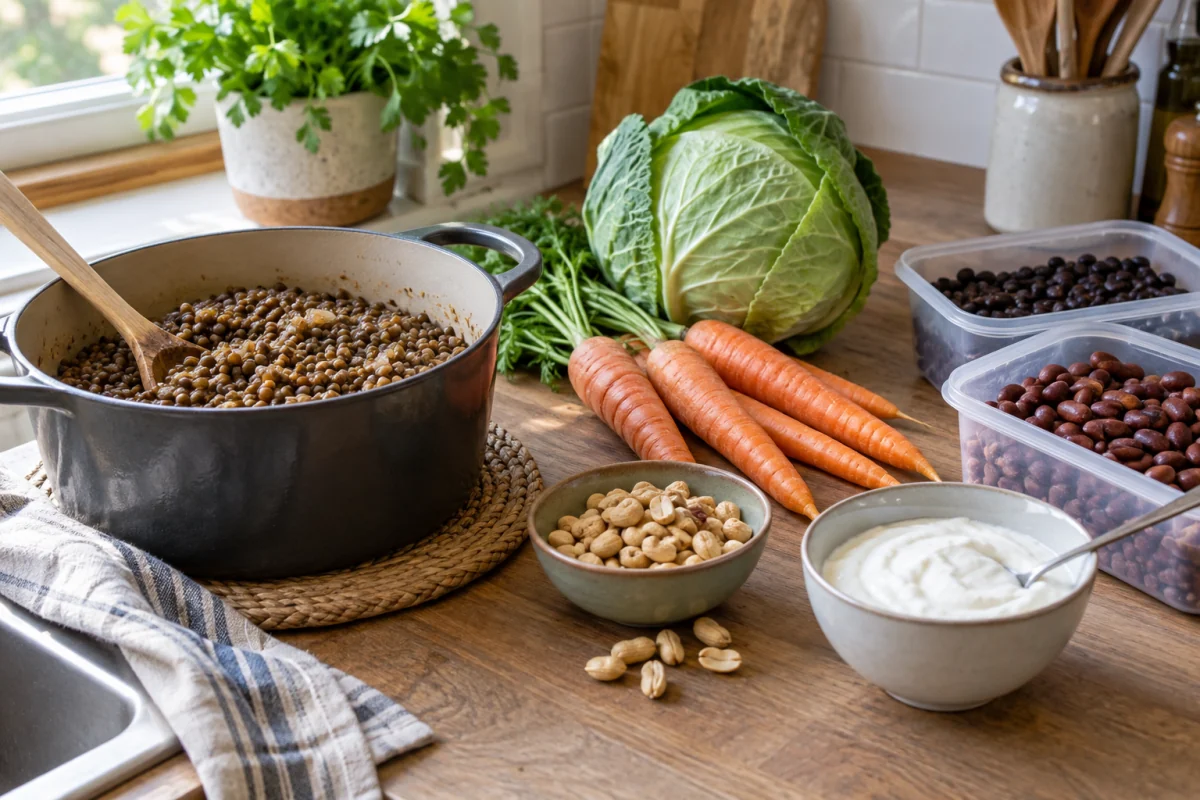
Budget swaps that keep the pattern intact
- Salmon is not required. Sardines, mackerel and local oily fish deliver the same omega-3 fats for a fraction of the price. Tinned fish is fine.
- Frozen vegetables count. They are frozen within hours of harvest and often hold more nutrients than fresh produce that has travelled for a week.
- Dried legumes over tinned. Soak overnight, cook a large batch, freeze in portions.
- Peanuts and sunflower seeds stand in for almonds and pine nuts.
- Curd for Greek yoghurt. Strain plain curd through a cloth for an hour and you have the same thing.
- Seasonal fruit only. Berries out of season cost five times more and add nothing that an orange does not.
What a typical day looks like
- Breakfast: Oats cooked with milk or water, topped with chopped apple, a few walnuts and cinnamon. Or wholegrain toast with olive oil, tomato and a boiled egg. For more ideas, see our anti-inflammatory breakfasts under 10 minutes.
- Lunch: A large salad of cucumber, tomato, onion, olives and feta with olive oil and lemon, plus a bowl of chickpeas or lentils and a piece of wholegrain bread.
- Snack: A handful of almonds, or yoghurt with fruit.
- Dinner: Grilled fish or chicken with roasted vegetables and brown rice, or a vegetable and bean stew with tomatoes, garlic and oregano.
- Drink: Water, tea, coffee. Wine is traditional but optional, and not recommended if you do not already drink.
Many Indian meals already fit with small changes: dal, sabzi, salad and roti is close to the template once the cooking fat is olive or mustard oil and the roti is whole wheat. Fish curry with brown rice and a cucumber raita is a Mediterranean-pattern meal by any reasonable definition.
Common beginner mistakes
- Buying everything at once. The list above is a reference, not a single shop. Buy the pantry items over two or three weeks.
- Drowning food in olive oil. It is healthy fat but still 120 calories a tablespoon. Two to four tablespoons a day is the usual range in the studies.
- Treating pasta and bread as unlimited. They are part of the pattern, but as a side to vegetables and legumes, not the centre of the plate.
- Skipping legumes. Beans and lentils are where much of the fibre and protein comes from. Without them, the diet drifts towards cheese and bread.
- Expecting fast weight loss. This is a long-term pattern. Weight tends to move slowly, and that is fine. If the scale is not moving at all after two months, our guide on why you are not losing weight covers the usual reasons.
- Adding more fibre than the gut can handle at once. Build up over two weeks and drink more water. Our list of foods that cause bloating explains which ones to introduce slowly.
Who should check with a doctor first
The Mediterranean pattern is safe and beneficial for most adults. Get individual advice before changing your diet if you have chronic kidney disease, because the potassium and phosphorus in legumes, nuts and some vegetables may need limiting. If you take warfarin or another vitamin K-sensitive blood thinner, a sudden jump in leafy greens can affect your dose. People with nut, fish or shellfish allergies should substitute rather than skip protein sources. And anyone with a history of disordered eating should approach any structured diet with support. The NHS Eat Well pages give a balanced baseline that works alongside the Mediterranean approach.
Frequently asked questions
Is the Mediterranean diet expensive?
It does not have to be. Legumes, oats, seasonal vegetables, eggs and tinned fish are among the cheapest foods available. Olive oil and nuts are the main costs, and both go a long way.
Can vegetarians follow it?
Yes. Replace fish and poultry with extra legumes, eggs, paneer, tofu and nuts. Walnuts, flaxseed and chia provide plant omega-3 fats.
Do I have to drink wine?
No. Wine is part of the traditional pattern but the health benefits come from the food. Health bodies do not recommend starting to drink for health reasons.
How much olive oil per day?
Most studies use roughly two to four tablespoons a day in total, used for cooking and dressing. It replaces butter and ghee rather than adding to them.
Can I follow it with Indian food?
Easily. Dal, vegetable sabzi, whole wheat roti, curd, fish curry and salads fit the pattern. The main changes are the cooking fat, less fried food and fewer refined grains.