

The fastest way to fix your sleep schedule after a run of night shifts is to control light and timing, not to force yourself to stay awake for 24 hours. On your last night, take a short anchor sleep in the morning, get outdoors in the afternoon, and go to bed at a normal hour that night. Most people are back on a daytime rhythm within two to three days using the plan below. This guide explains why night work scrambles your body clock, gives a day-by-day reset, and covers the mistakes that stretch recovery into a week.
- Light is the main signal your body clock uses. Bright light after a shift keeps you on night time; darkness lets you switch.
- A 90-minute to 3-hour “anchor” nap after the last shift beats both a full day of sleep and no sleep at all.
- Shift bedtime and wake time in steps of one to two hours rather than one big jump.
- Caffeine after the midpoint of your last shift will delay the reset.
- If sleep problems persist between shift blocks, shift work sleep disorder is a real diagnosis worth discussing with a doctor.
Table of Contents
Why night shifts wreck your rhythm
Your circadian rhythm is a roughly 24-hour cycle run by a cluster of cells in the brain that takes its main cue from light reaching the eyes. Light in the morning tells it to start the day; darkness in the evening lets melatonin rise and sleep pressure take over. Night work asks the body to do the opposite, but the clock does not simply flip. It drifts slowly, usually by an hour or so a day, and daylight on the drive home pushes it straight back.
The result is that most night workers never fully adapt. They sleep in short, light stretches during the day, run a sleep debt through the block, then face a second adjustment when they return to days. The National Heart, Lung, and Blood Institute classifies persistent problems from this pattern as shift work disorder, which is more than tiredness: it includes insomnia when you try to sleep and excessive sleepiness when you need to be awake.

The day-by-day reset plan
This plan assumes a typical block ending with a night shift that finishes around 7 a.m., and that you want to be on a normal daytime schedule as soon as possible. Adjust the clock times to your own shift.
The last night shift
- Stop caffeine by the midpoint of the shift, around 2 a.m. for a 10 p.m. to 7 a.m. shift.
- Eat your main meal early in the shift and keep the second half light. Heavy food at 5 a.m. sits badly and delays sleep later.
- On the way home, wear dark sunglasses. The goal is to keep the morning light from telling your clock that the day has started.
Day 1: the anchor nap
- Go to bed as soon as you get home, in a fully dark room. Set an alarm for 90 minutes to 3 hours; the longer end if you are badly sleep-deprived.
- Get up at the alarm even if you feel rough. Sleeping until 3 p.m. means you will not fall asleep that night.
- Go outside for at least 30 minutes in the early afternoon. Daylight, even overcast, is far brighter than indoor lighting and is the strongest reset signal available.
- Have a normal lunch and dinner at normal times. Meal timing is a secondary clock signal.
- Keep moving through the late afternoon: a walk, chores, errands. Avoid the sofa after 4 p.m.
- Go to bed between 10 p.m. and 11 p.m. Expect lighter sleep than usual; that is normal.
Day 2
- Wake at a fixed time, ideally 7 a.m. Open curtains immediately or step outside.
- No naps longer than 20 minutes, and none after 3 p.m.
- Exercise in the morning or early afternoon if you can. Late-evening hard exercise can delay sleep.
- Bed at the same time as day 1.
Day 3
Most people feel roughly normal by now. Hold the same wake time, get morning light, and keep caffeine to before 2 p.m. If you are still waking at 3 a.m. with no reason, the causes and fixes in why do I wake up at 3 a.m. apply here too.
| Day | Sleep | Light | Caffeine |
|---|---|---|---|
| Last shift | None until home | Sunglasses on the way home | None after shift midpoint |
| Day 1 | Anchor nap 90 min to 3 h, bed 10 to 11 p.m. | Outdoors early afternoon | One cup before noon if needed |
| Day 2 | Wake 7 a.m., no long naps | Morning daylight | Before 2 p.m. only |
| Day 3 | Same times | Morning daylight | Before 2 p.m. only |
Making daytime sleep work during the block
Recovery after a block is easier if you did not run a huge deficit during it. Daytime sleep is lighter and shorter for biological reasons, so it has to be protected deliberately.
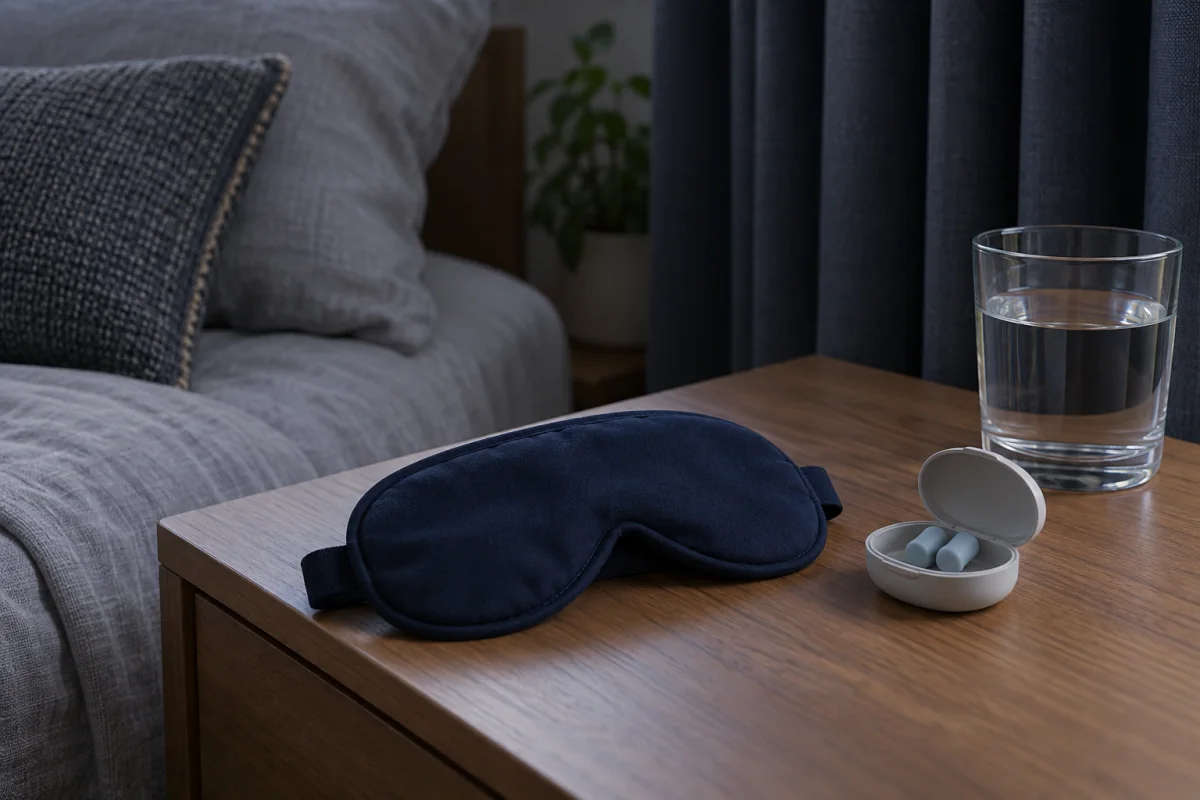
- Darkness: blackout blinds or a good eye mask. A bedroom that is dim is not dark enough; the clock responds to small amounts of light.
- Noise: earplugs or a fan for steady background sound. Tell the household your sleep hours and put the phone on do-not-disturb.
- Temperature: keep the room cool. Daytime rooms warm up, and a warm room shortens sleep.
- Consistency: sleep at the same time after every shift. Two blocks of sleep (say 8 a.m. to 12 p.m. and 5 p.m. to 8 p.m.) work for some people better than one long stretch.
- Pre-shift nap: a 20 to 60 minute nap before the shift improves alertness and reduces the debt.
A short pre-sleep routine helps signal that it is bedtime even though it is daylight. The technique in the military sleep method is popular with shift workers because it gives the mind a task instead of a clock to stare at.
Light: the lever that matters most
Everything else in this guide is secondary to light. The rules are simple:
- During a night shift, bright workplace light helps you stay alert and slowly shifts the clock later.
- After the shift, block light on the way home and sleep in darkness.
- When switching back to days, seek bright light in the morning and early afternoon, and dim the evening: lamps rather than overheads, screens on night mode or off an hour before bed.
Light therapy lamps (10,000 lux) can help people who cannot get outside, used for 20 to 30 minutes at the time you want to be “morning”. They are not necessary for most people; a walk does the same job for free. Anyone with an eye condition or bipolar disorder should ask a doctor before using a lamp.
Food, exercise and caffeine timing
Caffeine has a half-life of about five to six hours. A coffee at 5 a.m. at the end of a shift is still active when you are trying to sleep at 9 a.m. On reset days, keep caffeine to the morning. Alcohol makes you fall asleep faster but fragments the second half of the night and worsens the grogginess you are trying to clear; skip it on reset days.
Eat meals at daytime times from day 1, even if you are not hungry at lunch. The gut has its own clock that follows meal timing, and lining it up with light speeds the overall shift. Keep dinner moderate and at least two to three hours before bed.
Exercise during the day helps deepen sleep that night. A 30-minute walk in daylight does double duty as a light signal. Save intense sessions for when you are back on schedule, since a hard workout on top of sleep debt raises injury risk.
Common mistakes
- Staying up all day after the last shift “to be tired at night”. You will be, but you will also have been awake for 24 hours or more, which impairs judgement about as much as being over the drink-drive limit. See what happens when you do not sleep for the details.
- Sleeping the whole of day 1. It feels like recovery, but it locks you into night mode for another day.
- Reaching for sleeping tablets. Over-the-counter antihistamines cause next-day grogginess; prescription options are a conversation for a doctor, not a routine fix.
- Using melatonin without a plan. It has some evidence for shift work when taken before daytime sleep, but timing is everything and it is not regulated as a medicine in every country. Discuss it with a pharmacist or doctor rather than guessing.
- Lying in bed awake. If you have not slept after 20 to 30 minutes, get up, sit in dim light and go back when sleepy.
Who this is not for
This plan suits people who work occasional blocks of nights or rotate between shifts. Permanent night workers may be better off keeping a consistent night schedule on days off, at least partially, rather than fully flipping every weekend. People with diagnosed insomnia, sleep apnoea, depression or bipolar disorder should talk to their doctor before making large timing changes, because sleep shifts can affect mood and treatment. The NHS sleep and tiredness guidance is a sensible starting point for anyone whose tiredness does not lift within a week of returning to days.
Frequently asked questions
How long does it take to fix a sleep schedule after night shift?
With deliberate light and timing control, two to three days for most people. Without it, the body clock drifts by roughly an hour a day, so a full reset can take a week or more.
Should I stay awake all day after my last night shift?
No. Take a 90-minute to 3-hour anchor nap in the morning, get outside in the afternoon, and go to bed at a normal time. Staying awake for 24 hours makes the day miserable and unsafe without speeding the reset.
Is melatonin a good idea for night shift recovery?
It can help some shift workers fall asleep during the day, but timing and dose need care and it interacts with some medicines. Ask a pharmacist or doctor rather than self-prescribing.
What should I eat after a night shift before sleeping?
Something small and light, such as yogurt, a banana or toast. A heavy meal delays sleep and can cause reflux when you lie down. The foods that support sleep are listed in foods that help you sleep better.
Can I fix my schedule if I do rotating shifts every week?
Yes, but the same tools apply each rotation: light control, an anchor nap on the switch day and fixed meal times. Ask for forward rotations (days, then evenings, then nights) where possible, since the clock adjusts more easily to later times than earlier ones.