
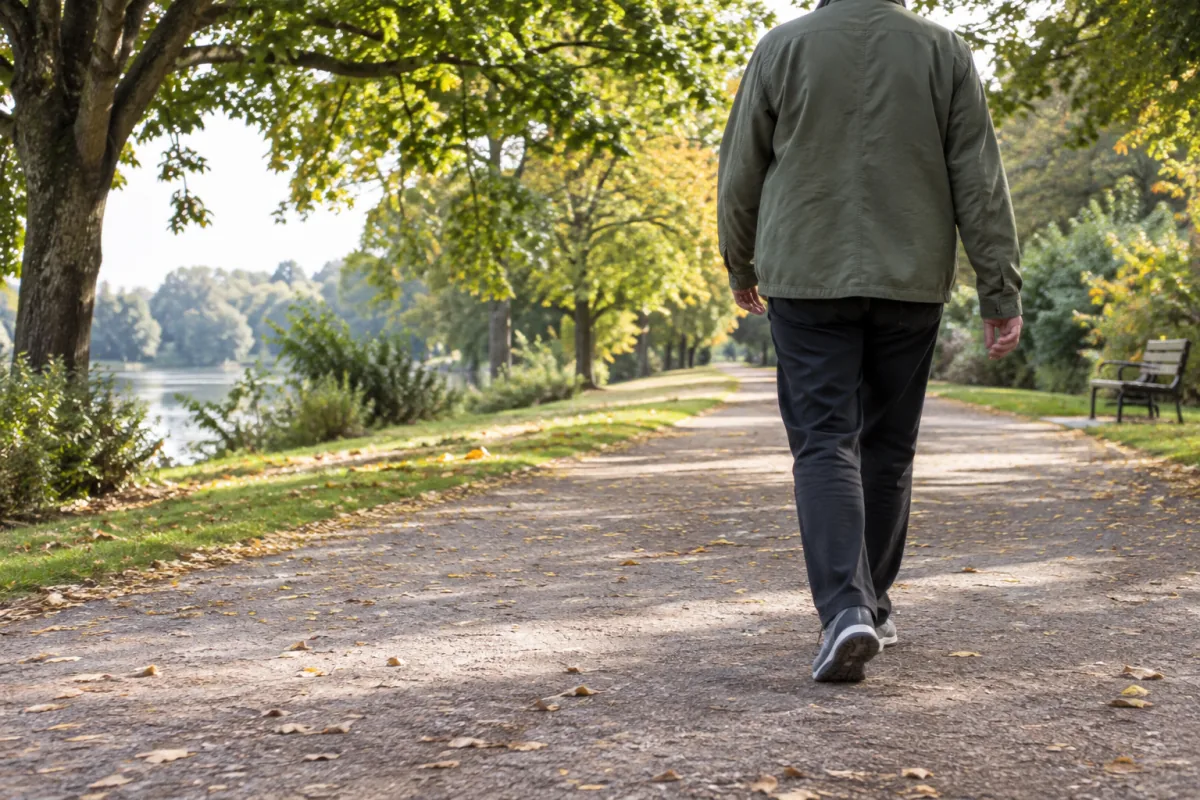
Active recovery means moving on your rest day at an effort so easy you could hold a full conversation the whole time: a 30-minute walk, 20 minutes of mobility work, an easy spin on a bike. The point is to increase blood flow to tired muscles and keep joints moving without adding any training stress. Done right, it leaves you feeling better than when you started. Done wrong, it is just another workout, and that is the most common way people sabotage their week. This post covers when to choose active recovery over full rest, eight options with times and intensities, how many rest days you need at each training level, and the signs that your body is asking for a day on the sofa instead.
Table of Contents
- 1 Key takeaways
- 2 Active recovery vs full rest: the difference and when each applies
- 3 Eight active recovery options, with time and intensity
- 4 How many rest days per week you need
- 5 Sleep, food and hydration on rest days
- 6 Signs you need full rest instead
- 7 Common mistakes: “recovery” sessions that are workouts
Key takeaways
- Active recovery is movement at 30 to 50 percent of your usual effort, for 20 to 45 minutes. If you are breathing hard, it is not recovery.
- Beginners need two to three full rest days a week. Experienced lifters and runners can replace one or two of them with active recovery.
- Walking, easy cycling, swimming, mobility work and gentle yoga are the best options. Foam rolling helps how soreness feels, less so how fast it heals.
- Sleep and food do more for recovery than any session. Do not cut calories on rest days.
- Soreness past 72 hours, poor sleep, a raised resting heart rate or a bad mood for no reason are signs you need full rest, not a light workout.
Active recovery vs full rest: the difference and when each applies
Full rest means no structured exercise. You still walk to the shop and climb stairs, but you do not put on training clothes. Active recovery means a deliberate, short, easy session that is planned as recovery. Both are valid. The question is which one your body needs on a given day.
Active recovery suits the day after a hard but normal session, when you are a bit stiff and would rather move than sit. Light movement raises blood flow through the muscles, which appears to help clear the by-products of hard exercise and reduces the feeling of stiffness. It also keeps your routine intact, which matters for people who find that one day off becomes four.
Full rest suits the day after something genuinely heavy (a long race, a max-effort lifting session, the first workout in months), any day you are unwell, and any point where the signs in the section below start to show. The World Health Organization guidelines of 150 to 300 minutes of moderate activity a week already assume that activity is spread out with easier days between the harder ones. Rest is part of the programme, not a break from it.
The rule of thumb: if you are unsure, take full rest. Nobody has ever lost fitness from one extra easy day. Plenty of people have picked up an injury by training through fatigue.

Eight active recovery options, with time and intensity
Intensity below is given as a share of the effort you would put into a normal session, and as a talk test. All of these should end with you feeling looser than when you started.
| Option | Time | Intensity | Best for |
|---|---|---|---|
| Brisk-to-easy walk | 30 to 45 min | Full sentences, no sweat needed | Everyone; after leg-heavy sessions |
| Mobility routine | 15 to 25 min | Slow, controlled joint circles and holds | Lifters, desk workers, anyone stiff |
| Easy cycling | 20 to 40 min | Light gear, high cadence, flat route | Runners; sore knees that dislike impact |
| Swimming or pool walking | 20 to 30 min | Gentle laps or walking in chest-deep water | Joint pain, heavy legs after long runs |
| Gentle yoga | 20 to 40 min | Restorative or slow flow, no power classes | Tight hips and back, stress |
| Foam rolling plus stretching | 10 to 20 min | Slow passes, 30 to 60 s per muscle | Muscle soreness, pre-bed wind-down |
| Light bodyweight circuit | 15 to 20 min | Squats, hinges, push-ups at half reps and half pace | People who cannot sit still |
| Recreational play | 30 to 60 min | Frisbee, a kickabout, an easy hike | Families, anyone bored of the gym |
Two of these deserve a note. Yoga is only recovery if the class is gentle; a heated power class is a workout and should be counted as one. If you are new to it, a short morning yoga for people who are not flexible routine is the right level. The bodyweight circuit is the riskiest option on the list, because the temptation to add reps is strong. Set a timer, do half of what you could, and stop.
For desk workers, the mobility option doubles as posture maintenance. Ten minutes of daily stretches aimed at the hips, upper back and chest undoes some of what sitting does, and it costs almost nothing in recovery terms.
How many rest days per week you need
The number depends on how hard and how often you train, and how long you have been doing it. New exercisers recover more slowly per session because their tissues are still adapting to the load, even though the sessions themselves look lighter.
| Training level | Hard sessions per week | Full rest days | Active recovery days |
|---|---|---|---|
| Beginner (first 3 months) | 2 to 3 | 2 to 3 | 1 to 2 |
| Intermediate (3 months to 2 years) | 3 to 4 | 1 to 2 | 1 to 2 |
| Experienced (2 years or more) | 4 to 5 | 1 | 1 to 2 |
| Anyone over 50 or returning from injury | 2 to 3 | 2 | 2 |
A simple weekly template for an intermediate: hard, easy, hard, active recovery, hard, easy, full rest. “Easy” here means a lighter training session, and “active recovery” means one of the eight options above. The NHS activity guidelines recommend strength work on at least two days a week; leave at least 48 hours between hard sessions for the same muscle group, and use the days between for other muscles or for recovery.
Age changes the numbers more than people like to admit. Recovery from hard sessions slows through the forties and fifties, and the fix is more recovery days, not less training intensity.

Sleep, food and hydration on rest days
Muscle repair happens mostly while you sleep. Growth hormone release peaks in deep sleep, and protein synthesis in muscle continues for 24 to 48 hours after a session. Cutting sleep short on a rest day throws away the part of recovery that no walk can replace. Aim for the same seven to nine hours you would want on a training night, and if you want to see what the deficit costs, our piece on what happens when you do not sleep spells it out.
Food is where many people undercut themselves. It feels logical to eat less on a day you are not training, but the repair from yesterday’s session is happening today and it needs protein and energy. Keep protein at your normal level, spread across three or four meals. Carbohydrates can come down a little if your rest day is genuinely sedentary, but not to the point of feeling flat. Skipping meals on rest days is one of the more common reasons the next hard session feels terrible.
Hydration is unglamorous and matters. Mild dehydration increases perceived soreness and lowers the quality of the next session. Drink to thirst, keep urine pale, and add a little extra on hot days or after a sweaty session the day before.
Signs you need full rest instead
Active recovery has a failure mode: people use it to avoid resting. These signs mean the right choice today is nothing at all, and if several persist for more than a week, a conversation with a doctor is sensible.
- Soreness that is still significant 72 hours after the session, or that is getting worse rather than better.
- Poor sleep for two or more nights, or waking unrefreshed despite enough hours.
- A resting heart rate on waking that is 5 to 10 beats above your usual figure. Check it before you get out of bed for a fair comparison.
- Low mood, irritability or a lack of motivation to train that is out of character.
- Persistent heavy legs, a drop in performance in easy sessions, or a niggle that has not settled.
- Any sign of illness. A sore throat, a cold or a raised temperature means rest, and a fever means no training at all until it has cleared for at least 48 hours.
Sharp pain, swelling around a joint, pain that wakes you at night or numbness are not overtraining signs; they are injury signs, and they need assessment rather than rest and hope.
Common mistakes: “recovery” sessions that are workouts
The classic mistake is the recovery run that turns into a tempo run because the legs felt good after ten minutes. The second is the recovery yoga class that turns out to be 60 minutes of chaturangas. The third is the “light” gym session that adds two exercises and a set of heavy carries. All three leave you with four hard days in a week instead of three and no recovery at all.
A few guardrails help. Decide the session before you start, including the end time, and stop at that time however good you feel. Leave the watch at home or turn off the pace display. Do recovery sessions with someone slower than you. Keep the talk test honest: if you cannot speak in full sentences, slow down or stop.
The other mistake is turning recovery into a project. Ice baths, compression boots, massage guns and supplements all have modest or mixed evidence, and none of them makes up for poor sleep or too little food. A 2019 review of foam rolling, for example, found it reduces how sore muscles feel and slightly improves flexibility, with little effect on actual performance recovery. That is worth ten minutes; it is not worth building a routine around.
Who this is not for: if you are new to exercise and still working out how often to train, do not add recovery sessions yet. Two or three full rest days a week and consistent sleep will do more for you than anything on the list above. Add active recovery once you are training four or more days a week and know what your normal soreness feels like. And if you have a heart condition, are pregnant or are returning from surgery, ask your doctor what “easy” should mean for you before assuming.
Frequently asked questions
Is walking an active recovery?
Yes, and for most people it is the best one. A 30 to 45 minute walk at a conversational pace raises blood flow, loosens the hips and back, and adds no training stress. It works after leg days, long runs and heavy lifting alike.
Can I do active recovery every day?
You can move every day, and a daily walk is a good habit. But at least one day a week should be free of anything that feels like a session, and beginners need two or three. If every day has a planned workout, even an easy one, you have removed the rest from your programme.
Does foam rolling help soreness?
It reduces how sore the muscle feels for a while afterwards and can improve range of motion in the short term. It does not appear to speed the underlying repair. Ten minutes on tight areas is reasonable; rolling for 40 minutes or pressing until it hurts is not.
Should I eat less on rest days?
Not by much. Muscle repair from yesterday is happening today and needs protein and energy. Keep protein steady and let carbohydrates fall slightly if you are sedentary. If your goal is fat loss, a small, consistent daily deficit beats big cuts on rest days, which mostly make the next training session worse.