
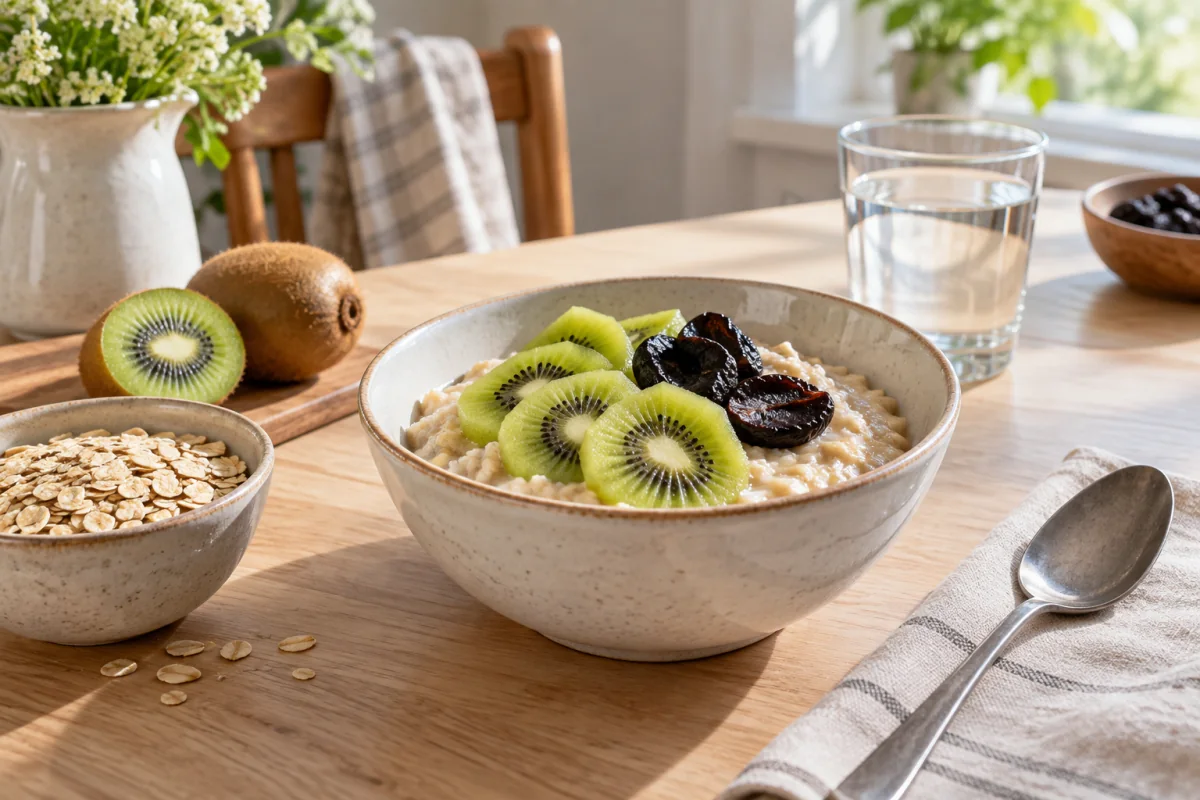
If you are constipated right now, the things most likely to help within a day or two are a glass of water with a cup of coffee in the morning, a serving of prunes or two kiwis, a 20-minute walk, and sitting on the toilet with your knees above your hips at the same time each day. Over the following weeks, the fix is a slow climb to about 30 g of fibre a day with enough fluid to go with it. This post covers what actually counts as constipation, which foods have evidence behind them, the habits that keep things moving, the causes people overlook, and the warning signs that mean you need a doctor rather than a remedy.
Table of Contents
Key takeaways
- Constipation means fewer than three bowel movements a week, or stools that are hard, dry and difficult to pass. Missing one day is not constipation.
- Fibre works, but only if you add it gradually and drink more at the same time. A sudden jump causes gas and can make things worse.
- Prunes, kiwifruit, ground flaxseed and oats have the best evidence of any single foods.
- Walking, a footstool under your feet and a fixed toilet time after breakfast are free and underrated.
- Blood in the stool, unexplained weight loss, severe pain or constipation lasting more than two weeks need a doctor.
What counts as constipation
People worry about frequency more than they need to. Anywhere from three times a day to three times a week is within the normal range. The National Institute of Diabetes and Digestive and Kidney Diseases defines constipation as fewer than three bowel movements a week, or stools that are hard, dry or lumpy, painful to pass, or leave you feeling that you have not finished. The NHS adds a useful test: if you have not had a bowel movement at least three times in the past week, or you are straining most of the time, that counts.
Two more things worth knowing. Constipation that comes and goes is common and usually explained by diet, travel, stress or a change in routine. Constipation that starts suddenly in someone over 50, or that arrives with other new symptoms, is a different matter and belongs in the red-flag section below.
Fibre: how much, which foods, and why adding it too fast backfires
Fibre is the part of plant food your gut cannot digest. Some of it (soluble fibre in oats, beans, apples) forms a gel that softens stool. Some of it (insoluble fibre in wheat bran, vegetable skins, nuts) adds bulk and speeds transit. Most adults eat around half the recommended amount, which is roughly 25 g a day for women and 30 to 38 g for men, according to the Mayo Clinic’s high-fibre food chart.
The mistake almost everyone makes is going from 12 g to 30 g in a day. The bacteria in your colon ferment the extra fibre and produce gas faster than your gut can adapt. The result is bloating, cramps and sometimes worse constipation, because bulk without fluid turns into a plug. Add about 5 g every three or four days instead, and drink an extra glass of water for each step up.
| Food | Serving | Fibre (approx.) |
|---|---|---|
| Lentils, cooked | 1 cup | 15 g |
| Black beans, cooked | 1 cup | 15 g |
| Chia seeds | 2 tablespoons | 10 g |
| Raspberries | 1 cup | 8 g |
| Pear with skin | 1 medium | 5.5 g |
| Oats, dry | half cup | 4 g |
| Broccoli, cooked | 1 cup | 5 g |
| Whole-wheat bread | 1 slice | 2 g |
A practical target: one high-fibre item at each meal. Oats or a pear at breakfast, beans or lentils at lunch, two vegetables at dinner. That alone gets most people close to 25 g. If you have already looked at the worst foods for gut health, you will notice the overlap: the foods that crowd out fibre (white bread, pastries, processed meat, ready meals) are the same ones that slow the gut down.
Fluids and the coffee question
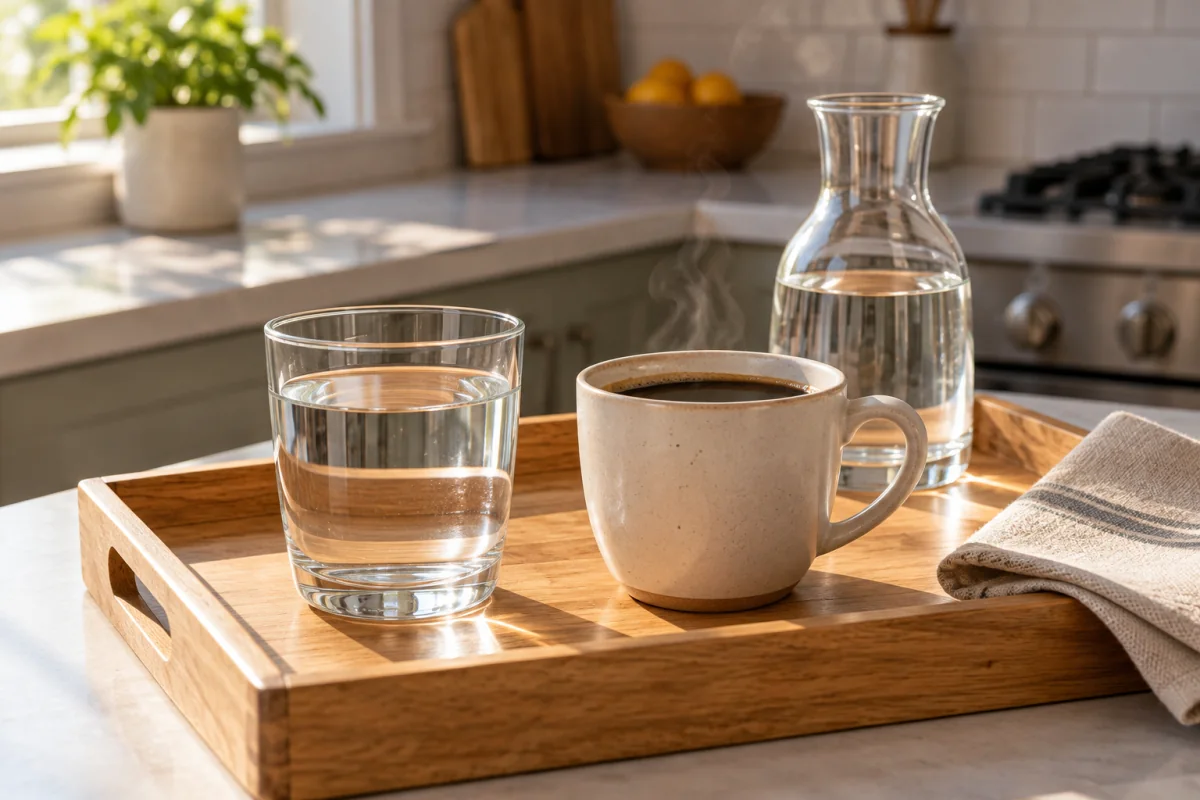
Fibre pulls water into the stool. If there is not enough water available, fibre makes stool bulkier but not softer. Most people do fine on six to eight glasses of fluid a day plus whatever comes in food; our guide to how much water you need gives a way to estimate your own figure. Warm drinks first thing in the morning have a mild extra effect because a full stomach triggers the colon to contract.
Coffee genuinely helps many people. Both caffeinated and decaf coffee stimulate colon activity within about half an hour of drinking, and the effect is stronger than that of warm water alone. It is not a reason to drink four cups, and it does not work for everyone, but a morning coffee followed by ten unhurried minutes near a toilet is a reasonable first experiment. If coffee gives you loose stools or reflux, warm water with lemon gets some of the same stomach-stretch effect.
Foods with evidence: prunes, kiwi, flax and oats
Prunes
Dried plums are the best-studied food for constipation. They contain fibre plus sorbitol, a sugar alcohol that draws water into the bowel. In trials, around 50 g a day (roughly five or six prunes) improved stool frequency and consistency as well as or better than psyllium fibre supplements. Start with three, since sorbitol can cause gas, and increase over a week.
Kiwifruit
Two green kiwis a day, eaten with the flesh scooped out or skin on, improved bowel frequency and reduced straining in several randomised trials, including one that compared kiwi directly with prunes and psyllium and found kiwi caused the least bloating. Kiwis are worth trying first if prunes make you gassy.
Ground flaxseed
One to two tablespoons of ground flaxseed stirred into porridge or yoghurt adds around 4 to 6 g of mostly soluble fibre and some oil, which softens stool. Whole flaxseed passes through undigested, so buy it ground or grind it yourself. Drink a glass of water with it.
Oats
Oats contain beta-glucan, a soluble fibre that holds water and keeps stool soft. A bowl of porridge is one of the easier ways to get 4 g of fibre before you leave the house, and it takes toppings (berries, chia, flax) that push the total past 10 g.
Foods that people expect to help but have weaker evidence include apple juice, bananas and yoghurt. Ripe bananas are fine; unripe ones contain resistant starch that can slow things down. Yoghurt and other probiotic foods help some people and do nothing for others, and the strain matters more than the label.
Movement, toilet posture and a regular time
Walking works on constipation two ways. Physical activity increases the muscle contractions that move stool along the colon, and the upright, rhythmic motion of walking seems to help more than seated exercise. Twenty to thirty minutes a day is enough. This is one reason constipation is so common after surgery, during illness and on long flights.
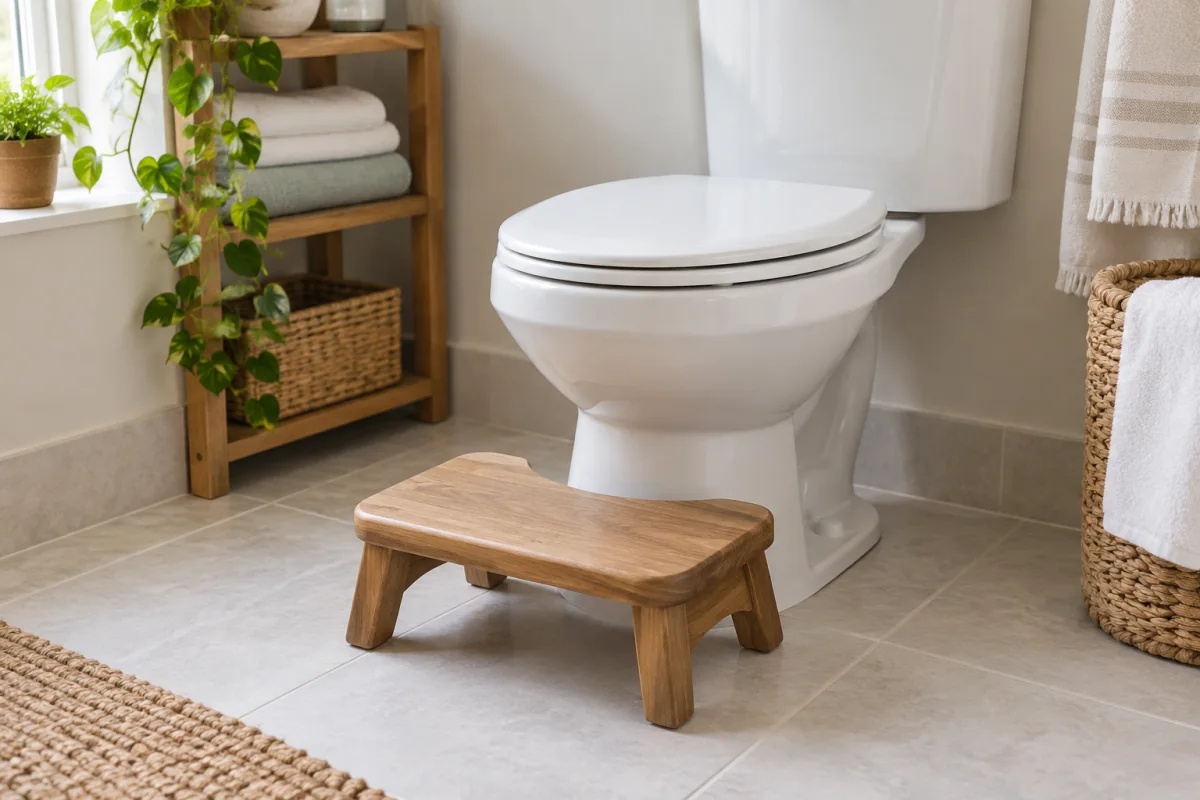
Posture matters more than most people realise. Sitting upright on a modern toilet puts a kink in the last part of the rectum. Raising your feet on a small stool or a stack of books so that your knees sit above your hips straightens that angle and reduces straining. Lean forward slightly with your elbows on your knees. Do not strain hard or hold your breath; that raises pressure in the pelvic floor and contributes to haemorrhoids.
Finally, the colon is a creature of habit. Its strongest wave of activity comes 20 to 40 minutes after breakfast. If you sit on the toilet at that time every day, even for five minutes, and never ignore an urge when it comes, most people find a rhythm within two weeks. Ignoring the urge because you are busy trains the rectum to stop signalling.
Common causes people miss
- Medication. Opioid painkillers, some antidepressants, antacids containing aluminium or calcium, some blood pressure tablets and antihistamines all slow the gut. Do not stop a prescribed medicine; ask the prescriber or a pharmacist whether there is an alternative or a plan for the side effect.
- Iron tablets. Constipation is the most common reason people stop taking iron. Taking it with food, on alternate days or in a different form can help; again, ask whoever prescribed it.
- Travel. Time zones, disrupted meals, dehydration on planes and unfamiliar toilets all interrupt routine. Pack prunes or dried figs, walk on arrival and keep your usual toilet time in the new time zone.
- Not eating enough. If you are dieting hard, there is simply less to pass and less to stimulate the colon. Very low-calorie eating and skipped breakfasts are a frequent hidden cause.
- Holding it in. Shared bathrooms, long shifts and anxiety about public toilets all lead to ignored urges, which over months dulls the reflex.
- Low thyroid function, pregnancy, diabetes and some neurological conditions. These need a medical conversation rather than a food change.
Bloating often travels with constipation, and the two feed each other. If gas is your main complaint, our list of foods that cause bloating pairs well with this one.
Red flags: when to see a doctor
Home remedies are for ordinary, occasional constipation. Book an appointment, and do not wait for the remedies to work, if you notice any of the following:
- Blood in or on the stool, or on the paper, especially dark or mixed-in blood.
- Constipation lasting more than two weeks despite changes to diet, fluids and activity.
- Unexplained weight loss, ongoing tiredness or loss of appetite.
- Severe abdominal pain, vomiting or a swollen, hard belly.
- Constipation alternating with diarrhoea, or a persistent change in bowel habit in anyone over 50.
- Thin, pencil-shaped stools that continue for more than a few days.
- A new episode in a child, an older adult who has never had it, or during pregnancy.
Over-the-counter laxatives have their place for short-term relief, and a pharmacist can help you choose between a bulk-forming, osmotic or stimulant type. They are not a long-term answer without medical advice, and regular use of stimulant laxatives can make the bowel less responsive. This post is general information, not a diagnosis, and it does not replace a conversation with your doctor.
Frequently asked questions
How long is too long without a bowel movement?
Three days without a bowel movement is uncomfortable but usually not dangerous if you feel otherwise well. Fewer than three a week for several weeks meets the definition of chronic constipation. A week with no movement, or any gap with pain, vomiting or a swollen belly, needs a doctor.
Does drinking more water really help?
It helps if you are not drinking enough, and it is essential once you increase fibre. Drinking well beyond your needs does not soften stool further; the excess goes to your bladder. Pale yellow urine is a good sign that you are in the right range.
Are prunes or prune juice better?
Whole prunes, because they keep their fibre. Prune juice still contains sorbitol and does work for many people, and it is easier for children and older adults to take. A small glass, around 120 ml, is a reasonable starting amount.
Can stress cause constipation?
Yes. The gut and brain share signalling pathways, and stress hormones slow digestion in some people and speed it up in others. Stress also changes behaviour: skipped meals, less walking, ignored urges, more caffeine. Treating the routine usually helps even before the stress itself eases.