
A common rule of thumb for water intake is about 30 to 35 ml per kilogram of body weight per day, which works out to roughly 2.1 to 2.5 litres for a 70 kg adult from all fluids, including tea, coffee and the water in food. That is a starting point, not a prescription. Heat, exercise, pregnancy, illness and some medical conditions change the number considerably, and the most reliable guide for a healthy adult is still thirst plus the colour of your urine. This article gives you a weight-based calculator table, the adjustments that matter, the signs of drinking too little and too much, and when fluid intake is a medical question.
Table of Contents
Key takeaways
- Starting estimate: 30 to 35 ml per kg of body weight per day, from all drinks and food combined.
- About 20 percent of your fluid comes from food, so the amount you need to drink is lower than the total.
- Add 400 to 800 ml for every hour of sweaty exercise, and more in hot, humid weather.
- Pale yellow urine most of the day means you are drinking enough. Dark yellow means drink more. Clear all day means you may be overdoing it.
- People with heart failure, kidney disease or on fluid-restricting medication should follow their doctor’s target, not a formula.
Where the weight-based rule comes from
Official bodies give total daily fluid recommendations rather than weight formulas. The Mayo Clinic cites the US National Academies figures of about 3.7 litres a day for men and 2.7 litres for women from all sources, including food. The NHS Eatwell Guide suggests 6 to 8 glasses of fluid a day, around 1.2 to 1.6 litres of drinks, on top of the water in food. In India, the ICMR-NIN dietary guidelines recommend adults take around 8 or more glasses, with more in hot conditions.
The per-kilogram rule is a way of scaling those population averages to your body. A 50 kg person and a 100 kg person do not need the same amount. Clinicians use 30 to 35 ml per kg as a working estimate for healthy adults, and that is what the table below is built on.
Water intake by body weight
Total daily fluid from all sources. To get the amount you should drink, subtract roughly 20 percent for water in food, more if you eat a lot of fruit, vegetables, soup or dal.
| Body weight | Total fluid at 30 ml/kg | Total fluid at 35 ml/kg | Roughly to drink (minus food) |
|---|---|---|---|
| 45 kg | 1.35 L | 1.6 L | 1.1 to 1.3 L |
| 50 kg | 1.5 L | 1.75 L | 1.2 to 1.4 L |
| 60 kg | 1.8 L | 2.1 L | 1.4 to 1.7 L |
| 70 kg | 2.1 L | 2.45 L | 1.7 to 2.0 L |
| 80 kg | 2.4 L | 2.8 L | 1.9 to 2.2 L |
| 90 kg | 2.7 L | 3.15 L | 2.2 to 2.5 L |
| 100 kg | 3.0 L | 3.5 L | 2.4 to 2.8 L |
| 110 kg | 3.3 L | 3.85 L | 2.6 to 3.1 L |
A glass is about 250 ml, so a 70 kg adult drinking 1.7 to 2.0 litres is having seven or eight glasses. That includes tea and coffee. Caffeinated drinks in normal amounts count towards your total; the mild diuretic effect is smaller than the fluid they provide.
When to adjust the number
Exercise
Sweat losses vary from about 0.5 to 2 litres an hour depending on intensity, heat and the individual. A practical approach: drink 400 to 800 ml for each hour of moderate exercise, and weigh yourself before and after a long session. Each kilogram lost is roughly a litre of fluid to replace over the next few hours. For sessions over 90 minutes or in heat, some electrolytes help. A pinch of salt and a squeeze of lemon in water, or diluted oral rehydration solution, works.
Heat and humidity
In a hot Indian summer or a humid monsoon, sweat losses rise even at rest. Add 500 ml to 1 litre on hot days, more if you work outdoors. Thirst lags behind need in heat, so drink on a schedule rather than waiting.
Pregnancy and breastfeeding
Pregnancy adds roughly 300 ml a day to requirements. Breastfeeding adds about 700 ml, because milk is mostly water. Drinking a glass each time you feed is a simple habit.
Illness
Fever, vomiting and diarrhoea all increase losses. Oral rehydration solution is better than plain water when losses are significant, because it replaces salts. Seek medical help if you cannot keep fluids down or if a child or elderly person shows signs of dehydration.
Age
Thirst sensitivity declines with age, so older adults often under-drink. Setting reminders or keeping a marked bottle helps. Children need proportionally more per kilogram than adults; ask a paediatrician for guidance rather than scaling the adult table.
The urine colour check
For a healthy adult, urine colour is a better real-time guide than any formula.
- Pale straw to light yellow: well hydrated. Keep doing what you are doing.
- Yellow: normal, could drink a little more.
- Dark yellow or amber: drink more now.
- Brown, red or cloudy: see a doctor, especially if it persists. This is not a hydration signal.
- Completely clear, all day: you may be drinking more than you need. Not dangerous in itself, but a sign to ease off.
First morning urine is usually darker and does not count. B vitamins, beetroot and some medications also change the colour, so judge over the day rather than a single visit.
Signs of drinking too little
- Thirst, dry mouth, dark urine, passing urine fewer than four times a day.
- Headache, particularly in the afternoon, and difficulty concentrating.
- Tiredness, dizziness on standing, muscle cramps.
- Constipation. Fibre needs water to move.
Mild dehydration is common in people who sit at a desk and forget to drink, and it is often mistaken for hunger or fatigue. If you get regular afternoon headaches, a glass of water at 2pm is a cheap first experiment.
Signs of drinking too much
Overdrinking is rarer but real. Drinking several litres in a short time, particularly during endurance events or under the belief that more is always better, can dilute blood sodium. Early signs are nausea, headache, confusion and swelling in the hands and feet. This is a medical emergency in severe cases. For everyday purposes, drinking more than about 1 litre an hour for several hours is the level to avoid, and clear urine all day plus frequent night-time trips to the toilet suggest you can cut back.
Practical ways to hit your number
- Front-load the morning. A glass on waking and one with breakfast puts you 500 ml in before the day gets busy.
- Use a marked bottle. A 1-litre bottle refilled twice is easier to track than counting glasses.
- Anchor to habits. A glass before each meal, one after each bathroom visit, one when you sit down at your desk.
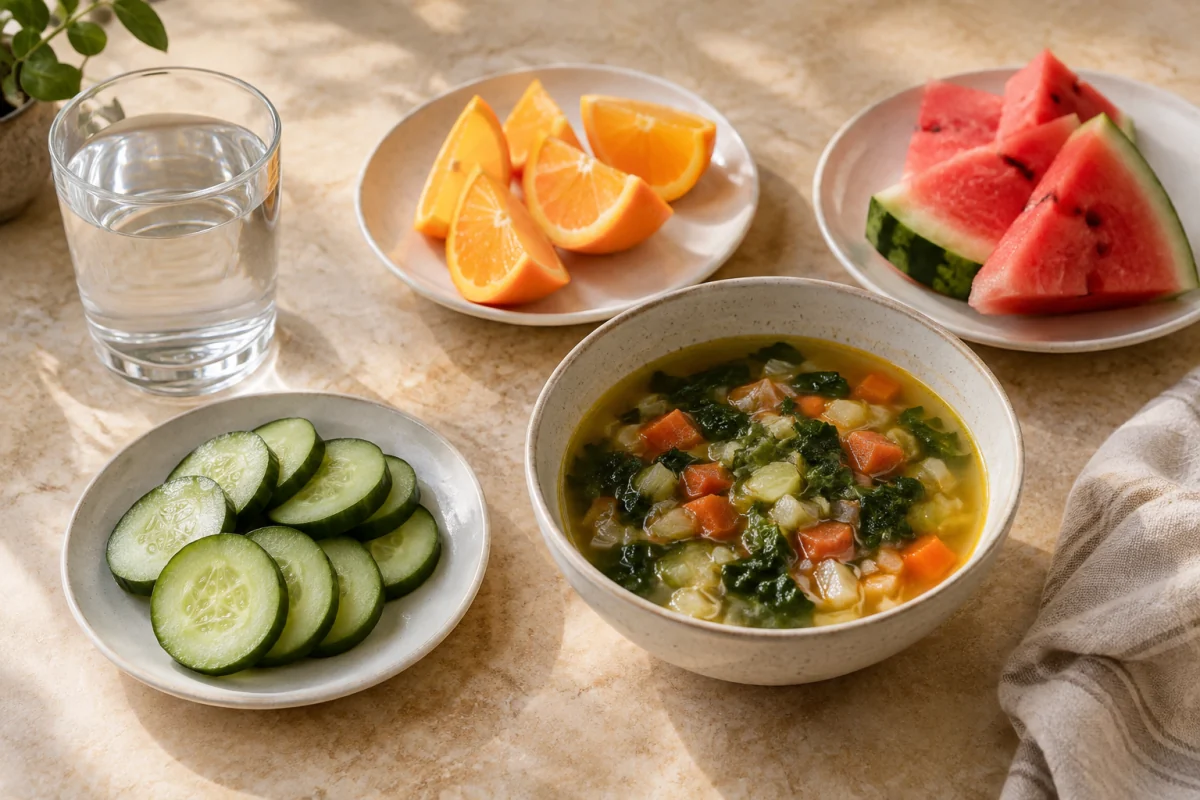
- Eat your water. Cucumber, watermelon, oranges, tomatoes, curd, soups and dal all contribute. A vegetable-rich diet, like the one in our Mediterranean grocery list, can supply a third of your fluid.
- Taper in the evening. Get most of your fluid in before 7pm so that a full bladder does not wake you. If you already wake in the night, our guide on why you wake at 3am covers the other causes.
Common mistakes
- Treating 8 glasses as a law. It is a rough average. A small, inactive person needs less; a large, active one needs more.
- Chasing a weight-loss effect. Water before meals can modestly reduce intake at that meal, but it does not burn fat. If the scale is stuck, our post on why you are not losing weight looks at the real reasons.
- Counting sugary drinks as hydration. They hydrate, but a 500 ml soft drink carries around 50 g of sugar. Water, tea and coffee are better vehicles.
- Ignoring salt after heavy sweating. Replacing litres of sweat with plain water alone can drop sodium. Add electrolytes for long, hot sessions.
- Drinking to clear urine. Pale yellow is the target, not clear.
Who should not use this formula
The 30 to 35 ml per kg estimate is for healthy adults. It does not apply to people with heart failure, chronic kidney disease, liver cirrhosis, or conditions treated with fluid restriction, where too much fluid causes harm. It also does not apply to people taking diuretics, lithium or certain other medications, to anyone with a history of low blood sodium, or to infants and young children. In all of these cases, follow the fluid target your doctor or dietitian gives you. If you have a medical condition and are unsure, ask before changing how much you drink.
Frequently asked questions
How much water should a 70 kg person drink a day?
About 2.1 to 2.5 litres of total fluid, of which roughly 1.7 to 2.0 litres comes from drinks and the rest from food. More on hot days or with exercise.
Does tea or coffee count towards water intake?
Yes. In normal amounts, up to around four cups a day, the fluid they provide outweighs the mild diuretic effect.
Is drinking 4 litres of water a day too much?
For a large, active person in hot weather, it may be appropriate. For a small, sedentary person it is more than needed. Spread over a day it is unlikely to be harmful in healthy adults, but there is no benefit to forcing it.
Can drinking more water help with weight loss?
Slightly, mainly by replacing sugary drinks and by making you feel fuller before meals. It is not a fat-burning strategy on its own.
How do I know if I am dehydrated?
Thirst, dark urine, headache, tiredness and passing urine fewer than four times a day are the usual signs. Urine colour is the quickest check.