
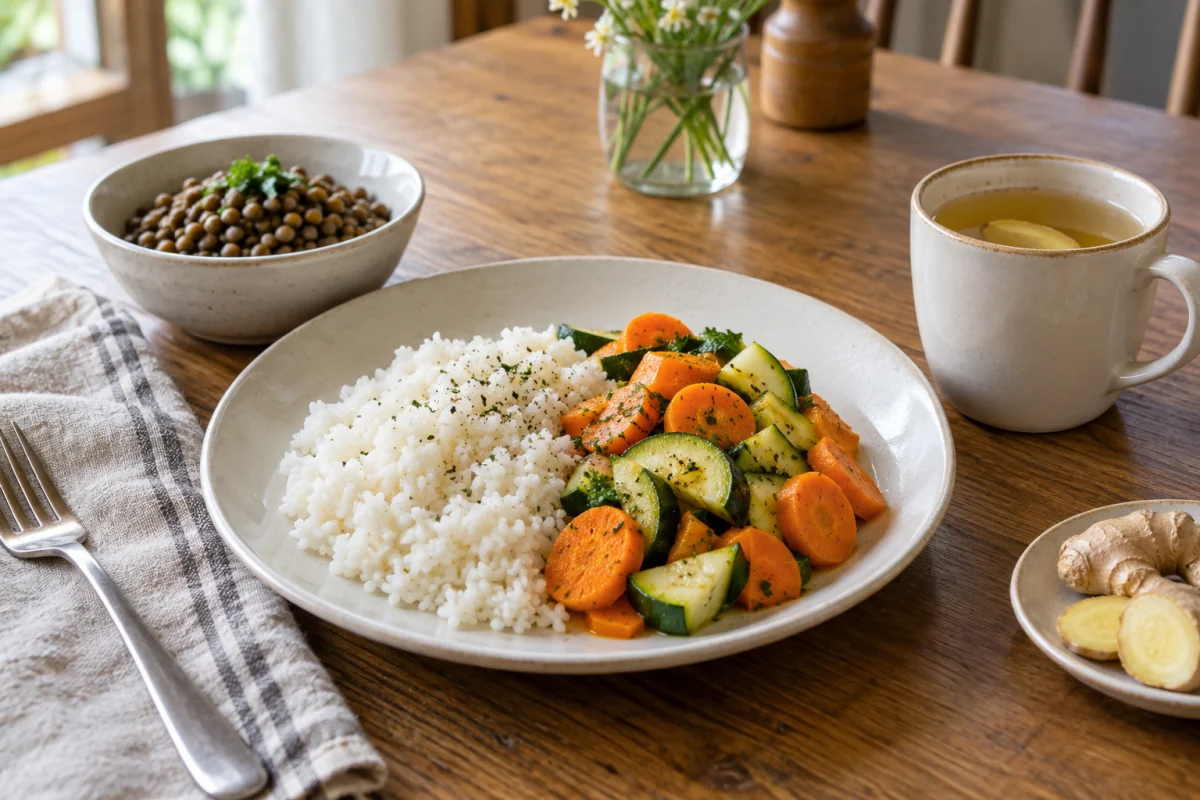
The foods that most often cause bloating are the ones that ferment in the large intestine: beans and lentils, onions and garlic, wheat, certain fruits, milk in people who are lactose intolerant, sugar alcohols in sugar-free products, and fizzy drinks. Most of them are healthy, so the goal is not to cut them out for good but to work out which ones affect you, how much you can tolerate, and how to prepare them so they cause less trouble. This guide lists the common culprits, the mechanism behind each, what to eat instead, and the signs that mean bloating needs a doctor rather than a food swap.
Table of Contents
- 1 Key takeaways
- 2 Why food makes you bloat
- 3 The common culprits and what to eat instead
- 3.1 1. Beans, lentils and chickpeas
- 3.2 2. Onions and garlic
- 3.3 3. Wheat in large amounts
- 3.4 4. Apples, pears, mango and watermelon
- 3.5 5. Milk and soft cheeses
- 3.6 6. Sugar-free sweets, gum and protein bars
- 3.7 7. Cauliflower, cabbage, broccoli and Brussels sprouts
- 3.8 8. Fizzy drinks and beer
- 3.9 9. Very salty meals
- 4 Trigger foods and swaps at a glance
- 5 How to find your own triggers in two weeks
- 6 Habits that reduce bloating regardless of food
- 7 Common mistakes
- 8 When bloating is not about food
Key takeaways
- Bloating is usually gas from bacteria fermenting carbohydrates that the small intestine did not absorb.
- The most common triggers are beans, onions, garlic, wheat, apples, milk, sugar-free sweeteners and carbonated drinks.
- Portion size and preparation matter more than the food itself. Soaked, well-cooked beans in small servings are tolerated by most people.
- A two-week food and symptom diary identifies your triggers better than cutting everything at once.
- Bloating with weight loss, blood in the stool, persistent pain or a change in bowel habit needs medical assessment.
Why food makes you bloat
Some carbohydrates are not fully broken down in the small intestine. They travel to the colon, where bacteria ferment them and release hydrogen, methane and carbon dioxide. Some of these carbohydrates also pull water into the gut. The combination of gas and fluid stretches the bowel, and that stretch is what you feel as bloating. People with a sensitive gut, including those with irritable bowel syndrome, feel the stretch more intensely at the same volume of gas.
The fermentable carbohydrates have a collective name, FODMAPs, which stands for fermentable oligosaccharides, disaccharides, monosaccharides and polyols. The NIDDK guide to gas in the digestive tract explains the process in more detail, and the NHS bloating page covers the everyday causes. Swallowed air from eating fast, chewing gum and fizzy drinks adds to the total.

The common culprits and what to eat instead
1. Beans, lentils and chickpeas
Why: They contain oligosaccharides that humans cannot digest. Bacteria can. Instead: Do not give them up. Soak dried beans overnight and discard the water, cook thoroughly, and start with a quarter cup per meal. Tinned lentils and chickpeas, rinsed well, are lower in the fermentable sugars. Moong dal is generally the gentlest.
2. Onions and garlic
Why: Rich in fructans, one of the most common triggers in sensitive people, and hard to avoid because they are in almost everything. Instead: The green tops of spring onions, chives, and garlic-infused oil, which carries the flavour without the fructans because they do not dissolve in oil. Asafoetida (hing) is the traditional Indian substitute and works well.
3. Wheat in large amounts
Why: Wheat contains fructans. A single roti is fine for most people; three rotis, a sandwich and pasta in a day is a lot of fructan. This is not the same as gluten intolerance or coeliac disease. Instead: Rice, oats, millets such as jowar and ragi, quinoa, and sourdough bread, where fermentation breaks down much of the fructan.
4. Apples, pears, mango and watermelon
Why: High in fructose or sorbitol, which are absorbed slowly. Instead: Bananas, oranges, grapes, kiwi, strawberries, papaya and pineapple are lower in these sugars.
5. Milk and soft cheeses
Why: Lactose. Many adults, and a majority of South and East Asian adults, produce less lactase enzyme after childhood. Instead: Lactose-free milk, hard cheeses such as cheddar and parmesan, which contain almost no lactose, and yoghurt or curd, where bacteria have done much of the digestion. Paneer is moderately low in lactose.
6. Sugar-free sweets, gum and protein bars
Why: Sorbitol, mannitol, xylitol and other sugar alcohols are poorly absorbed and have a laxative effect in larger amounts. Instead: Check labels for ingredients ending in “-ol”. A small square of ordinary dark chocolate causes less trouble than a whole sugar-free bar.
7. Cauliflower, cabbage, broccoli and Brussels sprouts
Why: Sulphur compounds and fermentable fibre. Instead: Cook them well rather than eating raw, keep portions moderate, and try carrots, courgette, capsicum, spinach, green beans and cucumber, which are low in fermentable carbohydrates.
8. Fizzy drinks and beer
Why: You are drinking gas. Beer adds fermentable carbohydrate on top. Instead: Still water, tea, or water with lemon or mint.
9. Very salty meals
Why: Sodium causes water retention, which many people experience as puffiness and bloating in the abdomen and hands. Instead: Cook more at home, go easy on pickles, papad and packaged snacks, and drink enough water.
Trigger foods and swaps at a glance
| Often causes bloating | Usually better tolerated |
|---|---|
| Kidney beans, chickpeas, chana dal | Moong dal, small portions of rinsed tinned lentils |
| Onion, garlic | Spring onion tops, chives, garlic-infused oil, hing |
| Wheat bread, pasta, several rotis | Rice, oats, millets, sourdough |
| Apple, pear, mango, watermelon | Banana, orange, kiwi, papaya, strawberries |
| Milk, ice cream, soft cheese | Lactose-free milk, hard cheese, yoghurt |
| Sugar-free gum and bars | Small amounts of ordinary sweets or fruit |
| Raw cauliflower, cabbage, broccoli | Carrot, courgette, capsicum, spinach, cucumber |
| Fizzy drinks, beer | Still water, herbal tea |

How to find your own triggers in two weeks
- Keep a diary. For 14 days, note what you ate, roughly how much, and rate bloating from 0 to 3 at bedtime. A phone note is enough.
- Look for patterns, not single events. A food that appears on three of your worst days is a candidate. A food that appeared once is probably a coincidence.
- Test one candidate at a time. Remove it for five days. If bloating improves, reintroduce it in a small portion and see if symptoms return. If they do, you have your answer.
- Find your threshold. Most people tolerate a small amount of a trigger food. Half an onion in a curry may be fine where a whole raw one in a salad is not.
- Do not stack triggers. Beans plus onion plus wheat plus an apple in one meal is a lot of fermentable load even for a tolerant gut.
Do not remove all the foods on the list at once for more than a few weeks without professional guidance. Most of them feed beneficial gut bacteria, and a long, strict low-FODMAP diet reduces microbial diversity. Our guide on the worst foods for gut health explains why fibre matters so much.
Habits that reduce bloating regardless of food
- Eat slowly and chew. Swallowed air is a major contributor. Put the fork down between bites.
- Smaller, more frequent meals. A very large meal stretches the stomach and slows everything down.
- Walk after eating. Ten to fifteen minutes of gentle walking speeds gas through the gut.
- Increase fibre gradually. If you have just started eating more vegetables or wholegrains, bloating is usually temporary and eases in two to three weeks.
- Drink enough water. Fibre without fluid causes constipation, and constipation causes bloating. See our guide on how much water to drink.
- Manage stress. The gut and the brain are tightly linked, and anxiety changes gut motility. A few minutes of slow breathing before meals helps some people; our breathing exercises are a good place to start.
- Try peppermint or ginger tea. Both have some evidence for easing gas and are safe for most adults.
Common mistakes
- Blaming gluten when the issue is fructan. Many people who feel better off wheat are reacting to its fermentable carbohydrate, not gluten. Sourdough or spelt often works. Coeliac disease should be tested for before going gluten-free, because the test does not work once gluten is removed.
- Switching to sugar-free products to “eat healthier”. Sugar alcohols are one of the most reliable causes of gas and loose stools.
- Cutting all dairy. Yoghurt and hard cheese are usually fine even for lactose-intolerant people.
- Eating salad raw when cooked vegetables would be tolerated. Cooking breaks down fibre structures and makes many vegetables easier on the gut.
- Taking a probiotic and expecting it to fix diet-related gas. Some strains help some people, but changing what you eat has better evidence.
When bloating is not about food
This guide is for adults with ordinary, food-related bloating and no diagnosed condition. It is not a treatment plan for irritable bowel syndrome, coeliac disease, inflammatory bowel disease or small intestinal bacterial overgrowth, each of which needs a doctor and often a dietitian. See a doctor promptly if bloating comes with unexplained weight loss, blood in the stool, persistent or severe abdominal pain, a change in bowel habit lasting more than three weeks, difficulty swallowing, vomiting, or, in women, bloating that is constant rather than coming and going, which can occasionally be a sign of ovarian problems. Persistent bloating that does not respond to dietary changes in a month is also worth a check.
Frequently asked questions
Why do I bloat after eating healthy food?
Many healthy foods, including beans, onions, apples and wholegrains, are high in fermentable carbohydrate. Increase them gradually and in smaller portions, and the gut usually adapts within a few weeks.
Which foods reduce bloating?
Low-fermentable options such as rice, oats, bananas, kiwi, cucumber, carrots, spinach, eggs, fish and lactose-free dairy. Ginger and peppermint tea help some people.
Is bloating a sign of a food intolerance?
It can be, especially with lactose. But most bloating is a normal response to fermentable carbohydrate rather than an intolerance. A diary and a single-food test are the way to tell.
Should I try a low-FODMAP diet?
It is designed for diagnosed irritable bowel syndrome and is meant to be followed with a dietitian for a few weeks, then foods are reintroduced. It is not a long-term way of eating.
Usually a few hours, and rarely more than a day. Bloating that is constant for weeks needs a doctor.