
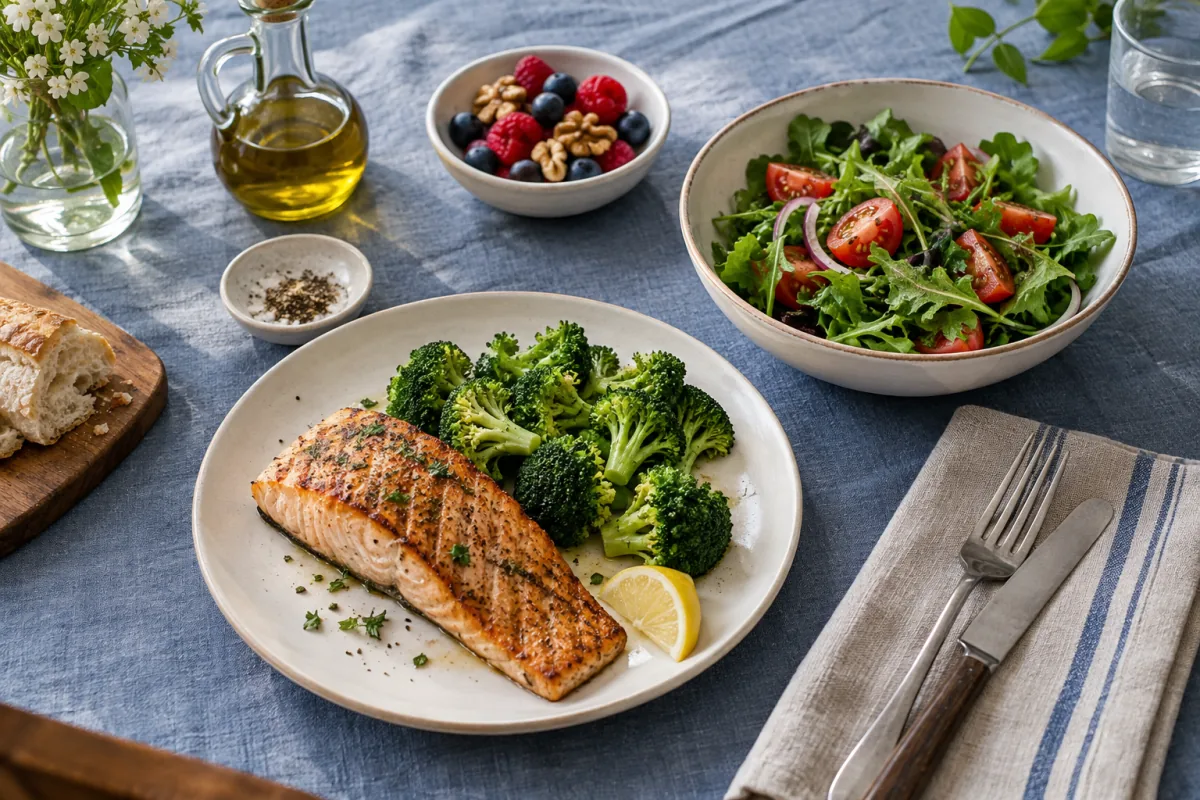
The anti-inflammatory foods with the best evidence behind them are not exotic. Oily fish, extra virgin olive oil, berries, leafy greens, nuts and seeds, tomatoes, broccoli and its relatives, turmeric, garlic and onions, and green tea all show up repeatedly in studies that measure inflammatory markers such as C-reactive protein. The catch is that the effect comes from eating them regularly as part of an overall pattern, not from a single portion. This guide ranks the ten by how strong the evidence is, tells you how much and how often, and explains what to expect, along with the limits of what food can do.
Table of Contents
Key takeaways
- The strongest evidence is for dietary patterns, especially Mediterranean-style eating, rather than individual foods.
- Oily fish, olive oil, nuts, vegetables and fruit have the most consistent support. Spices and tea have promising but smaller studies.
- Regular, modest portions beat occasional large ones. Twice-weekly fish and daily vegetables matter more than a turmeric shot.
- Foods can lower inflammatory markers by a modest amount. They do not treat arthritis, autoimmune disease or any diagnosed condition.
- Persistent pain, swelling, fatigue or fever need a doctor before a diet change.
What “works” means here
Chronic low-grade inflammation is measured in research by blood markers such as C-reactive protein and interleukin-6. Higher levels over years are associated with heart disease, type 2 diabetes and some cancers. A food “works” in this article if human studies, ideally randomised trials, show that eating it regularly lowers those markers or improves related outcomes. Animal studies and test-tube experiments do not count on their own, because many compounds that look impressive in a dish are barely absorbed by people.
By that standard, the list below runs from strong evidence to promising. Even the strongest effects are modest. Think of food as one lever alongside sleep, activity, not smoking and maintaining a healthy weight, all of which have larger effects on inflammation than any single ingredient.
The ten foods, ranked by evidence
1. Oily fish
Salmon, mackerel, sardines, herring, trout and, in India, rohu and hilsa. Their long-chain omega-3 fats, EPA and DHA, are among the best-studied anti-inflammatory nutrients. The NIH Office of Dietary Supplements summarises the evidence, which includes consistent reductions in inflammatory markers and a well-documented benefit for heart health. How much: two portions a week, around 140 g each. Tinned sardines and mackerel count and cost far less than fresh salmon.
2. Extra virgin olive oil
Contains oleocanthal, a compound with an action in the body similar to a low dose of ibuprofen, plus monounsaturated fat and polyphenols. It is the main fat in the Mediterranean diet trials that showed lower inflammatory markers and fewer heart events. How much: two to four tablespoons a day, replacing butter, ghee and refined oils. Use it for cooking and dressing.
3. Nuts and seeds
Walnuts, almonds, pistachios, flaxseed and chia. Trials adding around 30 g of nuts a day to the diet show reductions in C-reactive protein and improvements in blood lipids. Walnuts and flaxseed also provide plant omega-3. How much: a small handful, about 30 g, most days. Unsalted, and not roasted in sugar or oil.
4. Leafy greens
Spinach, kale, methi, amaranth, rocket. High in carotenoids, vitamin K, folate and fibre, and consistently associated with lower inflammation in large population studies. How much: at least one serving a day, cooked or raw. A serving is about a cupful raw or half a cup cooked.
5. Berries and deeply coloured fruit
Blueberries, strawberries, blackberries, cherries, pomegranate and black grapes. Their anthocyanins have shown reductions in inflammatory markers in several small human trials. How much: a cup a day where affordable. Frozen berries are as good as fresh. Pomegranate and jamun are the local options in India.
6. Tomatoes
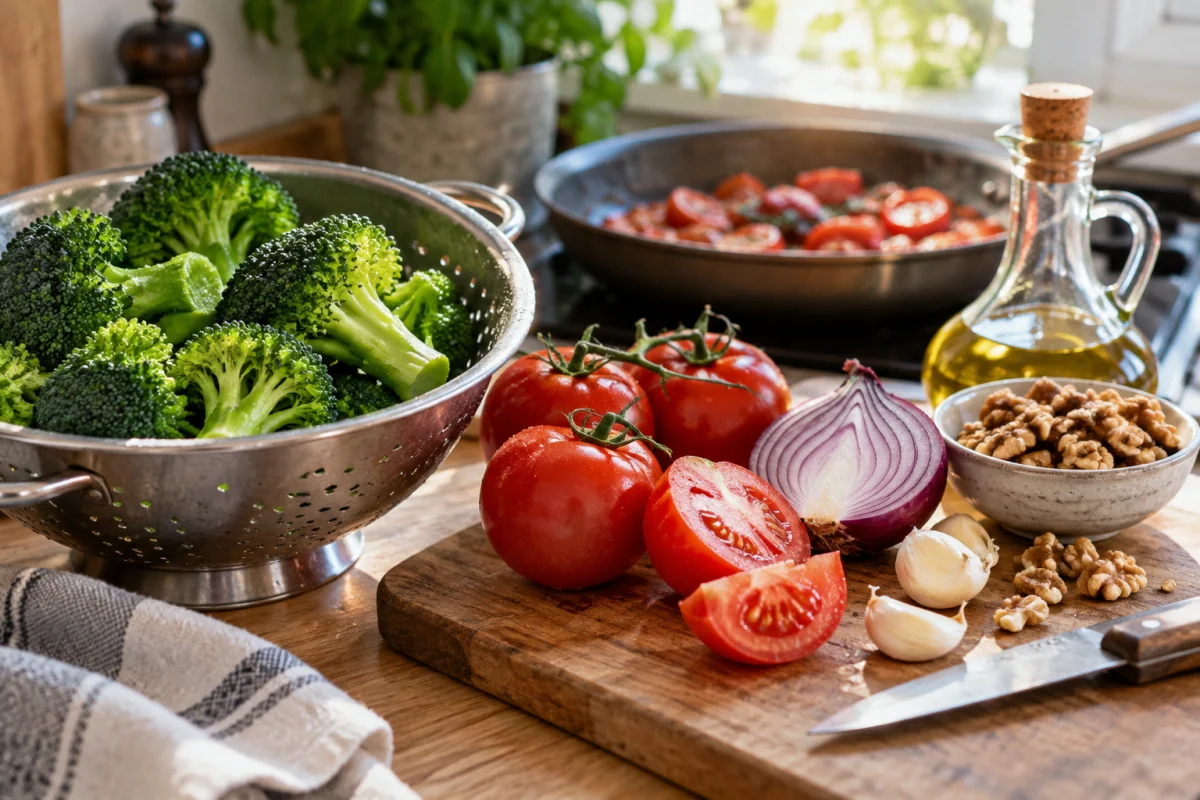
Rich in lycopene, which is better absorbed from cooked tomatoes than raw, and better still with a little oil. Higher lycopene intake is associated with lower inflammatory markers in observational studies, with some supporting trials. How much: daily is easy: tinned tomatoes, tomato-based curries, passata and sauces all count.
7. Broccoli and other cruciferous vegetables
Broccoli, cauliflower, cabbage, Brussels sprouts and radish contain sulforaphane, which activates the body’s own antioxidant defences. Evidence for lower inflammatory markers is mostly from population studies and a handful of trials using broccoli sprouts. How much: three to five servings a week. Light steaming preserves more of the active compounds than boiling.
8. Turmeric
Curcumin, the active component, has shown reductions in inflammatory markers and some improvement in knee osteoarthritis symptoms in trials, but nearly all of them used concentrated extracts at doses well above what food provides. The NCCIH turmeric summary is candid about this. Curcumin is also poorly absorbed on its own; black pepper and fat improve uptake. How much: half a teaspoon or so daily in cooking, with pepper and oil, is a reasonable habit. Supplements are a separate decision to discuss with a doctor, particularly if you take blood thinners or have gallbladder problems.
9. Garlic and onions
Both contain sulphur compounds and flavonoids such as quercetin, with some human trials showing modest reductions in inflammatory markers, and both are prebiotic fibre sources that support gut bacteria. How much: use them daily in cooking. The effect is from regular use, not from raw cloves as a remedy.
10. Green tea
Catechins, especially EGCG, have anti-inflammatory activity in lab studies and some support in human trials, mostly for markers of oxidative stress. How much: two to three cups a day if you enjoy it. It is a reasonable replacement for sugary drinks rather than a treatment.
Evidence and serving guide
| Food | Evidence strength | Aim for |
|---|---|---|
| Oily fish | Strong | 2 portions a week |
| Extra virgin olive oil | Strong | 2 to 4 tbsp a day |
| Nuts and seeds | Strong | 30 g most days |
| Leafy greens | Good | 1 serving a day |
| Berries and coloured fruit | Good | 1 cup a day |
| Tomatoes | Moderate | Daily, cooked |
| Cruciferous vegetables | Moderate | 3 to 5 servings a week |
| Turmeric | Moderate (extracts), limited (food) | Half a teaspoon daily with pepper |
| Garlic and onions | Moderate | Daily in cooking |
| Green tea | Promising | 2 to 3 cups a day |
What to eat less of
Adding good foods while keeping the pro-inflammatory ones changes little. The patterns most consistently linked to higher inflammatory markers are sugary drinks and sweets, refined grains, processed meat, deep-fried food and excess alcohol. The WHO healthy diet guidance on fat quality and free sugars lines up with the anti-inflammatory evidence. A practical rule: every time you add one food from the list above, drop one from this list. Our guide on the worst foods for gut health covers the same ground from the digestive side.
Putting it into a day
- Breakfast: oats with berries and walnuts, or eggs cooked in olive oil with spinach and tomato. More options in our breakfasts under 10 minutes.
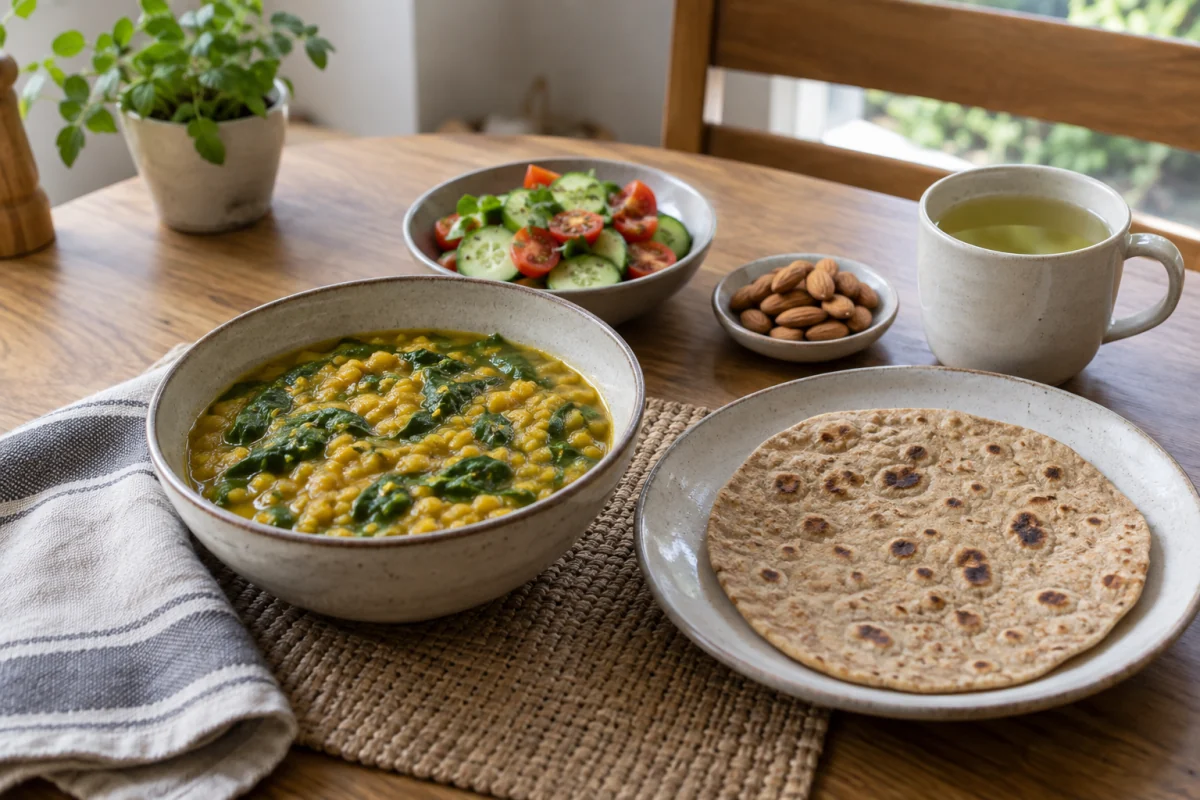
- Lunch: dal with turmeric, a leafy green sabzi, salad with olive oil, wholegrain roti or brown rice.
- Snack: a handful of almonds, or fruit and green tea.
- Dinner: grilled fish or a chickpea and tomato stew with garlic and onion, plus steamed broccoli.
For a ready-made shopping list that covers all ten foods, use our Mediterranean diet grocery list. If you prefer to start with fewer changes, our shorter list of seven foods that reduce inflammation includes a one-week plan.
Common mistakes
- Expecting a single food to fix a symptom. Turmeric shots, ginger tea and berry powders do not treat joint pain. The pattern over months is what moves the markers.
- Buying supplements instead of food. Fish oil, curcumin and green tea extract capsules are a separate question with their own risks and interactions. Talk to a doctor before taking them.
- Overdoing the oil and nuts. They are healthy but dense in calories. Weight gain raises inflammation, which undoes the benefit.
- Frying the fish in refined oil and batter. Grill, bake or curry it.
- Cutting whole food groups. Removing dairy, grains or nightshades without a diagnosed reason has no evidence behind it and narrows the diet.
Who this is not for
This article is for healthy adults who want to eat in a way that supports lower long-term inflammation. It is not a treatment plan for rheumatoid arthritis, lupus, inflammatory bowel disease, gout, psoriasis or any other diagnosed inflammatory or autoimmune condition. Those need medical management, and some of them come with specific dietary advice that may differ from this list. People on warfarin should discuss leafy greens and turmeric with their doctor. Those with kidney disease should ask about nuts and high-potassium foods. If you have persistent joint pain, swelling, unexplained fatigue, fever or weight loss, see a doctor first. Diet can support treatment; it does not replace it.
Frequently asked questions
What is the strongest anti-inflammatory food?
Oily fish has the most consistent human evidence, followed closely by extra virgin olive oil and nuts. The overall Mediterranean pattern outperforms any single food.
How long does it take for anti-inflammatory foods to work?
Trials typically show changes in blood markers after 8 to 12 weeks of consistent eating. Symptom changes, where they occur, are gradual and modest.
Does turmeric actually reduce inflammation?
Concentrated curcumin extracts have shown effects in trials. The amount in food is much smaller and poorly absorbed, so culinary turmeric is a sensible habit rather than a treatment.
Are anti-inflammatory foods good for arthritis?
They may help modestly alongside medical treatment, especially oily fish for rheumatoid arthritis. They are not a replacement for treatment. Ask your doctor or a dietitian.
Can I get the same effect from supplements?
Not reliably. Whole foods provide fibre and many compounds together. Supplements have their own evidence base, dosing questions and interactions, and should be discussed with a doctor.