
The simplest answer to how to meditate for beginners: sit somewhere you will not be interrupted, set a timer for five minutes, and pay attention to the feeling of your breath. When you notice your mind has drifted to something else, and it will within seconds, bring your attention back to the breath without telling yourself off. That is the whole method. The skill is not staying focused; it is noticing you have drifted and returning, over and over. Five minutes a day is enough to start, and the two-week schedule below builds it into a habit before you try anything longer. Along the way this article covers posture, the best time of day, what to do when it feels like it is not working, and when persistent anxiety or low mood needs more than a breathing exercise.
Table of Contents
Key takeaways
- You are not trying to empty your mind. You are practising noticing where it went and bringing it back.
- Five minutes daily beats thirty minutes once a week. Attach it to something you already do, like the kettle boiling.
- Sit upright on a chair with feet flat. Lying down is fine but you will probably fall asleep.
- Getting distracted a hundred times in five minutes is not failure. Each return is one repetition of the skill.
- Meditation supports mental health but does not treat anxiety or depression on its own. If low mood or worry lasts more than a couple of weeks, see a doctor.
What meditation is and is not
Most people who say “I tried meditation and I couldn’t do it” were trying to stop thinking. Nobody can do that. Thinking is what a brain does, in the same way a heart beats. Meditation, at least the mindfulness type this article teaches, is attention training. You pick one thing to attend to, usually the breath because it is always with you, and you practise keeping your attention on it. Every time your mind wanders and you catch it, you have done one rep. A session with fifty wanderings and fifty returns is a good session.
What it is not: a religion (though many religions use it), a way to feel blissful on demand, a replacement for sleep, or a cure for anxiety. What it is: a small daily practice that, over weeks, tends to leave people a bit less reactive, a bit quicker to notice stress building, and a bit better at putting attention where they want it.
The 5-minute method, step by step
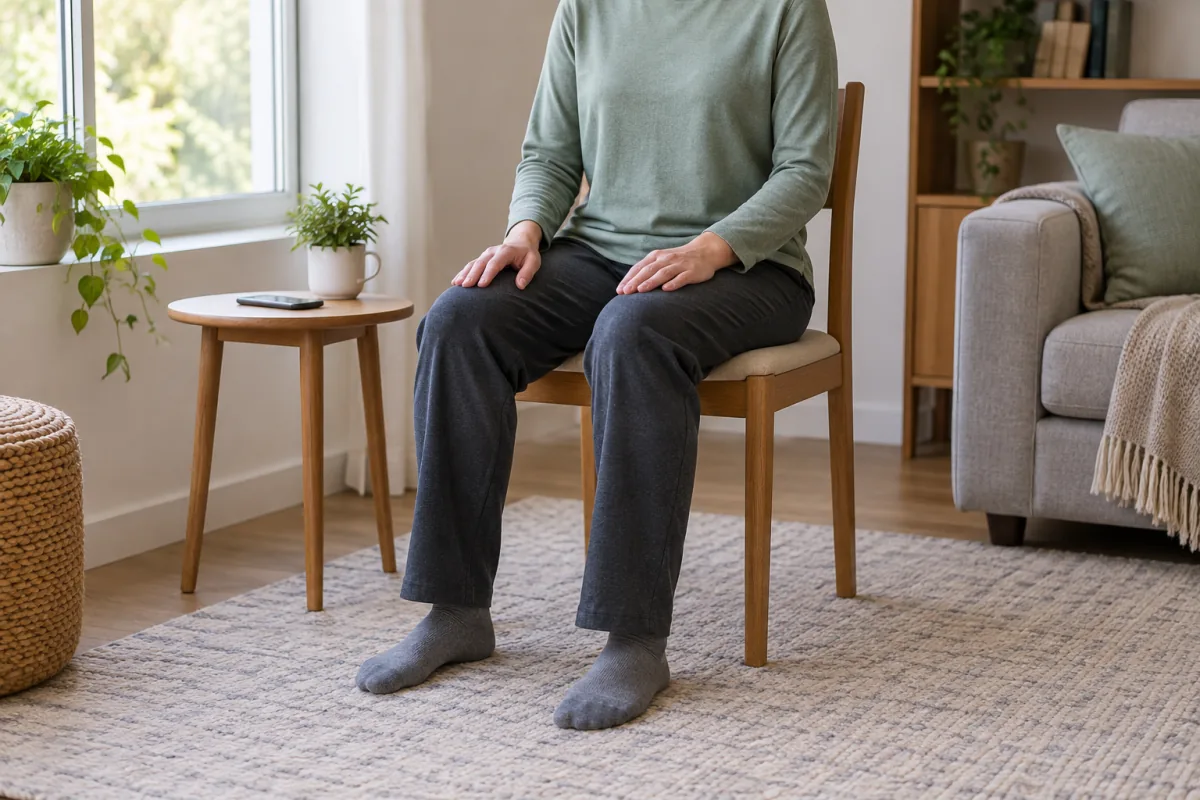
- Sit on a chair, feet flat, hands resting on your thighs. Set a timer for five minutes with a gentle sound at the end. Put the phone face down.
- Close your eyes or lower your gaze to a spot on the floor a metre ahead.
- Take two slower breaths to settle, then let your breathing go back to normal. Do not control it.
- Pick one place to feel the breath: the air at the nostrils, the chest rising, or the belly moving. Stay with that one place for the whole session.
- Follow one breath in. Follow it out. Then the next.
- When you notice you are thinking about lunch, an email, or whether this is working, silently label it “thinking” and go back to the breath at the place you chose.
- Repeat step 6 as many times as needed. This is the practice, not an interruption of it.
- When the timer goes, sit for ten more seconds, notice how you feel, then get on with your day.
Some people find counting helps in the first week: count “one” on the out-breath, “two” on the next, up to ten, then start again. Lose count, start at one. Counting gives the mind a small job and makes drifting easier to spot.
Posture, timing and where to sit
Posture
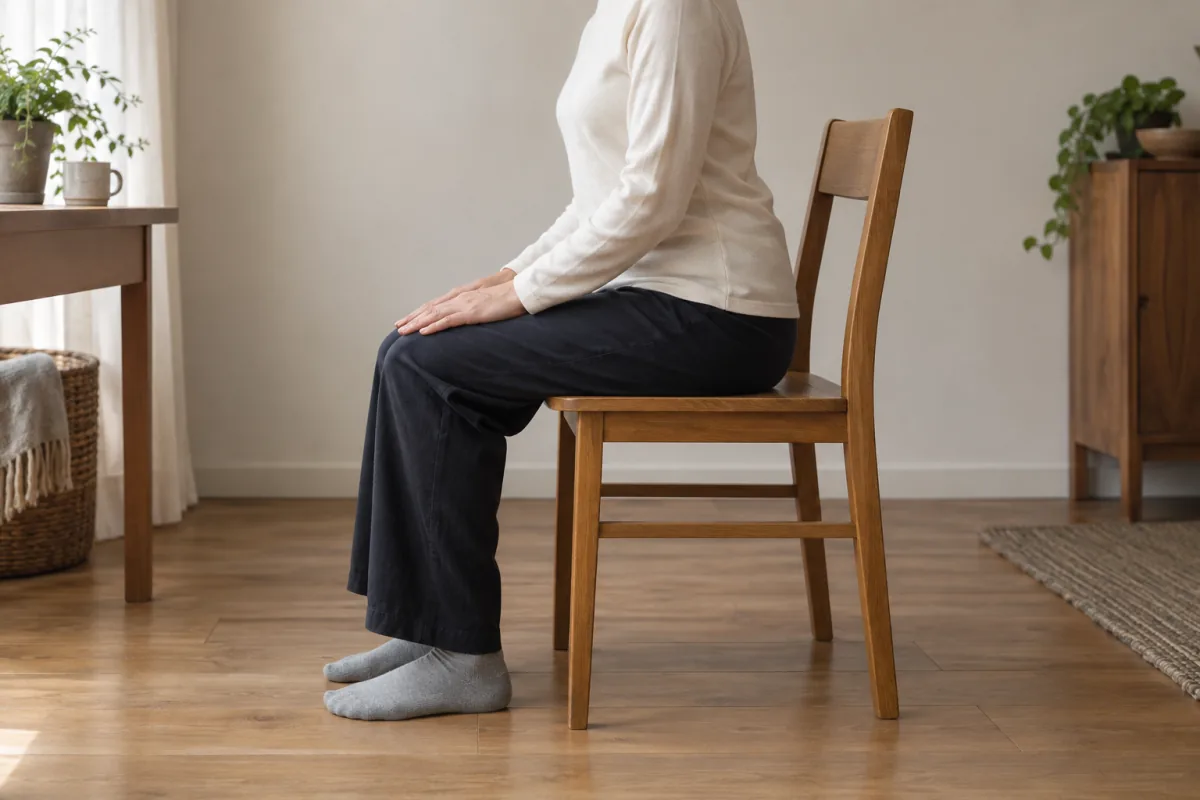
Upright but not rigid. On a chair, sit forward slightly so your back is not slumped against it, feet flat, knees at roughly right angles. If you prefer the floor, sit on a cushion thick enough that your knees are lower than your hips; otherwise your back will round and ache. Let the hands rest. The chin tucks in a fraction so the neck is long. If something hurts after a minute, move. Discomfort is not part of the training.
Timing
Morning, before you look at your phone, is the easiest slot to protect. Attach it to an existing habit: kettle on, sit, kettle boils, done. Evening works too and can help with winding down, but tiredness makes it more likely you will doze. Lunch break is fine if you can find a quiet spot. The best time is the one you will keep.
Where
Anywhere you will not be spoken to for five minutes. A chair in the bedroom, a parked car, a bench. It does not need to be silent. Background noise is another thing to notice and return from. A completely quiet room is a luxury, not a requirement.
What to do when your mind wanders
It will wander. In the first week, you may go two or three minutes before you realise you have been planning dinner. That is normal and it does not mean the session was wasted.
The moment you realise is the important one. Two things happen in that moment. You notice you are thinking, which is itself a small act of awareness, and you choose where to put your attention next. Do both gently. The habit to avoid is the sharp inner comment (“focus, idiot”), because that turns the practice into another thing to be stressed about. A neutral label works better: “thinking”, “planning”, “remembering”, then back to the breath.
Three common wanderings and what to do:
- A worry that will not leave. Acknowledge it in one word (“worry”), then return. If it comes back, do the same. You are not suppressing it; you are declining to follow it right now. If it needs action, write it down after the timer.
- Sleepiness. Open your eyes, sit up straighter, take one deeper breath. If it persists every day, the slot is wrong; move it earlier.
- Restlessness or the urge to stop. Notice the feeling in the body (usually chest or legs), name it, and give it three more breaths. The urge usually passes. If it does not, stop at the timer as planned, not before.
If you already use our 5-minute breathing exercises, notice the difference. Those change the breath on purpose to calm the body. Meditation leaves the breath alone and trains attention. Both are useful and they pair well; a minute of slow breathing before meditating settles a racing mind.
A two-week starter schedule
Consistency is the goal in the first fortnight, not duration. Five minutes every day builds the habit; a fifteen-minute session once a week does not.
| Days | Length | Focus | Note |
|---|---|---|---|
| 1 to 3 | 3 minutes | Breath at one spot, count to ten | Just show up. Mark the day on a calendar. |
| 4 to 7 | 5 minutes | Breath, count to ten | Notice how many times you return. More is fine. |
| 8 to 10 | 5 minutes | Breath, no counting | Drop the count once you can go a few breaths without losing it. |
| 11 to 12 | 7 minutes | Breath, then 1 minute of listening to sounds | Sounds come and go; treat them like thoughts. |
| 13 to 14 | 10 minutes | Breath, with a body scan for the last 2 minutes | Move attention from feet to head slowly, noticing without changing. |
After two weeks, settle at whatever length you can keep daily. Ten minutes is a common landing point. Twenty is where much of the research is done, but ten done daily is better than twenty done sometimes. If you miss a day, the streak is not broken in any way that matters. Sit the next day.
What the research supports
The evidence for mindfulness meditation is real but modest, and honest guides say so. Reviews summarised by the National Center for Complementary and Integrative Health find moderate evidence that mindfulness programmes reduce symptoms of anxiety and depression and help people cope with stress and some kinds of chronic pain. The effects are similar in size to other active self-help approaches, not larger. Some studies show improvements in attention and in how quickly people recover from a stressful task, though the trials are often small.
What the research does not show is that meditation replaces treatment for a diagnosed condition, or that a few minutes a day produces dramatic change. Most positive trials used structured eight-week programmes with 20 to 45 minutes of daily practice. A five-minute habit is a starting point that many people build from, and the NHS overview of mindfulness describes it as one of several steps people can take for everyday mental wellbeing, alongside sleep, exercise and connection with others.
Meditation also tends to make people more aware of habits they had not noticed, which is where it links to other changes. If evenings are the difficult time, our guide on how to stop overthinking at night uses the same noticing-and-returning skill in bed. If your attention feels fragmented by your phone, the practice makes that visible fast, and a short break from feeds can help; see social media detox benefits.
When to seek help instead
Meditation is safe for most people and a reasonable thing to try for everyday stress. It is not the right first step for everyone, and it is not a substitute for care.
- If anxiety, low mood or trouble sleeping has lasted more than two weeks and is affecting work, relationships or daily tasks, speak to a doctor. Meditation can sit alongside treatment; it should not delay it.
- If you have a history of trauma, sitting quietly with closed eyes can bring up distressing memories or sensations. That is a known effect, not a personal failing. Open eyes, shorter sessions or a trauma-informed teacher help, and a therapist can advise whether to continue.
- If you have had episodes of psychosis or mania, discuss meditation with your care team first; intensive practice has been linked to problems in a small number of cases.
- If meditation makes you feel worse consistently rather than occasionally, stop and talk to someone qualified.
Any thoughts of harming yourself need urgent help from a doctor, emergency services or a crisis line, not a breathing exercise. This article is general information only.
Frequently asked questions
How long should a beginner meditate?
Three to five minutes a day for the first week, building to ten minutes by the end of week two. Shorter and daily beats longer and occasional. Increase only when the current length feels routine rather than difficult.
Is it better to meditate in the morning or at night?
Morning is easier to keep because nothing has had a chance to derail the day yet, and you are less likely to fall asleep. Evening can help with winding down. Pick the slot you can protect every day; that matters more than the clock time.
Do I need an app?
No. A timer is enough. Apps help some beginners because a voice reminds them what to do and tracks streaks, and several free ones exist. If you use one, choose a plain guided breath practice rather than a long library, and try unguided sessions after a month so you are not dependent on it.
What if I fall asleep?
It means you are tired, not that you are doing it wrong. Sit rather than lie down, keep your eyes slightly open, and meditate earlier in the day. If you are falling asleep every time, the more useful change is probably to your sleep, not your meditation.