
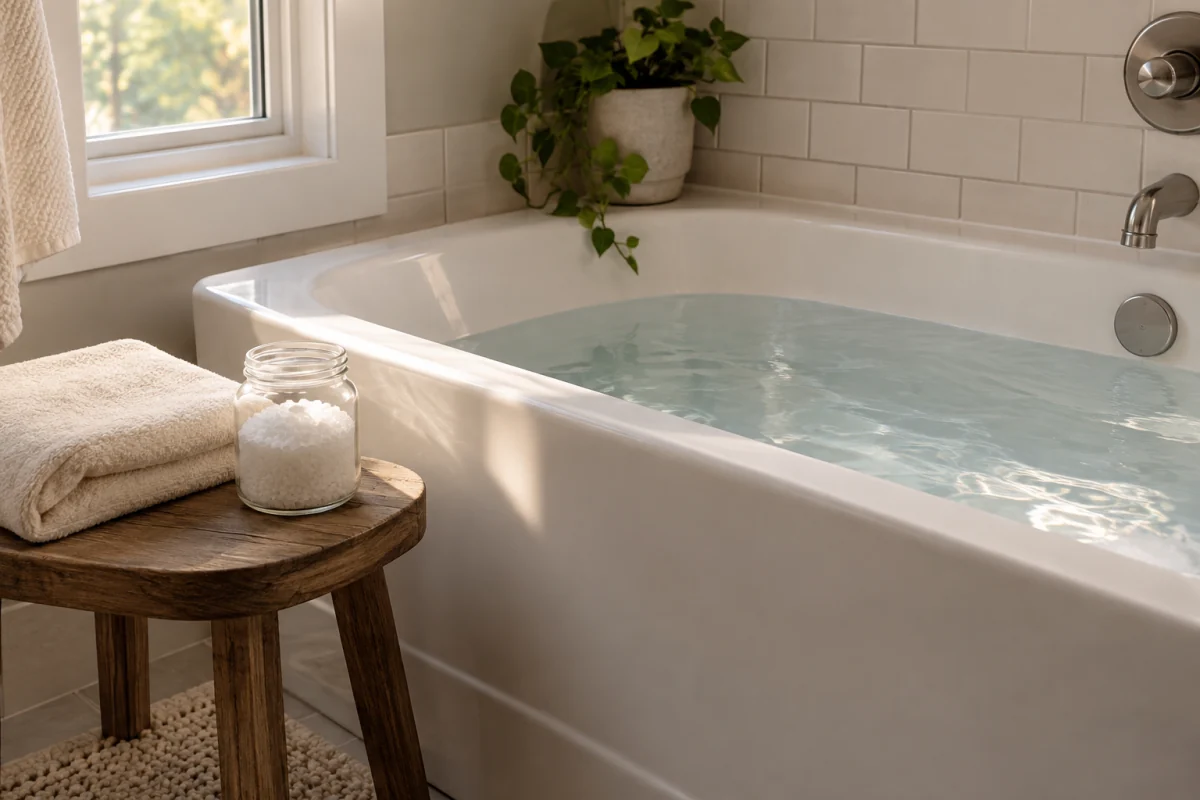
An Epsom salt bath is a warm bath with magnesium sulfate dissolved in it. Most of what people feel afterwards comes from the warm water: looser muscles, an easier time falling asleep and twenty minutes without a screen. The evidence that the magnesium itself passes through your skin in any useful amount is thin. This post explains what the research shows, how much salt to use and for how long, what a soak can and cannot do for sore muscles, stress, sleep and skin, who should skip it, and cheaper ways to get the same result.
Table of Contents
Key takeaways
- Epsom salt is magnesium sulfate, not table salt. It has been sold as a bath additive since the 1600s.
- There is no good evidence that a bath raises your magnesium levels in a meaningful way. Skin is built to keep things out.
- The warm water is the active ingredient. A bath at 40 to 42 C an hour or two before bed helps people fall asleep faster.
- Use one to two cups in a standard tub, 37 to 40 C, for 12 to 20 minutes.
- Skip it or ask first if you have open wounds, diabetes with foot problems, a heart condition, kidney disease or are pregnant.
What Epsom salt is, and whether it gets through your skin
Epsom salt is the everyday name for magnesium sulfate heptahydrate. It looks like coarse salt but tastes bitter and has nothing to do with sodium chloride. The name comes from Epsom in Surrey, England, where the mineral was first boiled out of spring water.
The central claim behind an Epsom salt bath is that magnesium soaks in through the skin and relaxes muscles from the inside. Here the research is not kind. A 2017 review in the journal Nutrients, titled Myth or Reality: Transdermal Magnesium?, went through the available studies and found no rigorous trial showing that magnesium crosses intact skin in amounts that change blood levels. The one study that gets quoted on product packaging was a small, unpublished report of 19 people that was never peer reviewed. The outer layer of skin, the stratum corneum, is a fat-rich barrier that blocks charged particles like magnesium ions. Hair follicles and sweat glands may let a trace through, but that is a long way from a dose.
So the honest position is this: a bath might deliver a very small amount of magnesium, and nobody has shown that amount does anything. If low magnesium is your real concern, food is the reliable route, and a supplement is something to discuss with a doctor. Our comparison of magnesium glycinate vs citrate covers the oral forms.
What the warm bath does on its own
Take the salt out of the picture and a warm bath still does three useful things.
First, heat increases blood flow to muscles and lowers the tension in them. That is why a stiff back or tight calves feel better after ten minutes in warm water. The buoyancy also takes weight off sore joints while you are in there.
Second, it helps with sleep, and this one has solid data behind it. A 2019 meta-analysis in Sleep Medicine Reviews pooled 17 studies of warm baths and showers before bed. Bathing at 40 to 42.5 C, timed one to two hours before bedtime, cut the time it took people to fall asleep by around ten minutes on average and improved how they rated their sleep. The mechanism is a little counterintuitive: warm water pulls blood to the skin, and once you get out, your core temperature drops. That drop is one of the signals the brain uses to start sleep. A bath right before bed is less effective because the drop has not happened yet.
Third, it is a quiet, enforced break. Twenty minutes with the door shut and no phone lowers stress for reasons that have nothing to do with chemistry. None of these effects require magnesium sulfate. The salt makes the water feel silkier and gives the ritual a name, which is not nothing, but it is worth knowing which part is doing the work.
How to take one: amount, temperature, time
| Setting | Guideline | Why |
|---|---|---|
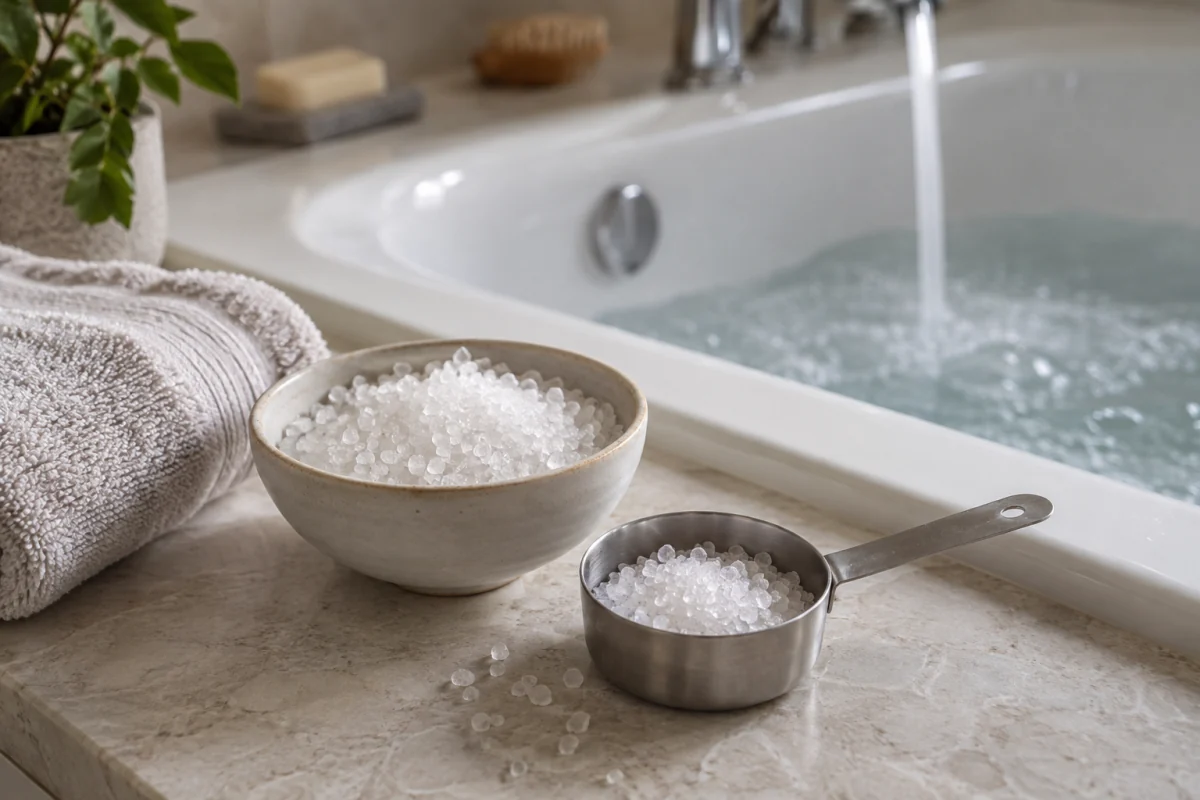
| Amount | 1 to 2 cups (about 250 to 500 g) per standard tub | Enough to feel a difference in the water; more does not add benefit |
| Temperature | 37 to 40 C, comfortably warm | Hot enough to relax muscles, not so hot that you feel faint |
| Time in the water | 12 to 20 minutes | Longer soaks dry out skin and can drop blood pressure |
| Timing for sleep | 1 to 2 hours before bed | Gives your core temperature time to fall |
| Frequency | 2 to 3 times a week | Daily is fine if your skin stays comfortable |
- Start filling the tub and pour the salt under the running tap so it dissolves as the water rises. Swirl it with your hand before getting in.
- Test the temperature with your elbow or a bath thermometer. If you cannot keep your hand in the water comfortably, it is too hot.
- Keep a glass of water within reach. Warm baths make you sweat more than you notice.
- Soak for 12 to 20 minutes. If you feel light-headed, get out.
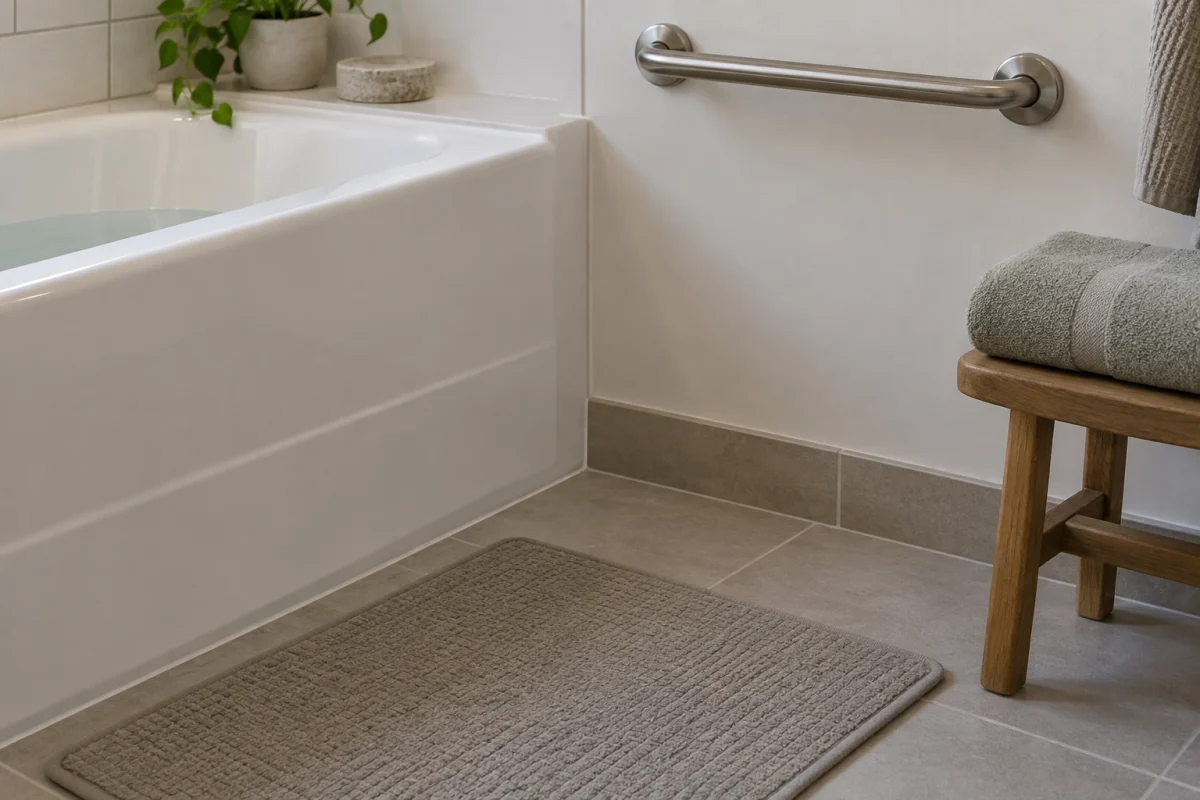
- Stand up slowly. Hold the edge of the tub. Blood pressure dips when you go from warm water to standing.
- Rinse off if your skin feels tight or itchy afterwards, then moisturise while it is still damp.
A few practical notes. Plain, unscented Epsom salt is the cheapest and least likely to irritate skin. Do not add it to a jetted tub or hot tub unless the manufacturer says it is fine, because the crystals and residue can damage pumps. Never drink the bath water or the salt. Magnesium sulfate taken by mouth is a strong laxative and an overdose is a medical problem.
Sore muscles, stress, sleep and skin: claim by claim
Sore muscles
A warm bath does ease the stiffness of delayed onset muscle soreness for an hour or two afterwards. Whether it speeds recovery over the following days is unclear, and no study has shown Epsom salt adds anything beyond warm water. Light movement and sleep do more for soreness than any soak. If you spend the day at a desk, a routine of stretches for desk workers will do more for a tight neck than a weekly bath.
Stress
Warm water, quiet and time all reduce the feeling of stress. There is no evidence the salt has a calming effect of its own. If a bath is the thing that gets you to stop for twenty minutes, that is reason enough to run one.
Sleep
This is the best-supported use, for the temperature reason above. Pair it with sensible timing and it works as well as most sleep habits. It combines well with foods that help you sleep and a fixed wake time.
Skin
Results are mixed. Some people with itchy or flaky skin find salt water soothing. Others find it drying and stinging, especially with broken skin. Epsom salt is not a treatment for eczema or psoriasis, and a doctor or pharmacist can suggest emollients that are.
Detox
No. Your liver and kidneys handle waste products. Nothing is drawn out through the skin during a bath, and sweating is not a detox mechanism in any meaningful sense.
Splinters, swelling and foot soaks
A warm soak softens skin, which makes a splinter easier to remove and can ease a tired, swollen foot after a long day. That is the water again. The same temperature and time limits apply to a foot bath as to a full tub.
Who should not take one, or should ask first
- Open wounds, burns or skin infections. Salt water stings and can spread infection. Wait until the skin has closed.
- Diabetes. Long soaks dry the skin of the feet and can lead to cracks, and reduced sensation makes it hard to judge water temperature. Mayo Clinic’s foot care guidance advises against soaking feet at all. Ask your diabetes team before making baths a habit.
- Pregnancy. Warm baths are generally fine, but keep the water below about 38 C and avoid anything that leaves you flushed or dizzy. Check with your midwife or doctor if you are unsure.
- Heart conditions and low blood pressure. Hot water widens blood vessels, which can cause dizziness or fainting when you stand. Keep the water warm rather than hot and talk to your doctor first.
- Kidney disease. Even a small magnesium load matters when the kidneys cannot clear it. Ask your specialist.
- Children. Use cooler water, half the salt, shorter soaks and constant supervision. Make sure they do not swallow bath water.
Anyone who feels faint, nauseated or gets a racing heart in the bath should get out slowly and sit down. If it happens more than once, mention it to a doctor. This post is general information and not a substitute for medical advice.
Cheaper alternatives that do the same thing
Epsom salt is not expensive, but since the water is doing the work, here is what else does the same job.
- A plain warm bath or ten-minute warm shower, timed one to two hours before bed. The sleep research above included showers.
- A heating pad or hot water bottle on a sore muscle for 15 to 20 minutes gives the blood-flow effect without filling a tub.
- Magnesium from food. The NIH Office of Dietary Supplements lists pumpkin seeds, almonds, spinach, black beans, brown rice and yoghurt as good sources. A handful of pumpkin seeds gives around 150 mg, which is a real dose, unlike a bath.
- Five minutes of stretching or slow breathing for the stress side.
If you enjoy the ritual, keep it. Just buy the plain salt, skip products that promise detox or deep magnesium replenishment, and spend the difference on a bath thermometer.
Frequently asked questions
How often can you take an Epsom salt bath?
Two or three times a week suits most people. Daily is fine if your skin does not feel dry or itchy and you keep each soak under 20 minutes. Moisturise afterwards either way.
Can Epsom salt baths help you lose weight?
No. Any weight change after a bath is water lost through sweat and it comes back with your next drink. Nothing about a soak burns fat or changes appetite.
Is an Epsom salt bath safe for kids?
For healthy children over about two, a short soak in cooler water with half a cup of salt is generally considered safe, as long as an adult is present and no water is swallowed. Ask a paediatrician if your child has eczema, a skin infection or any long-term condition.
Does Epsom salt expire?
Not in any way that matters. It may clump if it absorbs moisture from the air, and a best-before date on the bag is about packaging rather than safety. Store it sealed and dry and it will keep for years.