
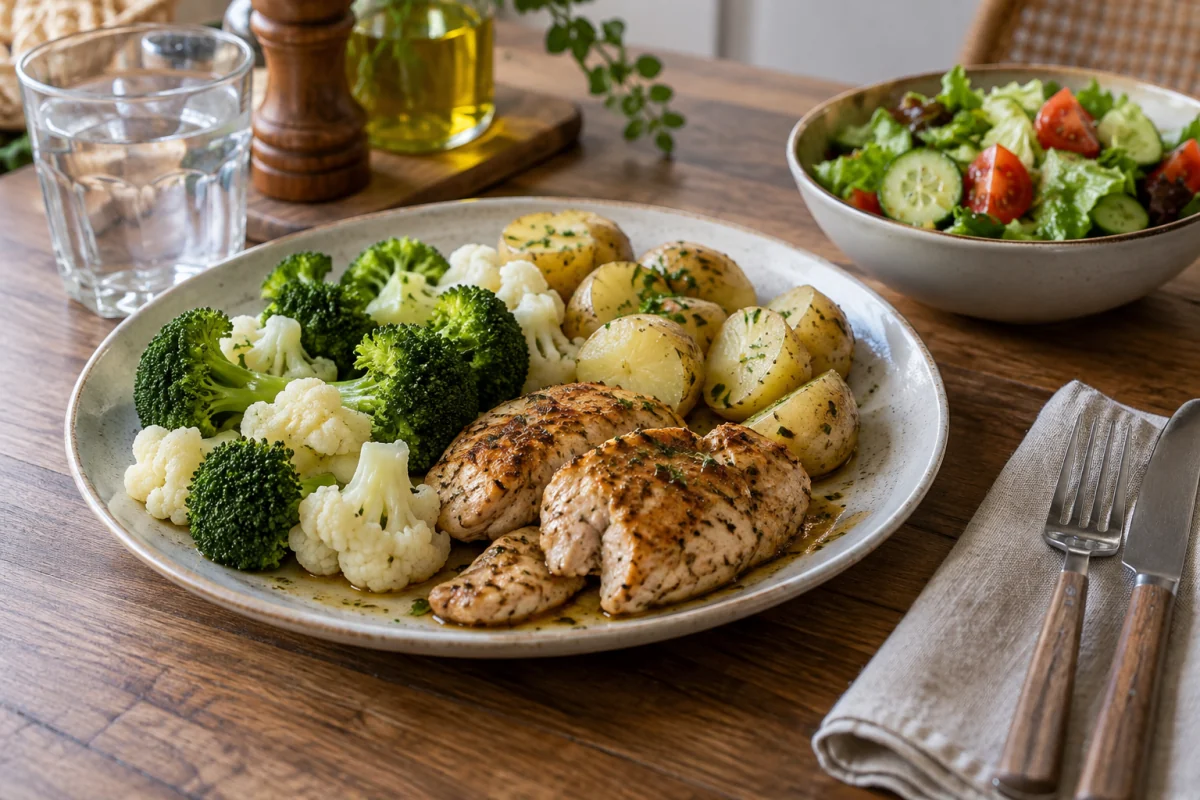
High-volume, low-calorie foods are the ones that fill a plate and a stomach for very few calories: most vegetables, watery fruits, broth-based soups, lean proteins, potatoes, oats and air-popped popcorn. Built around them, a 1,500-calorie day can look and feel like a lot of food. Below are 40 of these foods with calories per serving, grouped by meal, followed by three sample days, the limits of the approach, and who should not use it. The short version of why it works: your stomach judges fullness largely by weight and volume, not by calories, so food that carries a lot of water and fibre satisfies you on less.
Table of Contents
Key takeaways
- Calorie density is calories per gram. Foods under about 1 calorie per gram let you eat large portions in a deficit.
- Water and fibre lower density; fat raises it. That is the whole trick.
- Protein still has to be planned in, because most very low-density foods contain little of it.
- Ramp fibre up over two to three weeks or you will spend the first week bloated.
- Volume eating is not suitable for anyone with a history of disordered eating, or for athletes in heavy training who struggle to eat enough.
What calorie density is and why volume matters for fullness
Calorie density, sometimes called energy density, is the number of calories in a given weight of food. A cup of cucumber weighs about 100 g and has around 16 calories, so its density is 0.16. A tablespoon of olive oil weighs 14 g and has 120 calories, density 8.6. You could eat 50 cups of cucumber for the calories in seven tablespoons of oil. Nobody does, of course, which is the point: the low-density food stops you long before the calories add up.
Research going back to the 1990s, much of it from Pennsylvania State University, found that people tend to eat a fairly consistent weight of food from day to day. Serve a lower-density version of the same meal and they eat about the same weight, feel just as full, and take in fewer calories. The Mayo Clinic summarises the practical side well: fill up on fruit, vegetables, soups and whole grains, and keep the high-density foods to small amounts on top.
Three things drive fullness from a meal. Volume and weight stretch the stomach, which sends a signal to stop. Fibre slows emptying and keeps that signal going. Protein triggers hormones that reduce appetite for hours afterwards. Water-rich foods handle the first two. The third has to be added deliberately, which is where many volume-eating plans go wrong.
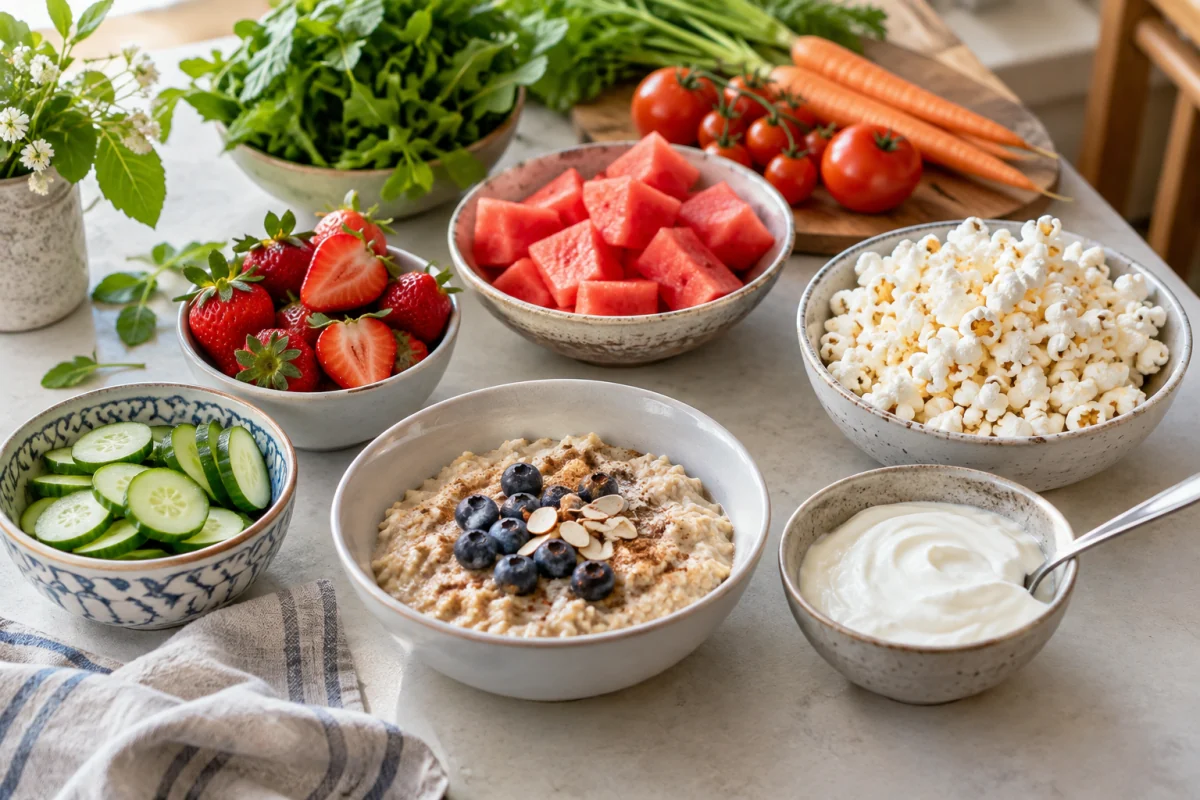
Forty high-volume foods with calories per serving
Calorie figures are rounded and taken from standard nutrient databases such as USDA FoodData Central. Cooking methods change them, so treat the numbers as a guide.
Vegetables
| Food | Serving | Calories |
|---|---|---|
| Cucumber | 1 cup sliced | 16 |
| Lettuce or mixed leaves | 2 cups | 10 |
| Spinach, raw | 2 cups | 14 |
| Tomato | 1 medium | 22 |
| Courgette, cooked | 1 cup | 27 |
| Cauliflower, cooked | 1 cup | 29 |
| Bell pepper | 1 medium | 30 |
| Mushrooms, cooked | 1 cup | 44 |
| Carrots, raw | 1 cup | 52 |
| Broccoli, cooked | 1 cup | 55 |
Fruit
| Food | Serving | Calories |
|---|---|---|
| Watermelon | 1 cup diced | 46 |
| Strawberries | 1 cup | 49 |
| Grapefruit | half | 52 |
| Cantaloupe melon | 1 cup | 54 |
| Orange | 1 medium | 62 |
| Papaya | 1 cup | 62 |
| Blueberries | 1 cup | 84 |
| Apple | 1 medium | 95 |
Protein
| Food | Serving | Calories |
|---|---|---|
| Egg whites | 3 large | 51 |
| Prawns, cooked | 100 g | 99 |
| Non-fat Greek yoghurt | 170 g | 100 |
| White fish such as cod | 100 g cooked | 105 |
| Firm tofu | 100 g | 145 |
| Low-fat cottage cheese | 1 cup | 160 |
| Chicken breast, skinless | 100 g cooked | 165 |
| Lentils, cooked | 1 cup | 230 |
Grains and starches
| Food | Serving | Calories |
|---|---|---|
| Air-popped popcorn | 3 cups | 93 |
| Brown rice, cooked | half cup | 110 |
| Quinoa, cooked | half cup | 110 |
| Boiled potato | 150 g | 130 |
| Baked sweet potato | 150 g | 130 |
| Oats cooked in water | 1 cup | 165 |
Snacks and soups
| Food | Serving | Calories |
|---|---|---|
| Shirataki (konjac) noodles | 100 g | 10 |
| Gherkin or dill pickle | 1 large | 15 |
| Seaweed snack | 1 small pack | 25 |
| Celery sticks | 2 cups | 28 |
| Plain rice cake | 1 | 35 |
| Miso soup | 1 cup | 40 |
| Broth-based vegetable soup | 1 cup | 70 |
| Frozen grapes | 1 cup | 104 |
Potatoes deserve a defence. Boiled or baked, with the skin, they score higher on satiety per calorie than almost any other food tested, and they are only a problem once they are fried or buried in butter. Popcorn is in the same category: three cups air-popped is a large bowl for under 100 calories, and the same volume of crisps is around 450.
Three sample days at about 1,500 calories
Each day comes to roughly 1,450 to 1,500 calories with 90 to 110 g of protein. Adjust portions of the protein and starch to your own needs; the vegetables can stay generous.
Day one
- Breakfast: 1 cup oats cooked in water, 1 cup blueberries, 170 g Greek yoghurt. About 350.
- Lunch: large salad of leaves, tomato, cucumber and pepper with 100 g chicken breast, 1 tablespoon olive oil dressing, plus an apple. About 460.
- Snack: 3 cups popcorn and an orange. About 155.
- Dinner: 100 g baked cod, 150 g boiled potato, 1 cup broccoli, 1 cup cauliflower, a teaspoon of butter. About 355.
- Evening: 1 cup strawberries with half a cup of cottage cheese. About 130.
Day two
- Breakfast: 3 egg whites plus 1 whole egg scrambled with spinach and mushrooms, 1 slice wholegrain toast, half an avocado. About 380.
- Lunch: 2 cups lentil and vegetable soup with a side salad. About 330.
- Snack: 170 g Greek yoghurt with 1 cup melon. About 155.
- Dinner: stir-fry of 100 g prawns, 2 cups mixed vegetables, half a cup of brown rice, a teaspoon of oil and soy sauce. About 360.
- Evening: 1 cup frozen grapes and a rice cake. About 140.
Day three
- Breakfast: 170 g Greek yoghurt, 1 cup strawberries, 30 g granola, 1 slice wholegrain toast with a tablespoon of peanut butter. About 455.
- Lunch: 150 g baked sweet potato topped with 1 cup lentils and a dressed salad. About 400.
- Snack: 1 cup watermelon and celery sticks with 2 tablespoons hummus. About 125.
- Dinner: 120 g chicken breast in tomato sauce over 2 cups cauliflower rice with courgette, a teaspoon of oil. About 360.
- Evening: 1 cup papaya and a cup of miso soup. About 100.
If you get hungry between meals on a plan like this, the answer is usually more protein at the previous meal rather than more vegetables. Our list of high-protein snacks under 200 calories fits in without breaking the calorie budget.
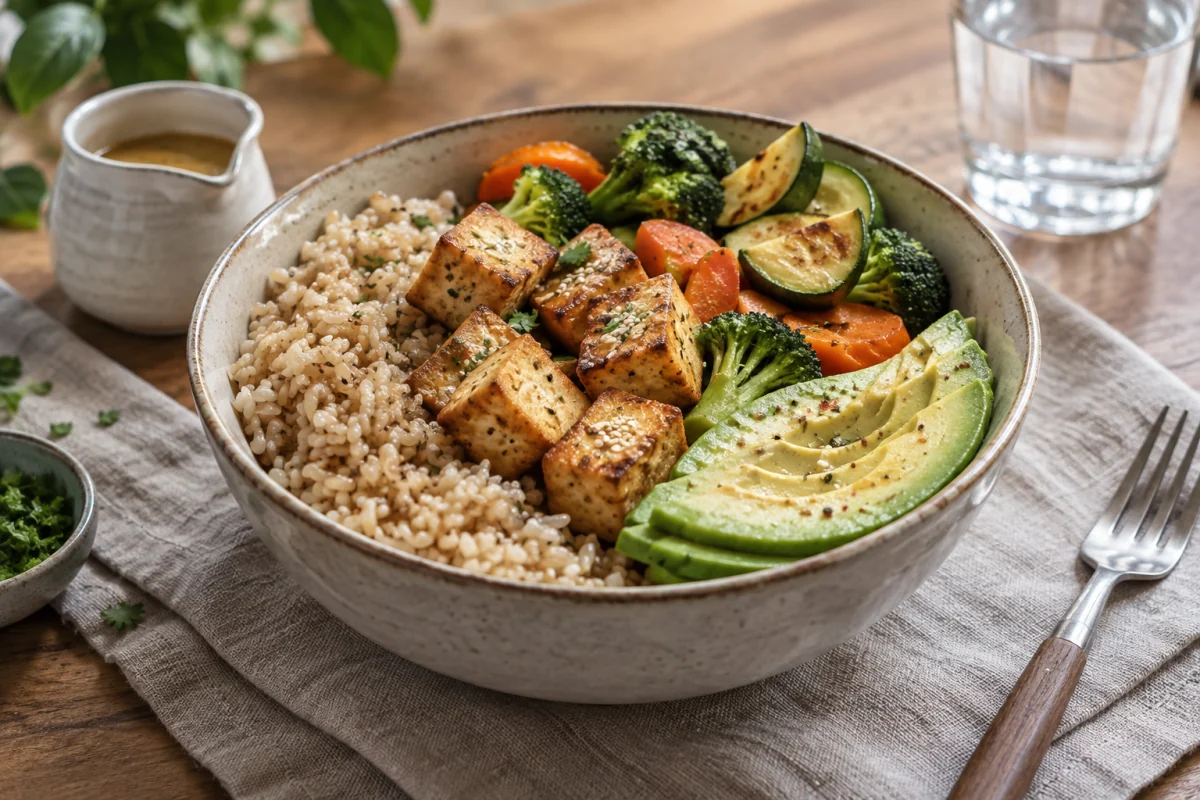
Limits: protein and fat still matter, and so does your gut
Volume eating has three predictable failure points.
The first is protein. A day of salads, soup and fruit can come to 1,400 calories with 40 g of protein, which leaves you hungry by evening and loses muscle over months. Aim for a palm-sized portion of protein at each meal, and count it. Every sample day above hits at least 90 g for that reason.
The second is fat. Cutting it too far means poorly absorbed fat-soluble vitamins, dull-tasting food and, for many people, a hormonal and mood cost within a few weeks. Twenty to thirty percent of calories from fat is a reasonable floor; a tablespoon of oil, half an avocado or a handful of nuts each day covers it.
The third is fibre. Going from 15 g a day to 45 g in a week produces gas, bloating and sometimes cramps, because the gut bacteria expand faster than your comfort does. The NHS recommends 30 g a day for adults and advises increasing gradually with plenty of fluid. Add one high-fibre swap every few days, drink more water than usual, and expect two to three weeks before your gut settles. If certain vegetables bother you more than others, our guide to foods that cause bloating explains why and what to swap in.
A quieter limit is that volume can become a habit of its own. If you find you cannot feel satisfied without an enormous plate, or you are eating vegetables you do not enjoy purely to fill space, the approach is working against you. Fullness is one tool for managing appetite; enjoying your meals and eating slowly are the others.
Who this is not for
Volume eating is a portion-control strategy, and like all portion-control strategies it can be misused.
- Anyone with a current or past eating disorder. Filling the stomach with very low-calorie food to suppress hunger is a pattern that appears in restrictive eating, and a plan that rewards it is not safe territory. Work with a doctor or dietitian instead.
- Athletes in heavy training. If you run 60 km a week or lift five days, your problem is usually eating enough, not eating less. Low-density food makes that harder, and under-fuelling costs performance, bone health and hormones.
- People with irritable bowel syndrome or inflammatory bowel disease. Large volumes of raw vegetables and fibre are a common trigger. Get individual advice before increasing fibre.
- Pregnant and breastfeeding women, and anyone who is underweight, recovering from illness or over about 70 with a small appetite. The goal in those situations is adequate energy and protein, and volume is the wrong lever.
- Anyone whose late-evening hunger is not really hunger. A full stomach does little for eating driven by stress or boredom. Our post on stress eating at night covers that pattern separately.
If you have diabetes, kidney disease or take medication that interacts with potassium or vitamin K, talk to your doctor or a dietitian before making a large shift toward fruit and leafy vegetables. This post is general information and does not replace individual medical advice.
Frequently asked questions
Can you lose weight with volume eating?
Yes, if it results in eating fewer calories than you burn, which for most people it does because low-density foods are hard to overeat. It is not magic: a large bowl of vegetables with a lot of oil, cheese and dressing is no longer low density. Keep the additions small and the protein consistent.
Is popcorn a good high-volume food?
Air-popped or lightly oiled popcorn is one of the best. Three cups come to under 100 calories with about 3.5 g of fibre, and the volume is satisfying. Cinema popcorn, microwave butter varieties and toffee popcorn are different products and can run to 400 or more calories per serving.
Will eating this much vegetable cause bloating?
Probably, for the first two or three weeks, if your fibre intake was low before. Increase gradually, drink more water, cook vegetables rather than eating everything raw, and go easy on the well-known gas producers such as beans, onions and cruciferous vegetables until your gut adapts. Persistent pain or bloating beyond a month is worth a doctor’s appointment.
Do soups count?
Broth-based soups are among the most effective high-volume foods there are. Studies that served soup as a first course found people ate fewer calories over the whole meal. Cream-based and cheese-topped soups do not count in the same way, and blended vegetable soups sit in between, so read the label or make your own.