
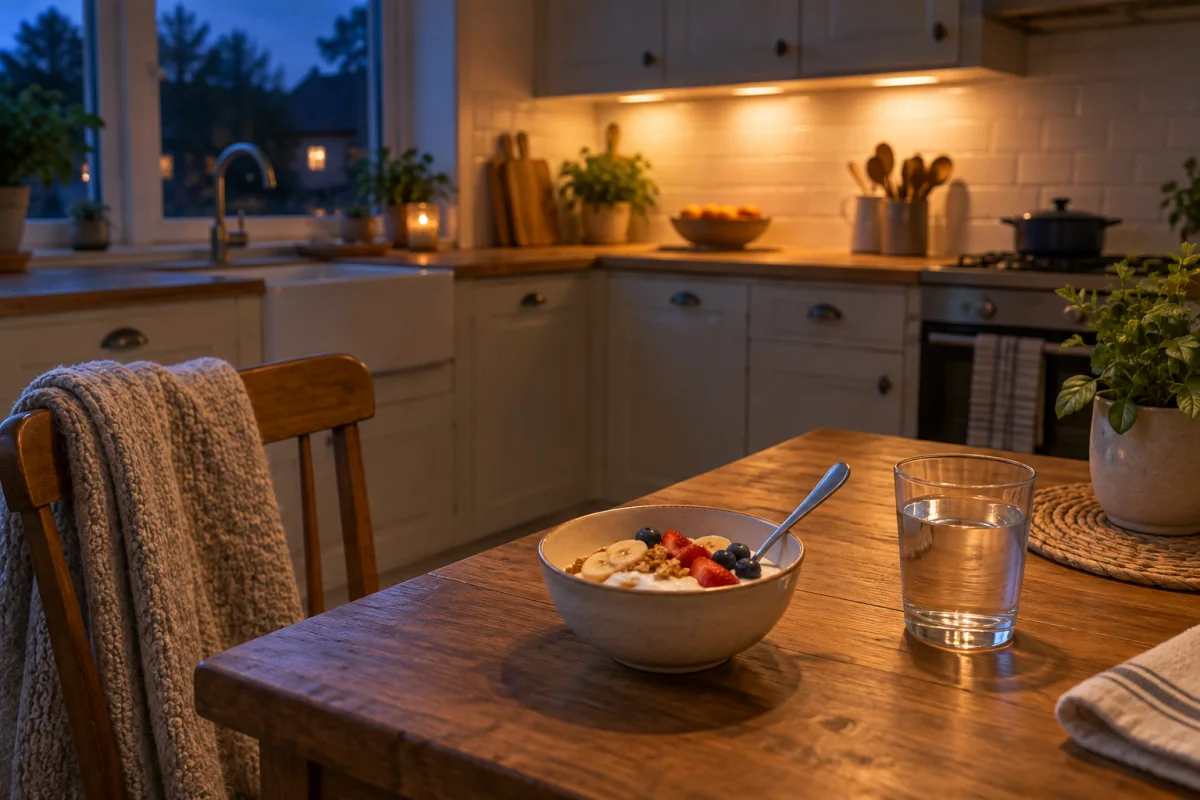
Stress eating at night is a loop: a long day, a drop in willpower, an urge that feels like hunger but is really tension or boredom, food that soothes for ten minutes, then guilt that adds to tomorrow’s stress. Breaking it means working on each link rather than trying to white-knuckle the moment in front of the fridge. That means eating enough earlier in the day, building a short evening routine that handles stress before it turns into cravings, putting friction between you and the snacks, and learning to tell physical hunger from emotional hunger. This guide gives a practical plan for the first two weeks and explains when the pattern needs professional help.
- Under-eating during the day is the most common hidden driver. A skipped lunch shows up as a 10 p.m. binge.
- Emotional hunger arrives suddenly, wants a specific food, and does not stop when full. Physical hunger builds gradually and accepts most foods.
- A ten-minute delay with a set alternative activity breaks most urges.
- Kitchen setup matters more than willpower: what is visible and easy gets eaten.
- Eating in secret, losing control regularly, or eating most of your daily food after dinner are signs to talk to a doctor.
Table of Contents
Why it happens at night
Several things line up in the evening. Cortisol, the stress hormone, has been high all day and drives cravings for energy-dense food. Willpower is a finite resource that has been spent on work, family and decisions. The structure of the day has ended, leaving unfilled time. And food is available, private and reliable in a way that few other comforts are. Add a day of eating too little and the biological hunger underneath the emotional one becomes overwhelming.
The Mayo Clinic’s guidance on emotional eating makes the same point: emotional eating is usually a response to stress, boredom or difficult feelings, and the way through is to address those triggers rather than fight the food. That is not a character flaw; it is a habit loop, and habit loops can be rebuilt.

Step 1: eat properly during the day
This is the fix people skip because it feels like the wrong direction. It is the right one. Restriction earlier in the day sets up the evening loss of control, and the “good” day makes the “bad” night feel like a failure rather than a predictable result.
- Breakfast with protein and fibre within two hours of waking: eggs, curd, oats with nuts.
- A real lunch, not a salad with no protein. Include a starch, a protein and vegetables.
- A planned afternoon snack of 150 to 200 calories with protein, so you are not ravenous at dinner. Options are in high-protein snacks under 200 calories.
- Dinner that satisfies: enough volume, enough protein, some fat. A “light dinner” of soup on its own is an invitation to snack at 10 p.m.
Run this for one week before judging the night-time pattern. Many people find the evening urges halve once the day is fed properly.
Step 2: tell the two hungers apart
| Physical hunger | Emotional hunger |
|---|---|
| Builds gradually over an hour or more | Arrives suddenly, often within minutes of a trigger |
| Accepts many foods, including plain ones | Wants something specific: sweet, salty, crunchy |
| Felt in the stomach | Felt in the head or chest, as a craving or restlessness |
| Stops when comfortably full | Continues past fullness |
| No guilt afterwards | Guilt, shame or a sense of having lost control |
A quick test in the moment: would an apple or a boiled egg satisfy this? If yes, eat it; that is hunger. If only the chips will do, it is something else, and the next step applies.
Step 3: the ten-minute rule with a set alternative
Most urges peak and fade within ten to fifteen minutes if you do something else. The key is deciding in advance what that something is, because deciding in the moment is exactly what a tired brain cannot do.
- Notice the urge and name it out loud or in a note: “stressed”, “bored”, “lonely”, “tired”.
- Drink a large glass of water or make a herbal tea. Thirst masquerades as hunger more often than people expect.
- Set a ten-minute timer.
- Do the pre-chosen alternative: a short walk around the block, a five-minute breathing exercise, a shower, a call to a friend, a page of a book, a stretch sequence.
- When the timer ends, check again. If you are still hungry, eat a planned snack sitting at a table. If the urge has faded, carry on with the evening.
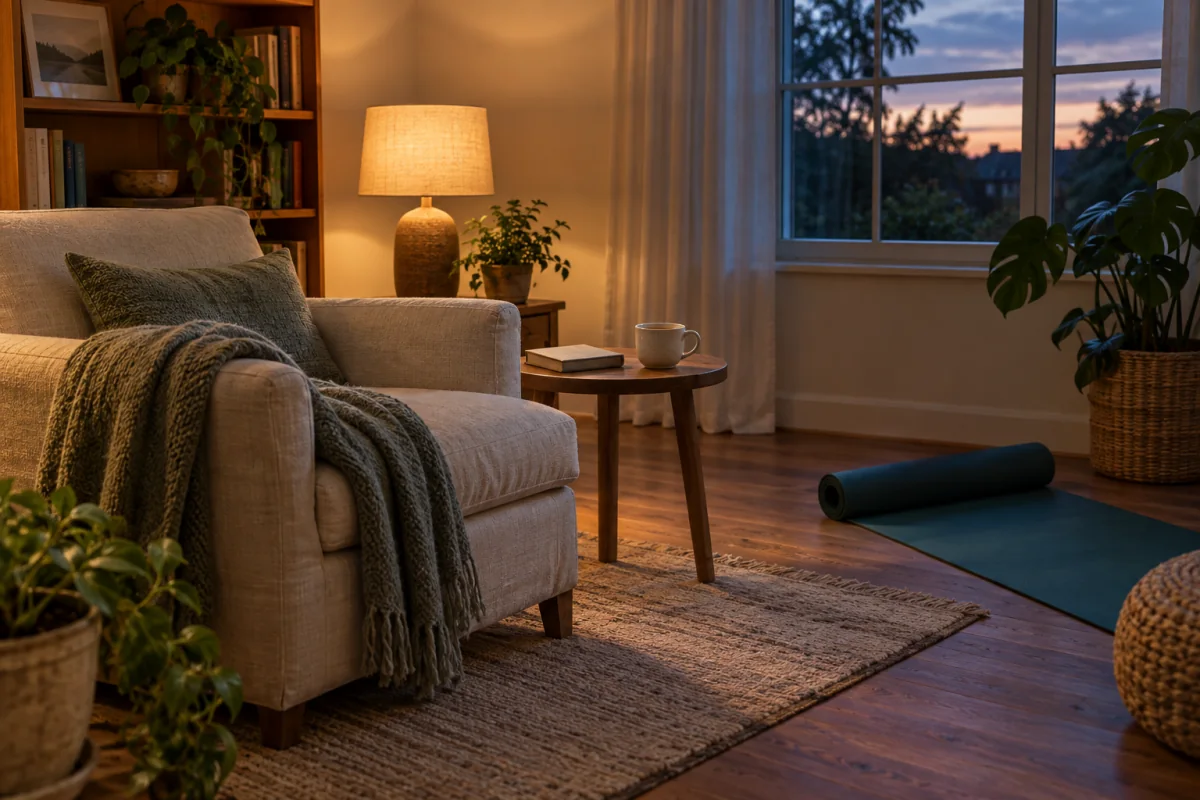
The alternative needs to be as easy to start as opening a packet. A yoga mat already unrolled, a book on the sofa, walking shoes by the door. Slow breathing is the most portable option and the five-minute breathing exercises are a good fit for this exact gap.
Step 4: rebuild the evening
An evening with no shape is an evening that drifts towards the kitchen. A loose routine gives the stressed brain a track to run on.
- Close the kitchen. After dinner and the washing-up, lights off, counters clear. Some people find brushing their teeth straight after dinner a surprisingly strong signal.
- Decompress deliberately. Ten minutes of something that actually lowers stress: a walk, a shower, stretching, music, a conversation. Scrolling does not count; it tends to raise arousal, not lower it.
- Plan one pleasant activity that is not food. The evening needs a reward; make sure there is one that is not edible.
- Bed at a consistent time. Late nights are where the second wave of snacking lives, and tiredness itself increases cravings the next day.
Racing thoughts are a frequent trigger for the fridge trip, and they respond to specific techniques; see how to stop overthinking at night.
Step 5: change the environment
Willpower is weakest at 10 p.m. Design around it.
- Keep trigger foods out of the house, or at least out of sight and in inconvenient places. A packet in a high cupboard gets eaten less than one on the counter.
- Buy single portions of the things you cannot live without, rather than family packs.
- Stock the visible spots with the planned option: fruit on the counter, cut vegetables and yogurt at eye level in the fridge.
- Eat only at the table, from a plate, with the television off. Eating from the packet on the sofa removes every natural stopping point.
- If a planned evening snack is part of your day, make it decent: a bowl of yogurt with fruit, cheese and crackers, a small handful of nuts with a piece of fruit. A snack you chose is not a lapse.
A two-week plan
| Days | Focus | What to do |
|---|---|---|
| 1 to 3 | Observe | Eat normally; log each evening urge with time, feeling and what you did. No judgement. |
| 4 to 7 | Feed the day | Add breakfast protein, a real lunch and a planned afternoon snack. Keep logging. |
| 8 to 10 | Insert the pause | Ten-minute rule with one pre-chosen alternative, every urge. |
| 11 to 14 | Shape the evening | Kitchen closed after dinner, one non-food reward, fixed bedtime. Review the log. |
Expect partial success, not perfection. Two nights out of seven going differently is real progress, and the log will show you which triggers are the stubborn ones.
Common mistakes
- Trying to fix the nights by eating less in the day. This is the mistake that keeps the loop running.
- Banning all evening food. A planned snack removes the forbidden-fruit effect and prevents genuine hunger.
- Punishing a lapse with restriction the next day, which sets up the next lapse.
- Using distraction that raises arousal (news, feeds, work email) instead of lowering it.
- Working on the food and ignoring the stress. If the day is unmanageable, the evening will keep trying to compensate.
When to seek help
Occasional stress eating is universal. See a doctor, or ask for a referral to a dietitian or psychologist, if you regularly eat large amounts in a short time with a sense of loss of control, eat in secret, feel significant distress about it, or consume most of your food after the evening meal or during the night. These can be signs of binge eating disorder or night eating syndrome, both of which respond well to treatment, particularly cognitive behavioural therapy. The NHS guidance on anxiety is also worth reading if the stress driving the eating is constant rather than occasional; persistent exhaustion and irritability can point to something more than a hard week, and signs of burnout versus depression may help you decide what to raise with a doctor.
Who this is not for
This plan assumes stress eating is a habit problem in an otherwise healthy adult. It is not a treatment for an eating disorder, and self-directed restriction can worsen one. Pregnant women, people with diabetes and anyone on medication that affects appetite should discuss changes to meal timing with their care team. If you have a history of anorexia or bulimia, work with a professional rather than following a general plan.
Frequently asked questions
How long does it take to stop stress eating at night?
Most people see a clear reduction within two to three weeks of feeding the day properly and inserting the ten-minute pause. Fully rebuilding the habit usually takes two to three months of practice.
Why do I only crave junk food at night?
Cortisol, fatigue and low willpower all peak in the evening, and energy-dense food gives the fastest sense of comfort. Under-eating earlier in the day amplifies the effect.
Is it bad to eat after 8 p.m.?
Not in itself. A planned, moderate snack in the evening is fine. What matters is the total for the day and whether the eating is chosen or compelled.
What can I eat at night instead of snacks?
If you are genuinely hungry: yogurt with fruit, a boiled egg, cheese with wholegrain crackers, or a small bowl of oats. If you are not hungry, the answer is an activity, not a different food.
Does stress eating at night affect sleep?
Yes. Large late meals delay sleep, cause reflux and can lead to early waking. Better sleep, in turn, reduces next-day cravings; the foods that help are in foods that help you sleep better at night.