
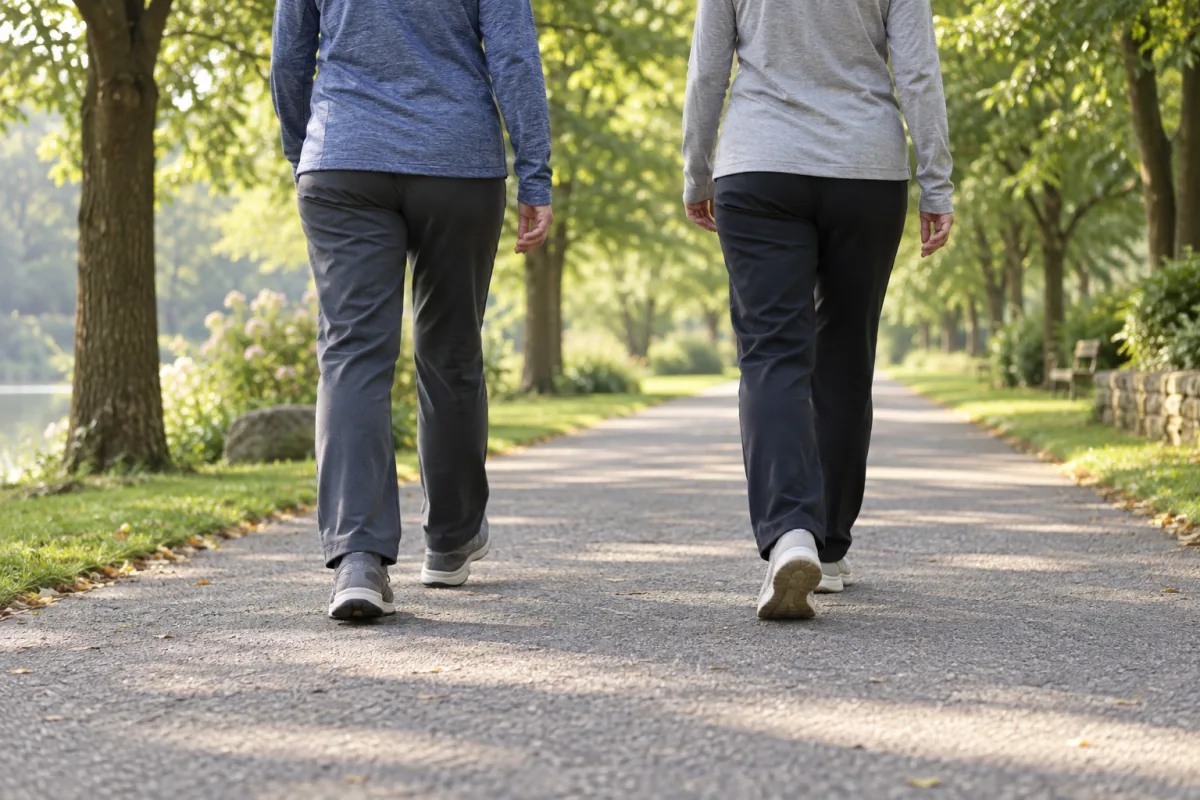
Walking 30 minutes a day for a month will not transform your body, but it will change things you can measure: resting heart rate drops a few beats, blood pressure eases, sleep gets deeper, mood lifts, and you lose somewhere between half a kilogram and two kilograms if your eating stays the same. Those are the results the research supports, and they are worth having. This guide sets out what a month of daily walking realistically does, how to structure the 30 minutes so it counts, and how to keep going once the novelty wears off.
- A brisk 30-minute walk burns roughly 120 to 180 calories depending on body weight and pace, which adds up to 3,500 to 5,000 calories over a month.
- Cardiovascular changes such as a lower resting heart rate and blood pressure show within two to four weeks.
- Mood and sleep improve within the first week for many people, especially with daylight walks.
- Weight loss from walking alone is modest. Pair it with small food changes for visible results.
- Thirty minutes a day meets the minimum weekly activity target set by health authorities.
Table of Contents
What 30 minutes a day actually delivers
The World Health Organization recommends at least 150 minutes of moderate-intensity activity a week for adults. A brisk 30-minute walk five days a week meets that exactly; seven days exceeds it. Brisk means around 5 to 6 km per hour, or a pace at which you can talk but not sing. That distinction matters: a stroll at 3 km per hour is pleasant and better than sitting, but it does not produce the fitness changes below.
Over a month, the evidence points to these outcomes for a previously inactive adult:
| Outcome | Typical change after one month | Notes |
|---|---|---|
| Resting heart rate | Down 2 to 5 beats per minute | A sign the heart is working more efficiently |
| Blood pressure | Down 2 to 5 mmHg systolic in people with raised readings | Small but meaningful; keep taking prescribed medicines |
| Weight | 0.5 to 2 kg loss with unchanged diet | Larger with modest food changes |
| Waist | 1 to 2 cm | Abdominal fat responds early to regular activity |
| Sleep | Faster to fall asleep, more deep sleep | Strongest with morning or daytime walks |
| Mood | Lower anxiety and low mood scores | Noticeable within days for many people |
| Blood sugar | Better control after meals | A walk after eating blunts the glucose rise |
| Fitness | Able to walk further and faster at the same effort | The most obvious change by week four |
The Mayo Clinic lists the longer-term benefits of regular walking as a healthier weight, better heart health, stronger bones and muscles, improved balance and a lower risk of several chronic conditions. A month is the start of that curve, not the end.
Week by week
Week 1: it feels harder than it should
Legs and feet ache a little, especially if you were mostly sedentary. Breathing feels laboured at a pace that will feel easy in three weeks. Mood and sleep often improve first, partly from daylight exposure and partly from the simple structure of a daily commitment. Do not try to walk fast yet; focus on doing it every day.
Week 2: the pace comes
The same route takes less time and feels easier. Resting heart rate may already be a beat or two lower. This is the week most people start noticing they are less winded on stairs. It is also the week the novelty fades and skipping a day becomes tempting, so it helps to have the walk tied to a fixed time.
Week 3: measurable changes
Clothes fit a little differently around the waist. Blood pressure, if you track it, is often slightly lower. Sleep is more consistent. If you have kept eating exactly as before, the scale might show a kilogram less; if you have made small food changes alongside, it might show two or three.
Week 4: a habit, and a plateau
By now the walk is part of the day. Fitness has improved enough that the original 30-minute brisk walk is no longer challenging, which is why the results plateau unless you add pace, hills or minutes. This is normal and it is the cue to progress.
Making the 30 minutes count
- Warm up for the first three to five minutes at an easy pace, then push to brisk.
- Check your effort: you should be able to hold a conversation in short sentences, not in paragraphs and not in single words.
- Swing your arms, land heel to toe, and keep your head up. Looking at a phone shortens the stride and rounds the shoulders.
- Add variety from week 2: one route with hills, one with intervals of two minutes fast and two minutes easy.
- Cool down with an easy last three minutes, then stretch the calves, hamstrings and hip flexors for a couple of minutes.
If your day is already full of sitting, the desk-related tightness in the hips and shoulders will show up on walks. The stretches for desk workers are a good match for a post-walk routine.
Walking and weight: honest numbers
A person weighing 70 kg burns about 150 calories in a brisk 30-minute walk; someone at 90 kg burns closer to 190. Over 30 days that is 4,500 to 5,700 calories, or roughly 0.6 to 0.8 kg of fat if nothing else changes. Most people see a bit more, because walking tends to reduce snacking and improve sleep, both of which affect eating. Some see less, because they eat back the calories with a post-walk treat.
If weight loss is the goal, the walk works best as the exercise half of a plan whose diet half does the heavy lifting. Cutting one sugary drink a day roughly doubles the deficit the walk creates. The home-based approach in how to lose belly fat without a gym pairs daily walking with simple food changes and bodyweight strength work. And if the scale refuses to move despite both, the reasons are usually the ones in why am I not losing weight in a calorie deficit.
When to walk
The best time is the one you will keep. That said, the evidence gives a few nudges:
- Morning walks in daylight anchor the body clock and improve sleep that night more than evening walks do.
- A 10 to 15 minute walk after meals, particularly after the largest one, lowers the post-meal blood sugar rise. Splitting the 30 minutes into three post-meal walks is a legitimate option, especially for people with insulin resistance.
- Late evening walks are fine for most people; only very vigorous exercise close to bedtime tends to delay sleep.
- Hot climates: walk early or late and carry water. Heat adds strain without adding fitness.
A four-week plan
| Week | Daily walk | Extra |
|---|---|---|
| 1 | 30 minutes, comfortable to brisk, flat route | Fix the time of day; log each walk |
| 2 | 30 minutes brisk; two days with gentle hills | Note resting heart rate on waking |
| 3 | 30 minutes brisk; two days with 2-minute fast intervals | Measure waist; add a five-minute stretch after each walk |
| 4 | 30 to 40 minutes; one longer weekend walk of 60 minutes | Compare week 1 and week 4 times on the same route |
After week 4, keep progressing: a faster pace, a hillier route, a heavier backpack, or 45 minutes on some days. Adding two short strength sessions a week protects joints and builds the muscle that walking alone does not.
Common mistakes
- Strolling and counting it as brisk. Check the talk test.
- Rewarding the walk with food that costs more than the walk burned.
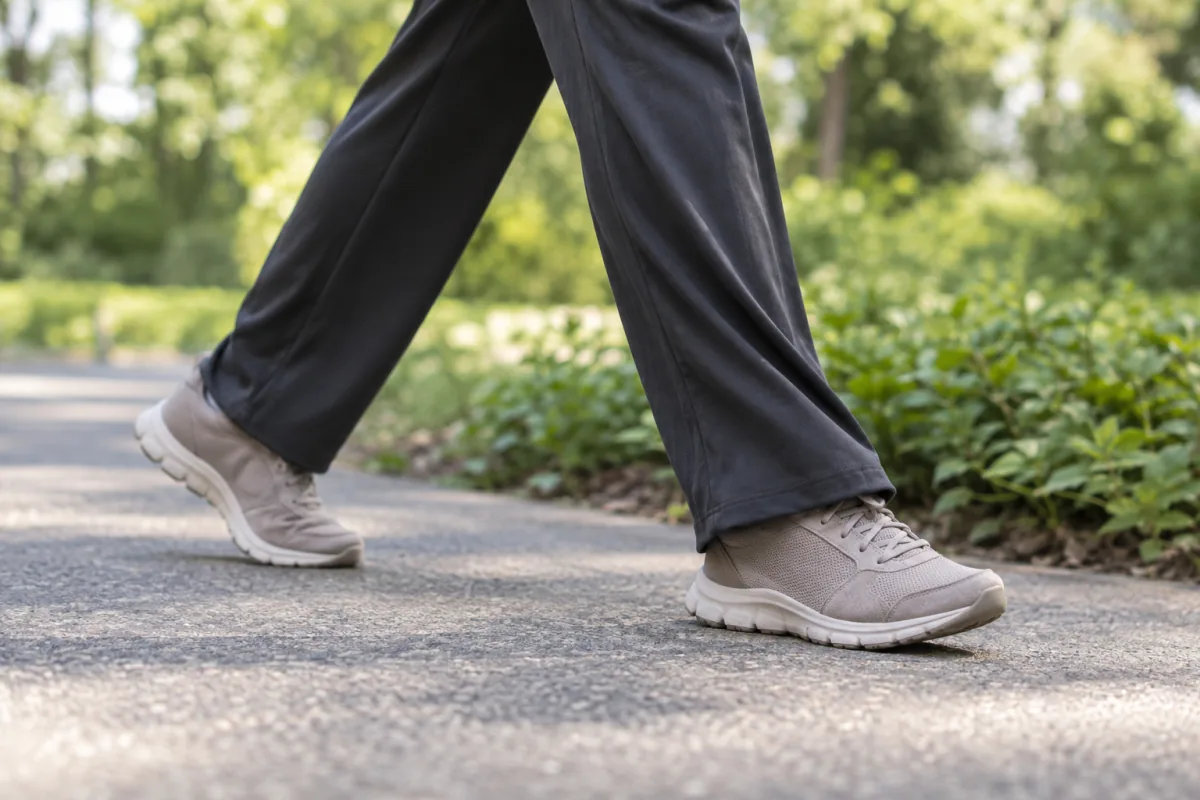
- Worn-out shoes. Blisters and shin pain in week 2 often trace back to footwear. Any cushioned trainer with a firm heel is fine; it does not need to be expensive.
- All or nothing. Missing a day is not failure. Missing a week and giving up is the pattern to avoid.
- Judging by weight alone. Track resting heart rate, waist and how the route feels; those move first.
Who this is not for
Thirty minutes of brisk walking is safe for most adults, including many with chronic conditions, and is often exactly what doctors recommend. Check first if you have chest pain or breathlessness on exertion, a heart condition, uncontrolled blood pressure, diabetes with foot problems, or a recent injury or surgery. People who are significantly deconditioned should start with ten minutes and build up rather than beginning at 30; the gradual route in how to start working out when out of shape covers that. Stop and seek advice if walking causes chest pain, dizziness, or pain that gets worse rather than easing as you warm up.
Frequently asked questions
How much weight can I lose walking 30 minutes a day for a month?
With no change to eating, about 0.5 to 2 kg. With modest food changes alongside, two to four kilograms is realistic for many people.
Is 30 minutes of walking a day enough exercise?
Yes, for the minimum weekly target. Adding two short strength sessions a week covers the muscle and bone recommendations that walking alone does not.
Can I split the 30 minutes into shorter walks?
Yes. Three 10-minute brisk walks give most of the benefit, and post-meal walks are particularly useful for blood sugar.
What if I miss a day?
Nothing is lost. Walk the next day. The month’s results come from the pattern, not from a perfect streak.
Will walking tone my legs and stomach?
Walking builds endurance and some leg strength, and helps reduce overall fat including around the waist. Visible muscle definition needs strength training and a lower body fat level than a month of walking produces.