
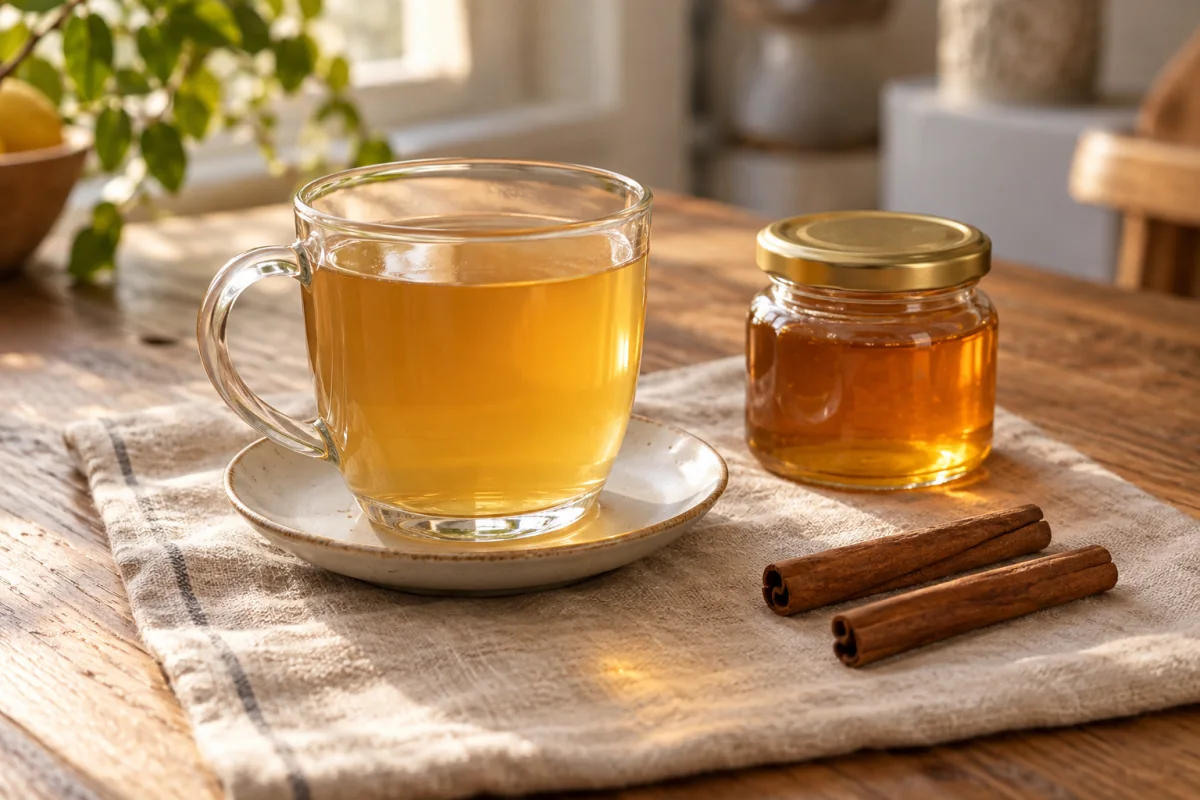
Honey does help a sore throat: it coats the irritated lining, and trials in both children and adults show it eases cough and throat pain at least as well as common over-the-counter remedies. Cinnamon adds flavour and a little warmth, but there is no human evidence that it does anything for a sore throat on its own. Together they make a pleasant, cheap, low-risk remedy for the ordinary viral sore throat that clears in a week. This guide shows how to use them properly, what else actually works, the one group who must never have honey, and the signs that mean you need a doctor rather than a spoon.
- Honey is the evidence-backed half. Studies show it reduces cough frequency and throat discomfort, particularly at night.
- Cinnamon has antimicrobial activity in the lab but no trials for sore throat in people. Treat it as flavour.
- Never give honey to a baby under 12 months because of the risk of infant botulism.
- Most sore throats are viral and improve within a week; antibiotics do not help them.
- Severe pain, trouble breathing or swallowing, a high fever or a sore throat lasting more than a week needs medical advice.
Table of Contents
Why honey works
A sore throat is inflamed tissue at the back of the mouth, usually caused by a cold or flu virus. Anything that coats and soothes that tissue helps, and honey is a thick, sugary, slightly acidic syrup that does exactly that. It also appears to calm the cough reflex, which matters because coughing keeps re-irritating the throat.
The evidence is decent for a kitchen remedy. A review of trials found honey performed better than usual care and at least as well as some over-the-counter cough medicines for upper respiratory infections, and paediatric studies found a spoonful before bed reduced night-time cough in children over one year old. The NHS sore throat guidance lists honey among the simple home measures it recommends, alongside fluids, rest and cool or soft foods.
Raw, manuka or “medical grade” honey is often marketed as stronger. For soothing a throat, ordinary honey does the same job. Manuka’s extra antibacterial activity matters for wound dressings, not for a viral pharyngitis.
What cinnamon does and does not do
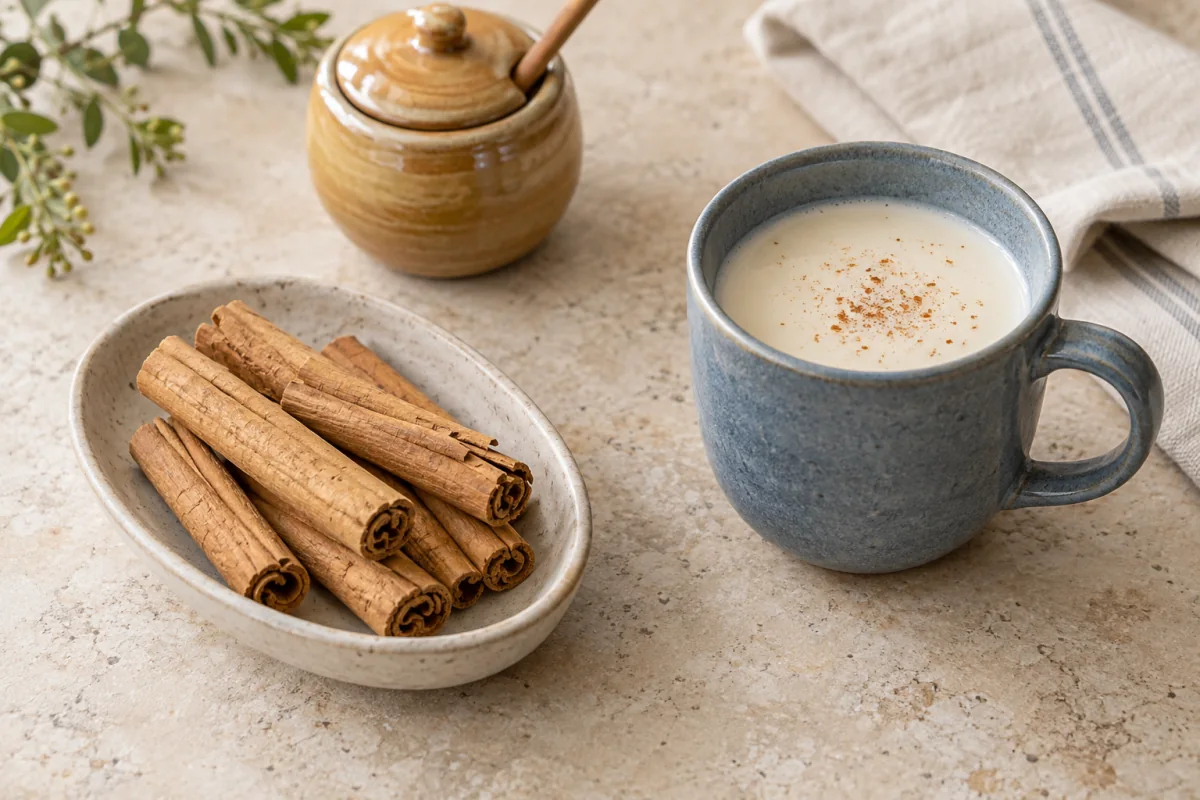
Cinnamon contains cinnamaldehyde and other compounds that kill bacteria and fungi in laboratory tests. That is the basis for every “cinnamon fights infection” claim. There are no clinical trials of cinnamon for sore throat, cough or cold in people, and the amounts used in a cup of tea are far below what laboratory studies test.
Two things are worth knowing:
- Cassia cinnamon, the common supermarket kind, contains coumarin, which can affect the liver in large regular doses. A pinch in a drink is fine; a teaspoon a day for weeks is not a good idea. Ceylon cinnamon contains far less.
- Cinnamon is mildly irritating to mucous membranes. Too much in a hot drink can make a raw throat feel worse, not better.
So use cinnamon for taste, keep it to a pinch, and give the credit to the honey.
How to use honey and cinnamon for a sore throat
The basic warm drink
- Warm 250 ml of water until hot but not boiling; very hot liquid irritates an inflamed throat.
- Stir in one to two teaspoons of honey until dissolved.
- Add a pinch of ground cinnamon, no more than a quarter teaspoon, and a squeeze of lemon if you like it.
- Sip slowly. Repeat up to three or four times a day.
Straight honey at bedtime
The paediatric trials used honey on its own: one to two teaspoons for children over one year, up to a tablespoon for adults, taken 30 minutes before bed. This is the version with the best evidence for night-time cough. Brush teeth afterwards if you can, since honey is sugar.
Honey and ginger tea
Ginger has better evidence than cinnamon for calming an upset stomach and may help a throat feel warmer and less scratchy. Simmer a few slices of fresh ginger in water for five minutes, let it cool slightly, then stir in honey. The comparison in ginger versus turmeric covers what ginger can and cannot do.
Honey in warm milk
Milk does not increase mucus, despite the folklore, and a warm milk with honey and a pinch of cinnamon is a comfortable bedtime drink. Skip it only if dairy makes your throat feel thicker, which some people notice.

The other things that genuinely help
Honey is one tool. The full kit for a viral sore throat looks like this:
| Measure | What it does | Notes |
|---|---|---|
| Warm salt-water gargle | Draws fluid from swollen tissue, clears mucus | Half a teaspoon of salt in a cup of warm water, several times a day; adults and older children only |
| Fluids | Keeps the throat moist, thins mucus | Water, warm drinks, diluted juice; see how much water you need |
| Paracetamol or ibuprofen | Reduces pain and fever | Follow the pack; ibuprofen is not for everyone, so check with a pharmacist |
| Lozenges or hard sweets | Stimulate saliva, which soothes | Not for young children (choking risk) |
| Rest and a humid room | Helps recovery, eases dry throat | A bowl of water near a radiator works if you have no humidifier |
| Cool, soft foods | Easier to swallow | Ice lollies, yogurt, soup |
A soothing herbal tea can carry the honey too; chamomile and lemon balm are gentle on a raw throat. Our guide to herbal teas covers brewing them properly.
Who must not use honey
Babies under 12 months must never be given honey, in any form, including cooked into food. Honey can contain spores of Clostridium botulinum, which an infant’s gut cannot yet control, and infant botulism is a serious illness. The NHS list of foods to avoid for babies is explicit on this. For a baby with a sore throat, ask a pharmacist or doctor about age-appropriate options.
Other cautions:
- Diabetes: honey raises blood sugar like any sugar. A teaspoon or two is manageable for most people, but count it, and prefer straight honey over a large sweetened drink.
- Pollen or bee allergies: rare reactions to honey occur. Stop if you notice itching or swelling.
- Cinnamon allergy: uncommon but real, and cinnamon is a known contact irritant in the mouth.
- Liver conditions: avoid regular cassia cinnamon because of coumarin.
- Reflux: hot, acidic drinks with lemon can worsen it. Skip the lemon.
When to see a doctor
Most sore throats are viral, peak in two or three days and are gone within a week. Home remedies are for comfort while that happens. See a doctor, or in some cases go to emergency care, if you have:
- Difficulty breathing, drooling or inability to swallow saliva. This is urgent.
- A sore throat that is severe, one-sided, or comes with a muffled voice or a stiff neck.
- A fever above 38.5 degrees Celsius for more than two days, or any high fever in a young child.
- White patches on the tonsils, swollen glands and no cough, which can point to a bacterial infection such as strep throat that may need antibiotics.
- Symptoms lasting more than a week, or recurring sore throats.
- A weakened immune system, or you are pregnant and unsure.
Antibiotics do not work on viruses, and taking them for a viral sore throat brings side effects without benefit. A doctor can do a quick throat swab if strep is suspected.
Common mistakes
- Scalding hot drinks. Heat above what you would comfortably bathe in irritates the throat further. Warm, not boiling.
- Heaped spoons of cinnamon. It burns, and cassia in quantity is a liver concern.
- Buying expensive “medicinal” honey for a cold. Plain honey coats a throat just as well.
- Endless sweet drinks all day. Sugar feeds the bacteria on your teeth, and constant sipping is worse than a few sessions. Rinse with water afterwards.
- Waiting out red-flag symptoms with home remedies. If swallowing or breathing is hard, stop reading and call a doctor.
If you find a sore throat is your excuse to load up on sugar generally, the changes people notice after cutting back are described in what happens when you stop eating sugar.
Frequently asked questions
Does honey and cinnamon cure a sore throat?
No. Honey soothes the throat and reduces cough while your body clears the virus; cinnamon adds flavour. Neither shortens the illness or treats a bacterial infection.
How quickly does honey help?
The soothing effect is immediate and lasts around an hour. Trials measuring night-time cough found a difference on the first night.
What is the best ratio of honey to cinnamon?
One to two teaspoons of honey with no more than a pinch (up to a quarter teaspoon) of cinnamon per cup. More cinnamon does not add benefit and can irritate the throat.
Can children have honey for a sore throat?
Yes, from 12 months onwards. One to two teaspoons before bed is the amount used in studies. Never give honey to a baby under one year.
Is manuka honey better for a sore throat?
Not for a viral sore throat. Its extra antibacterial activity has been studied for wounds, not colds, and ordinary honey coats the throat equally well at a fraction of the price.